

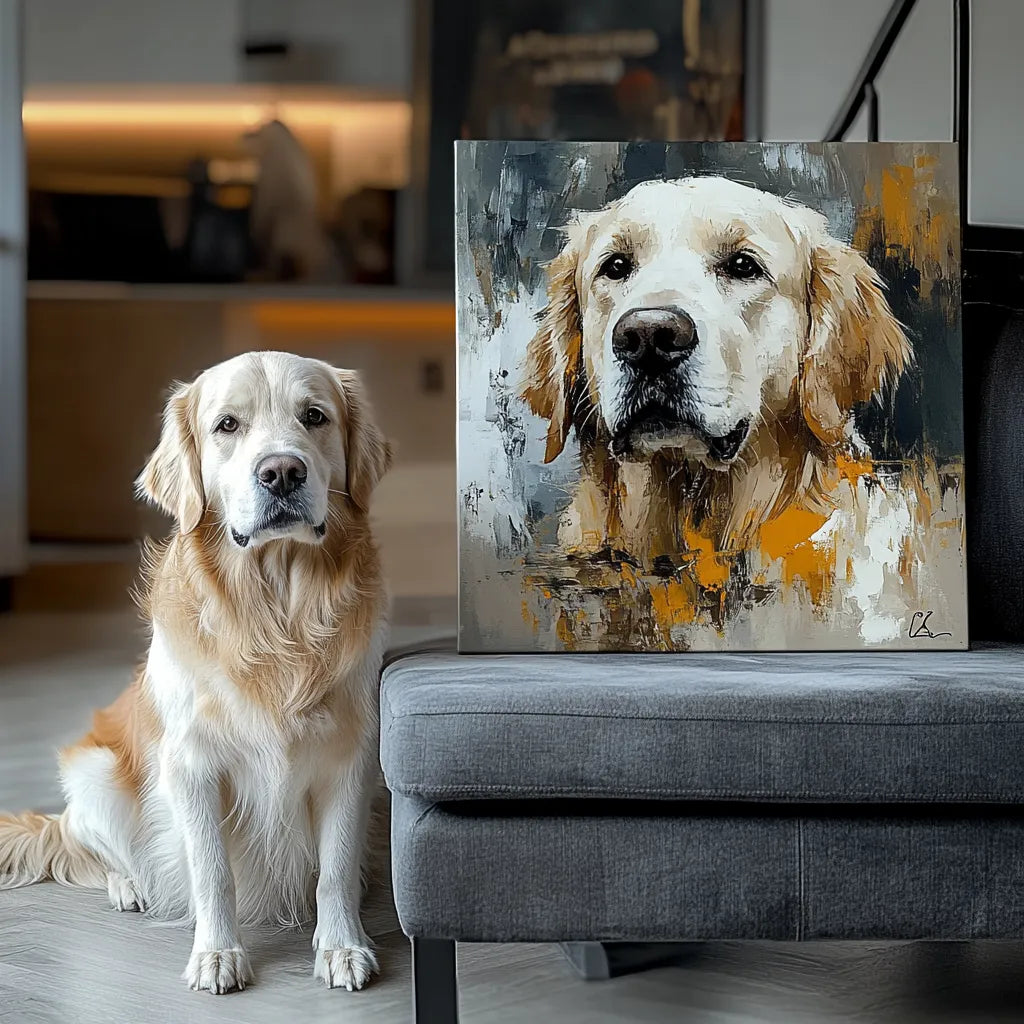
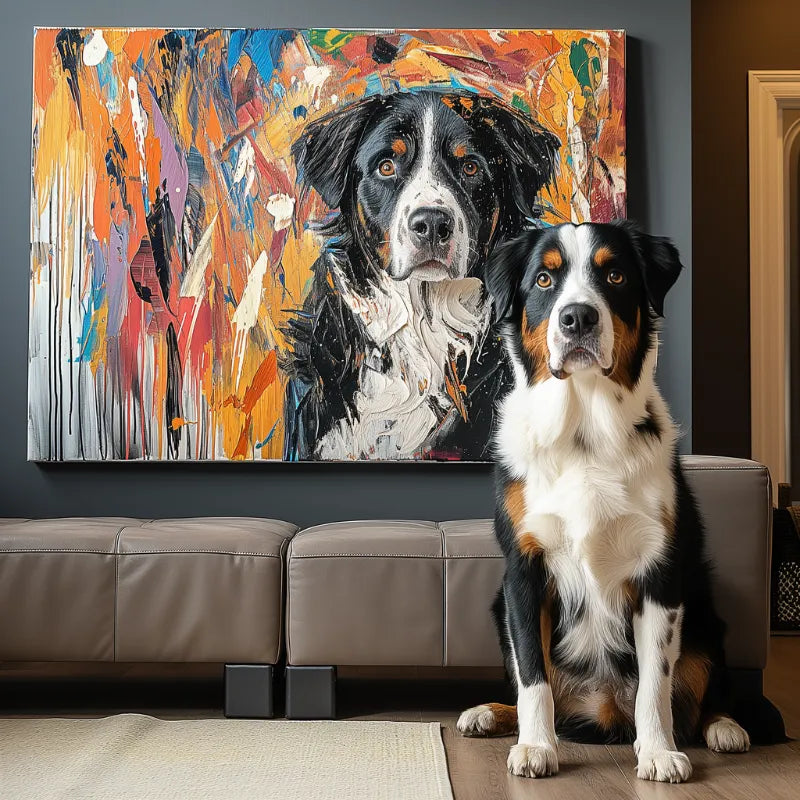

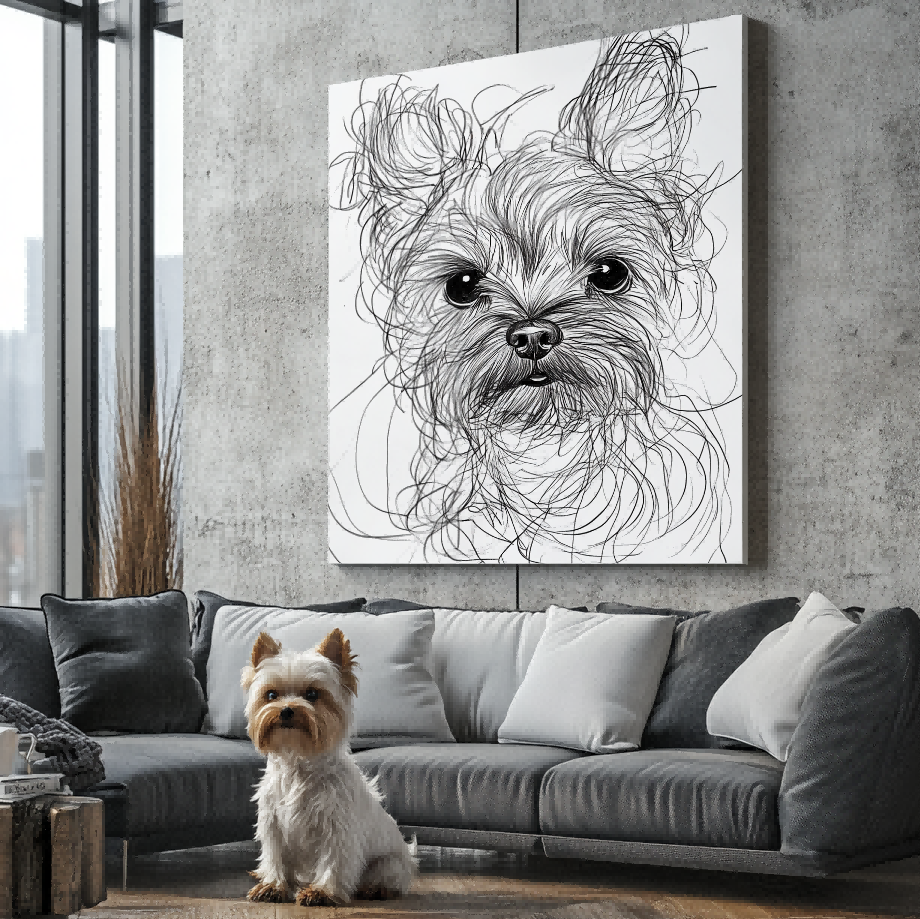

I'll be straight with you—I used to think a canvas frame was just… a frame. You buy the canvas, you put it in something, you hang it on the wall. Done deal.
Nope. Big mistake. I learned that the hard way when I ordered a custom portrait of my dog, picked some random frame online, and ended up with this weird, clunky thing that made my dog look like he was trapped in a wooden box. The frame swallowed the artwork. My living room wall looked like a bad Pinterest fail.
So I started asking around. Talked to a framer at a local shop. Read a bunch of stuff that put me to sleep. Ordered a few more canvases just to test different setups. And finally, after spending way too much money on trial and error, I figured out what actually works.
If you're looking at custom pet portraits and wondering what to do about the frame, here's what I wish someone had told me from the start.

The First Thing: There Are Two Kinds of Canvas Frames
Okay, so this confused me for way too long.
When people say canvas frame, they could mean one of two things:
One is the stretcher frame—the wooden structure inside the canvas that keeps it tight and prevents sagging. You don't really see this, but it matters a lot. Cheap stretcher bars warp over time, and suddenly your perfectly straight portrait starts looking wavy. Palette Tales uses wooden stretcher frames for theirs.
The other is the decorative frame—the outer frame you actually see on your wall. The pretty part. The thing that makes your portrait look finished or, if you pick wrong, makes it look like a high school art project.
This article is about that second one. The visible one. The one that can either make your pet look like a masterpiece or a mess.

The Three Main Options (and Which One I Actually Like)
Gallery Wrap – No Frame Needed
This is when the canvas gets stretched over thick wooden bars and stapled on the back. The image wraps around the sides so you can hang it without any outer frame at all. Clean, minimal, modern.
I've got one of these in my hallway. It looks fine. But honestly? It feels a little unfinished to me. Like I forgot to do the last step. Some people love that look—it's trendy, especially in minimalist spaces. But for my living room, where I actually care about things looking polished, I wanted something more. If you're curious about the different portrait styles Palette Tales offers, check out all the portrait styles they have available.
Floater Frames – My Personal Favorite
Floater frames are where the canvas sits slightly inside the outer frame with a small gap around it. That gap creates a shadow line that makes the artwork look like it's literally floating inside the frame. It's subtle but it adds so much depth.
These are everywhere in 2026. Designers can't stop talking about them. They work especially well with gallery-wrapped canvases because you get to see the wrapped edges while still having that finished, framed look.
When I finally got a floater frame for my dog's portrait, it was like night and day. The shadow gap made the whole thing feel expensive, even though I didn't spend that much. If you want that gallery feel without paying gallery prices, this is the move. Palette Tales has a bunch of different portrait options to choose from—watercolor, pop art, minimalist, you name it.
Traditional Wood or Metal Frames
These fully enclose the canvas, overlapping the edges. Wood gives you that warm, classic look. Metal feels sleek and contemporary.
Wood frames in oak, walnut, and maple are popular right now—especially with matte finishes. Metal frames, usually black, white, or silver, keep the focus on the artwork itself. I tried a walnut wood frame on one of my portraits and it worked beautifully with my brown leather couch. If you're wondering what styles are available, honestly just scroll through their collection—you'll see everything from modern abstracts to classic pet portraits. But on a different portrait with brighter colors, it looked too heavy. It's all about balance.

What Framers Are Saying About 2026 Trends
I talked to a framer friend (yes, I actually made a framer friend during this whole rabbit hole) and here's what's actually happening out there:
-
Floater frames are still the big thing. Everyone wants that clean, contemporary gallery vibe. If you're selling canvas art or buying it, these are the frames people are looking for right now.
-
Natural wood tones are everywhere. Oak, walnut, maple, ash—people want warmth. Not glossy, manufactured finishes. They want something that feels real.
-
Slim profiles. Thin frames, clean lines. The idea is to let the artwork do the talking. Especially popular for photography and digital art.
-
Mixed materials are having a moment. Wood with black metal. Brass with linen. Texture matters.
-
Bold colors are creeping in. Deep navy, warm terracotta, earthy greens. If you're brave, a colored frame can really punch up a room.
-
And unframed art is apparently a thing too. Designer Steven Graffam said unframed art feels “fresh because it's more immediate and less formal”. So if you don't want to frame it at all, that's actually on-trend.
Personally? I like the polish a frame gives. But I get the appeal of going frameless if you're going for that organic, effortless look.

How to Pick a Frame Without Losing Your Mind
I've made enough mistakes to have a pretty solid system now. Here's what I think about before I order:
Match the frame to the portrait. If your pet portrait is modern or abstract, a slim black or white frame (or a floater) works great. If it's classic or textured, go for a warmer wood or subtle metallic. Palette Tales has a whole collection of portrait styles—you can scroll through and get a feel for what matches your taste before you even think about framing.
Look at your room. The frame should fit the space it's going into. A big ornate frame on a small minimalist portrait looks goofy. A tiny delicate frame on a huge bold canvas looks weak. Think about your wall color, your furniture, your lighting. It all matters.
Check the canvas construction. If your canvas has finished edges (like a gallery wrap), a floater frame shows them off. If the edges aren't finished, a traditional frame that covers them might be better.
Don't let the frame steal the show. This is a big one. The frame should highlight the artwork, not compete with it. If people notice the frame before the pet, you picked wrong.
Size matters. I've bought canvases that were too big for my space and had to return them. Most custom sites like Palette Tales offer standard sizes—8×10, 11×14, 16×20, up to 24×30. If your room is small, stick to 12×16 or smaller. If you've got a big empty wall, go bigger.

The Cost Thing Nobody Talks About
Framing is not cheap. I learned that real quick.
A typical custom framing job for a mid-size print can run you $150 to $350—and that's just for a simple frame and basic mounting. If you want UV-protective glass or fancy matting, it climbs fast. I've seen quotes over $500 for larger pieces.
Frame materials alone range from about $9 to over $52 per linear foot. So even if you're just buying the frame and doing it yourself, it adds up.
That's actually why I ended up liking what Palette Tales does. They offer frame options starting at $29 when you order your canvas. No separate trip to the framer. No sticker shock. Just pick the frame that matches your vibe and it shows up ready to hang.
For a small size like 8×10, it's around $100 total for canvas plus frame. For a medium like 16×20, maybe $150–$200. That's honestly a steal compared to what I paid at the local frame shop for just the frame alone.
Why I Keep Ordering from Palette Tales
I've tried a few different custom pet portrait services. Palette Tales is the one I've gone back to three times now. Here's why:
-
The canvas itself is 13-oz cotton—heavy enough that it doesn't warp or sag. They hand-stretch it over wooden frames.
-
They offer six different frame styles starting at $29. Oak, walnut, black, white, silver, and a few others I can't remember off the top of my head.
-
Everything arrives ready to hang. No assembly, no trips to the hardware store.
-
They retouch your photo for free if the quality isn't great. That saved me when I only had a grainy photo of my cat from five years ago.
-
They also do phone cases, tote bags, doormats, and caps with the same pet portrait. So if you want your dog's face on your phone case too, it's all in one place.
Is it the cheapest option out there? No. But for the quality and the convenience, I think it's fair. Honestly, if you're even remotely interested, browse the full portrait collection and see if anything catches your eye.
A Few Quick Things to Keep in Mind
-
Measure your wall before you order. Seriously. I bought a 24×30 canvas for a narrow hallway once and it looked ridiculous.
-
Use a high-resolution photo. The better the original, the sharper the print. If your photo is blurry, Palette Tales can help fix it, but it's not magic.
-
Match the frame to your existing decor. Neutrals like black, white, oak, and walnut are safe bets that won't clash.
-
Going frameless is fine too. Gallery-wrapped canvases are a legit look, especially in modern or minimalist spaces.
FAQ – Canvas Frames and Custom Pet Portraits
1. What's a floater frame and why does everyone like it?
It's a frame that sits slightly away from the canvas with a small gap around it. That gap creates a shadow effect that makes the artwork look like it's floating. It's modern, clean, and gives the piece a polished gallery feel.
2. Do I have to frame a canvas?
Nope. Gallery-wrapped canvases are made to hang without an outer frame. If you like that minimalist look, go for it. If you want something more traditional or finished, add a frame.
3. What sizes do canvas frames come in?
Standard sizes are 8×10, 11×14, 16×20, 18×24, and 24×30. Smaller sizes work for gallery walls or small spaces. Bigger ones work as statement pieces.
4. How much should I expect to spend on framing?
Custom framing usually runs $150–$350 for a mid-size piece. Frame materials alone cost $9–$52 per linear foot. Palette Tales offers frames starting at $29 when you order your canvas with them.
5. Can I just buy a frame separately and do it myself?
You can, but you'll need to make sure the frame fits your specific canvas depth. And you'll need hanging hardware. It's doable—there are plenty of DIY guides—but it's more work.
6. What frame material works best for pet portraits?
Wood frames (oak, walnut) add warmth and a classic feel. Metal frames (black, white, silver) are more modern. For most pet portraits, natural wood tones are a safe bet in 2026.
7. Does Palette Tales offer framing?
Yes. They have six modern frame styles starting at $29. Their canvases are hand-stretched over wooden stretcher frames.
8. How long will a framed canvas last?
A good-quality framed canvas can last 20+ years if you keep it out of direct sunlight and away from moisture. Palette Tales uses quality materials designed for longevity.
I've got three custom pet canvases hanging on my walls now. One framed with a floater, one gallery-wrapped, one in a walnut wood frame. Each one looks different, but they all make me smile when I walk past.
If you've got a favorite photo of your furry friend sitting in your camera roll, honestly? Just go for it. Pick a frame that feels right, order the canvas, and hang it up. Future you will be glad you did.
Check out www.palettetales.com for custom pet canvases and framing options. Code WELCOME gets you 10% off your first order.


