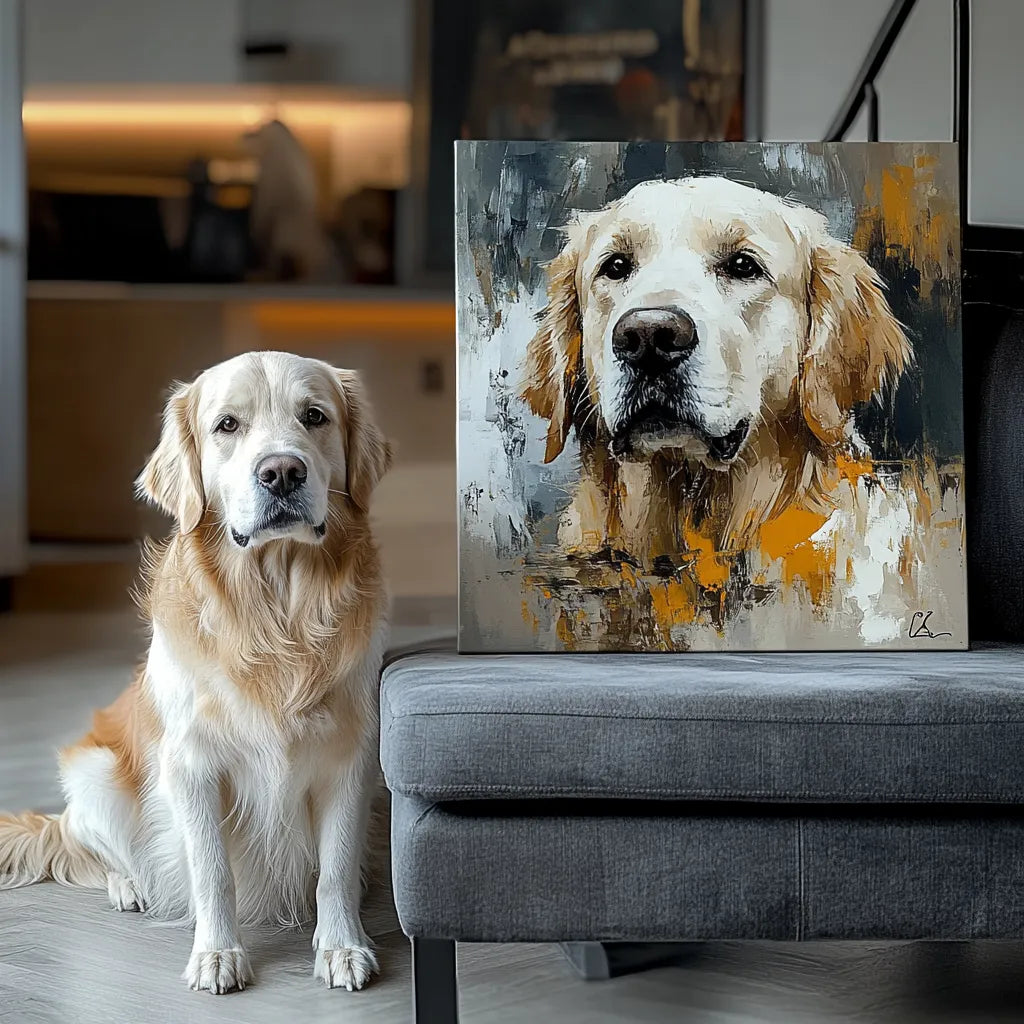
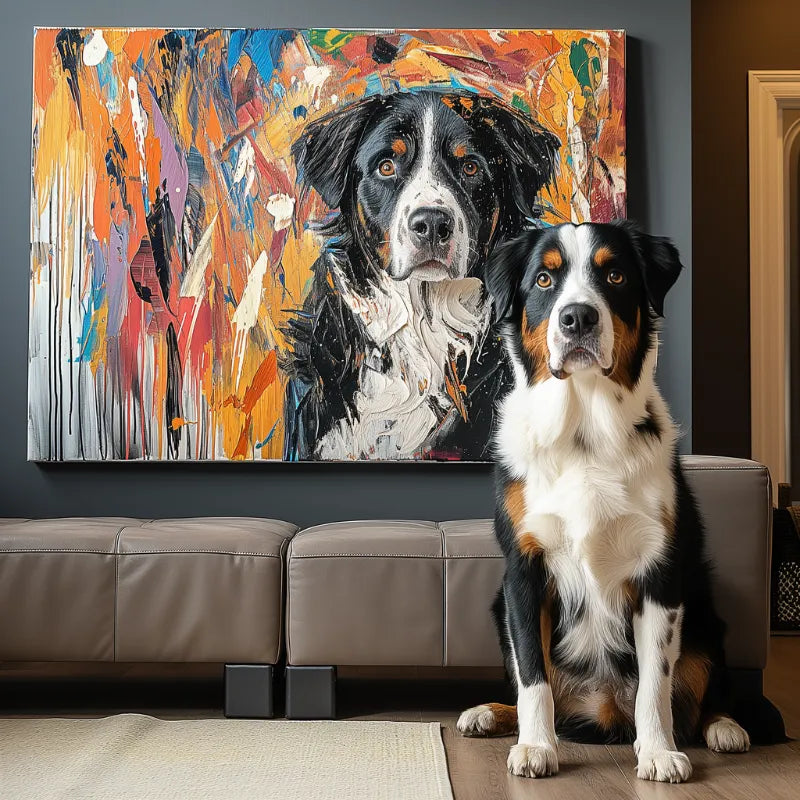
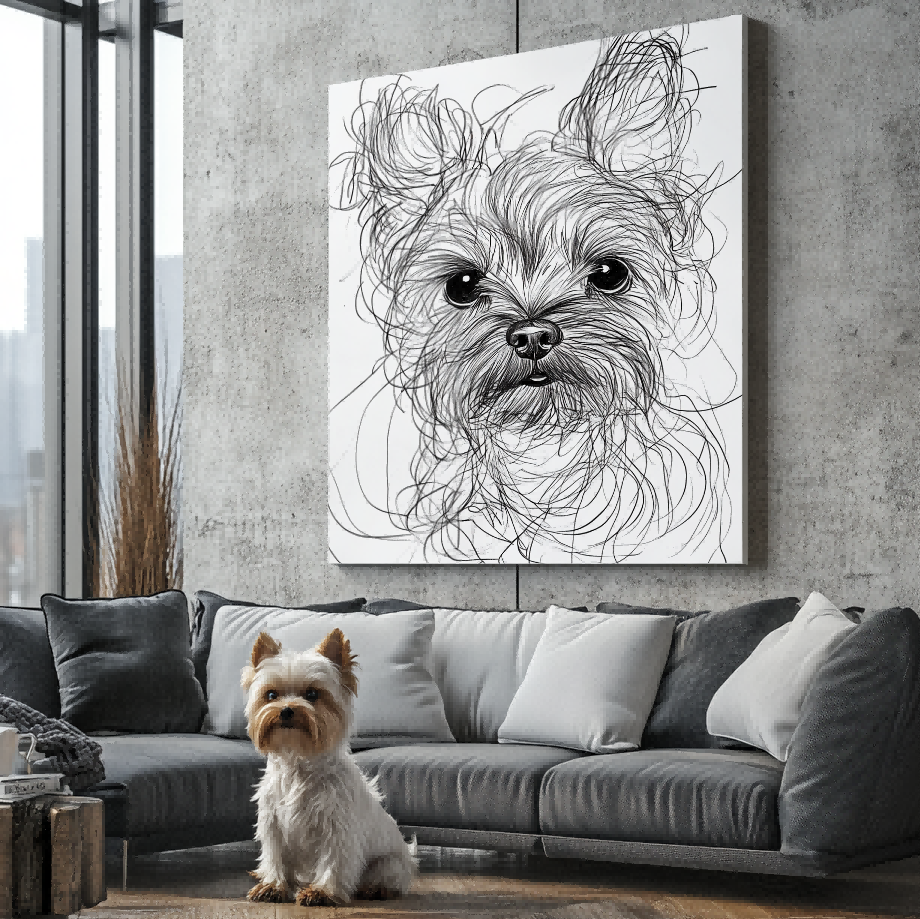
Custom pet portrait styles are different visual ways to interpret the same pet photo. Watercolor can feel soft and expressive, Line Art focuses on shape, Abstract uses bolder interpretation, Modern keeps the composition clean, and Neo Pop leans into bright graphic energy. Style is an artwork attribute—not a separate Collection—and it is different from the final print finish.
This guide explains what each direction can look and feel like. It does not decide which style matches a particular room; that separate decision belongs to the existing home-fit guide.
Style changes the artwork; finish changes how it is produced
Palette Tales creates custom pet portraits from customer photos. The chosen style guides the visual treatment of the pet, while the finish determines how the approved artwork is produced.
A Standard Print and a Texture Art upgrade can use the same approved artwork. Texture Art is an optional premium finish with a raised, handcrafted 3D effect. It is not a portrait style, a separate Collection, or the primary product entity.
For the separate finish decision, use the Texture Art and Standard Print comparison. Finish education should not replace the style comparison on this page.

Watercolor: soft transitions and a painterly feel
Watercolor-style artwork usually emphasizes flowing color, softer edges, and a less rigid finish around fine details. The effect can feel gentle, expressive, and slightly airy without removing the pet’s recognizable features.
This direction may suit a calm expression, soft fur, or a photo where the face is clear but the customer prefers a painterly interpretation instead of strong graphic outlines. The visual feeling is relaxed rather than highly structured.
Line Art: shape, outline, and visual simplicity
Line Art reduces the portrait to clear contours and selected details. Instead of relying on many color transitions, it uses the pet’s silhouette, facial shape, ears, markings, and expression to carry the image.
It may work well when the source photo has a distinctive profile or easily recognized features. The result feels clean and graphic, with more open space than a densely rendered portrait.
Abstract: expressive shapes and interpretive color
Abstract treatment gives the artist more freedom to interpret the pet through color blocks, simplified shapes, and selective detail. Recognition still matters, but the artwork does not need to imitate every part of the original photo literally.
This direction can suit an energetic pose, a playful expression, or a customer who wants the portrait to feel more like an artistic statement. The display feeling is expressive and less traditional.
Modern: clear composition with controlled detail
A Modern approach usually favors an uncluttered composition, intentional contrast, and a balanced amount of detail. It can retain realistic features while simplifying elements that would otherwise compete with the pet.
It may suit a sharp source photo and a customer who wants the pet to remain immediately recognizable without a heavily decorative treatment. The overall feeling is polished and contemporary.
Neo Pop: bright color and playful graphic energy
Neo Pop uses stronger color relationships, sharper graphic contrast, and a more playful interpretation. The pet remains the subject, but the palette and visual rhythm can make the artwork feel more energetic.
This direction may suit an expressive face, a lively personality, or a customer who enjoys bold color. The display feeling is vivid and attention-grabbing rather than quiet or restrained.
A quick comparison of the five style directions
Watercolor
Visual character: Soft transitions and painterly color.
Overall feeling: Gentle and expressive.
Line Art
Visual character: Clear outlines and selected detail.
Overall feeling: Clean and graphic.
Abstract
Visual character: Interpretive shapes and color.
Overall feeling: Bold and artistic.
Modern
Visual character: Controlled detail and balanced contrast.
Overall feeling: Polished and contemporary.
Neo Pop
Visual character: Bright color and graphic energy.
Overall feeling: Playful and vivid.

What the source photo contributes
A style cannot recover important information that is missing from the source photo. A clear view of the face, recognizable markings, and enough detail around the eyes, ears, and fur give the artwork a stronger foundation.
The photo does not need to look professionally staged. What matters is whether the pet is visible enough for the selected treatment. Line Art relies heavily on recognizable shape; Watercolor benefits from readable facial detail; bolder Abstract or Neo Pop interpretations still need a clear subject.
The custom pet portrait photo checklist explains the practical photo details that support each artwork direction.
Use the artwork preview to refine the direction
The preview is where a style label becomes a specific portrait of your pet. Palette Tales provides a Free Preview Before Printing, and the preview process supports edits and review before production.
For verified artwork-stage examples, view the Customer Preview Gallery. These examples build trust in the artwork process; they are not presented as proof of a particular physical product.
If the first version feels too soft, too graphic, too bright, or not expressive enough, the feedback can focus on visible changes rather than broad labels. For example: ask for stronger facial detail, less background color, cleaner outlines, or a calmer palette.
For the broader order and review sequence, read what to expect before ordering a custom pet portrait from a photo.
If you are not satisfied with the artwork preview, you may request a refund before approving it—or before the 48-hour review window expires and the order enters production. This is a preview-stage option and does not mean the preview is provided before payment.
Keep style education separate from room matching
This article explains what Watercolor, Line Art, Abstract, Modern, and Neo Pop mean as visual directions. If your question is instead about scale, wall color, viewing distance, or how a portrait fits a particular room, use the separate guide to choose a pet portrait style that fits your home.
From style comparison to a custom portrait
Once you understand the visual differences, the next step is to start with your pet photo and use the preview to refine the artwork. You can explore custom pet portraits from photos after comparing the style directions above.
Questions about custom pet portrait styles
Are Watercolor, Line Art, Abstract, Modern, and Neo Pop separate Collections?
No. They are style attributes used within the existing product architecture. Palette Tales does not create separate Watercolor, Line Art, or Abstract Collection URLs.
Is Texture Art a portrait style?
No. Texture Art is an optional premium finish upgrade for a Custom Pet Portrait. Style describes the visual treatment; Texture Art describes a raised, handcrafted 3D finish applied after the artwork is approved.
Can I request changes after seeing the artwork preview?
Yes. The preview process supports edits and review before production. Specific feedback about color, outline strength, facial detail, and background treatment is more useful than choosing a style name alone.
What if I am not satisfied with the preview?
You may request a refund before approving the preview or before the 48-hour review window expires and the order enters production. After the review window, an unanswered preview is treated as approved and moves into production.