

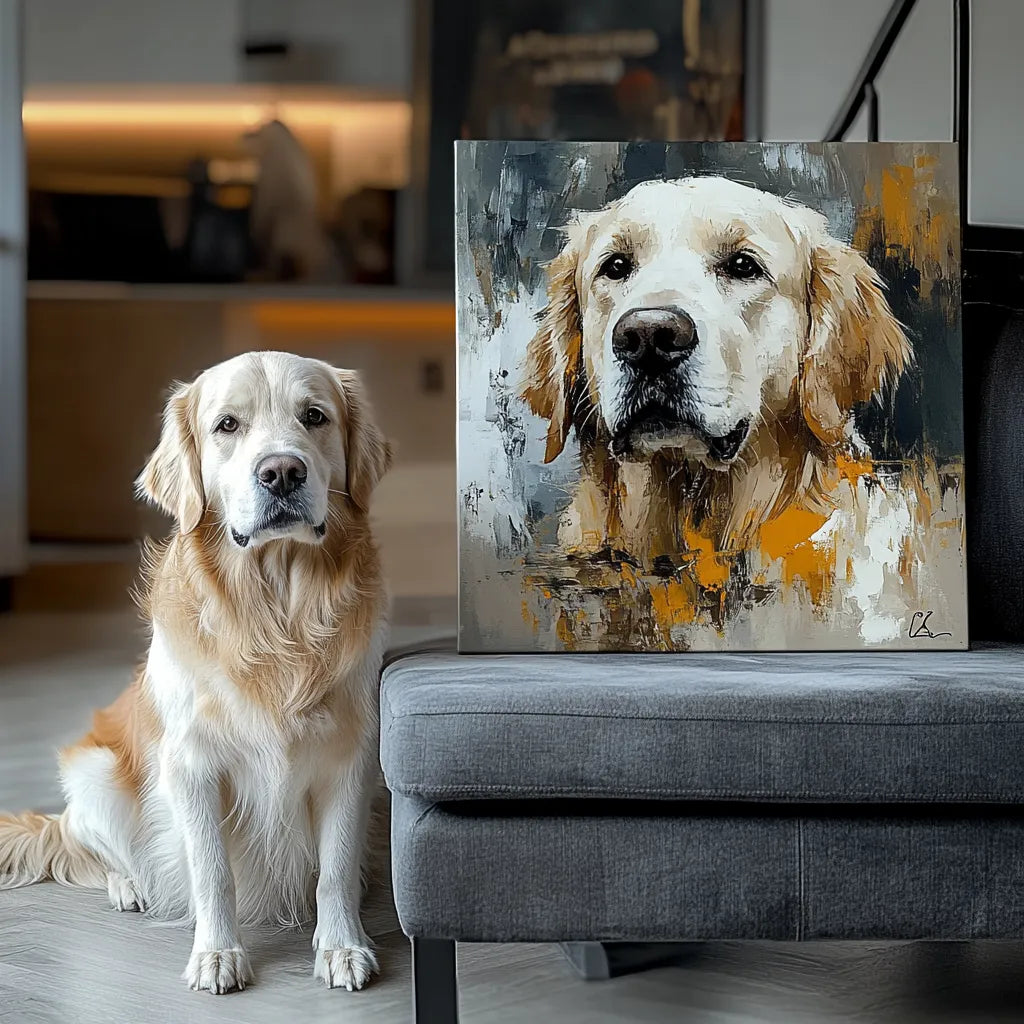
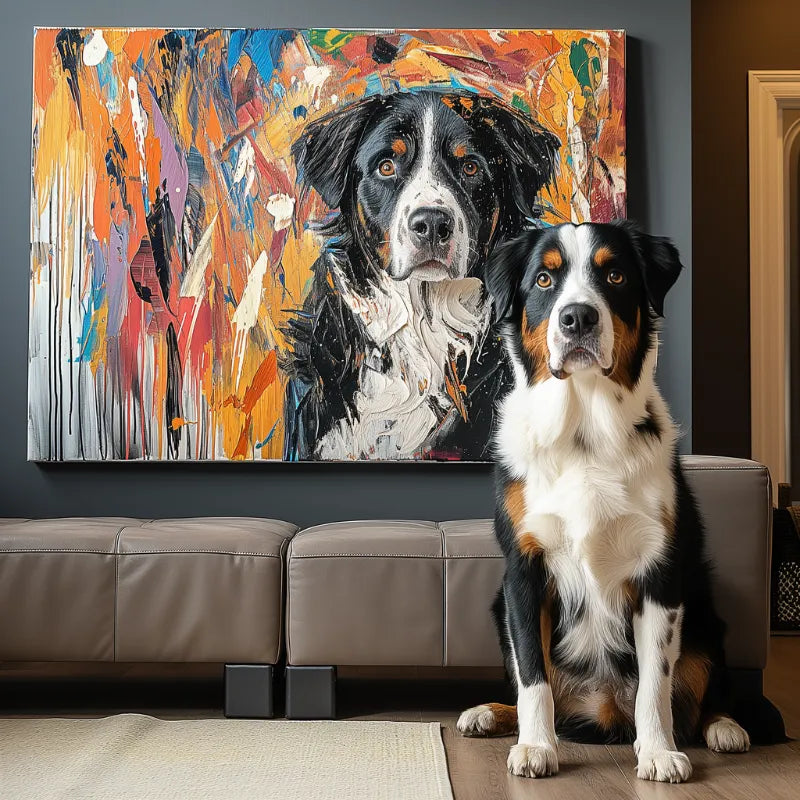

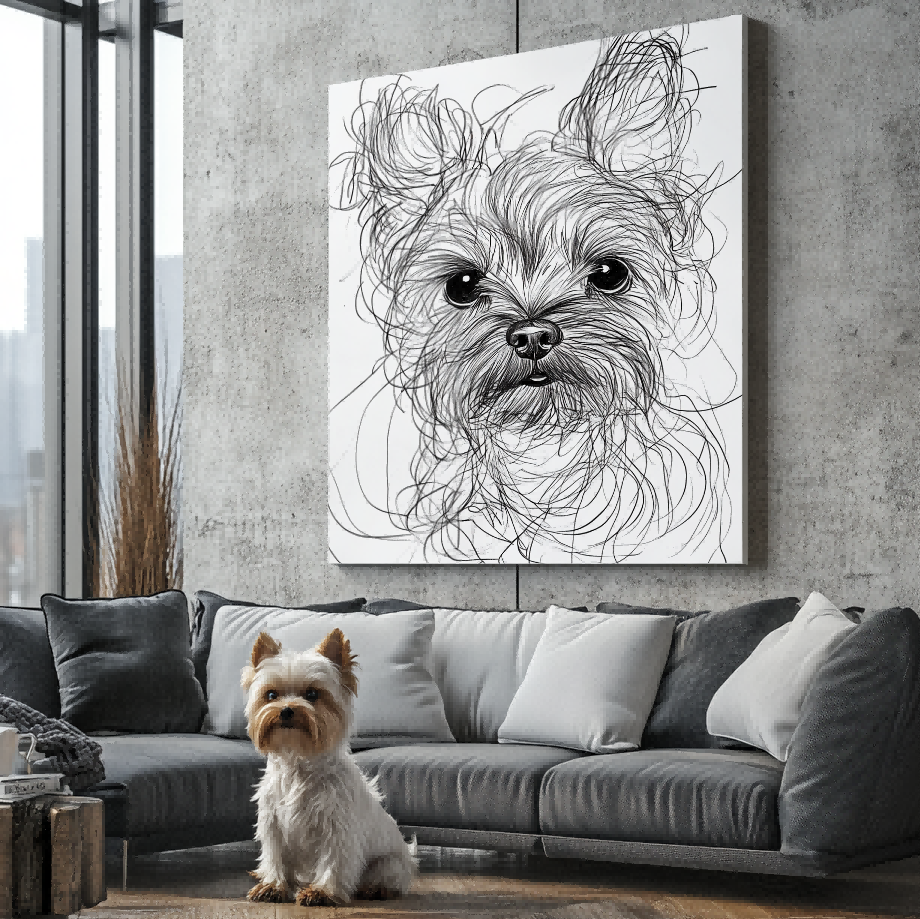

A pet portrait canvas and a personalized tote can begin with the same emotional idea—keeping a favorite pet visible—but they serve different parts of daily life. A canvas becomes a fixed visual presence in a room. A tote moves through errands, work, and travel. The better choice depends less on which product feels more “special” and more on where the recipient will actually enjoy it.
This comparison uses verified Palette Tales product families without assuming a specific size, price, material, stock level, or delivery promise. Check each live collection before ordering because current options can change.
Choose canvas when the room is part of the decision
A wall portrait works best when you know the likely display area and viewing distance. It can anchor a small wall, join a gallery arrangement, or become a familiar focal point in a living room or office. The image does not need to compete with objects placed inside a bag, but its proportions must make sense for the wall and surrounding furniture.
Think about whether the portrait will be seen from across the room or at close range. A simple crop and clear expression can stay readable at a distance, while a more detailed scene may invite closer viewing. Use the room-by-room display guide before choosing a size or orientation.

Choose a tote when everyday visibility matters
A tote turns the artwork into something carried rather than displayed in one place. That can suit a pet owner who enjoys practical personalized items or who has limited wall space. The design needs to remain legible while the bag moves, folds, and is viewed from a shorter distance. A clear face or simplified crop may communicate more quickly than a complicated scene.
Confirm the current bag dimensions, orientation, printed sides, care information, and available design options on the live listing. Do not infer those facts from the example below. It proves that a personalized pet artwork can appear on a physical tote; it does not guarantee the same construction or configuration for every current product.

Use the same photo differently for each format
A strong source photo should make the pet recognizable in either product, but the composition may need to change. On a wall canvas, the room and chosen dimensions influence how much negative space feels balanced. On a tote, the artwork must work inside the printable area and remain readable when carried. Keep an uncropped original so the composition is not limited before the format is chosen.
If the photo contains the full body but the face is small, a tighter crop may be more effective on the bag. If the body posture is part of the pet’s personality, a larger wall format may give that pose more room. These are design questions, not promised editing capabilities. Ask the seller what composition is supported by the current product and preview process.
Think about wear, placement, and viewing time
Wall art is usually viewed without being handled, while a tote is exposed to everyday movement and whatever its current care guidance allows. That does not make one format more durable by definition. Materials and construction differ by product, so consult the live specifications rather than applying a general canvas claim to both.
Viewing time also changes the design. Someone may study wall art quietly, but a tote is often noticed in passing. For the portable format, a recognizable silhouette and uncluttered composition can matter more than tiny background detail. For a wall piece, surrounding color, scale, and sightline may carry more weight.
Compare how the gift will be experienced
A canvas is encountered repeatedly in the same environment. It can feel reflective, commemorative, or decorative. A tote is handled and seen in changing places, so it can feel more casual and social. Neither is automatically the better gift. Match the format to the recipient’s habits: do they enjoy decorating their home, or are they more likely to carry a personal accessory?
For a surprise, wall art requires more confidence about space and decor. A tote requires confidence that the recipient uses that type of bag. If either is uncertain, ask a subtle question or give the recipient a role in choosing. The surprise gift guide explains how to gather details without overpromising the result.
Check current facts before the final choice
Compare the live portrait and tote collections on the day you order. Review current price, dimensions, personalization inputs, preview terms, delivery information, and care guidance. Promotional banners and older blog posts are not a substitute for current product facts.
If the choice is for someone else, separate emotional fit from practical fit. The most moving portrait idea can still be inconvenient in the wrong format. A renter with no free wall space may use a tote more often; someone who does not carry totes may value a home display more. A small amount of recipient research usually matters more than adding another decorative option.
Choose the canvas when a lasting room display is the primary goal. Choose the tote when everyday use and portability matter more. If both fit, decide which role should come first rather than assuming one photo composition is ideal for every format. You can explore current portrait formats or compare current pet tote bags before making the final decision.


