

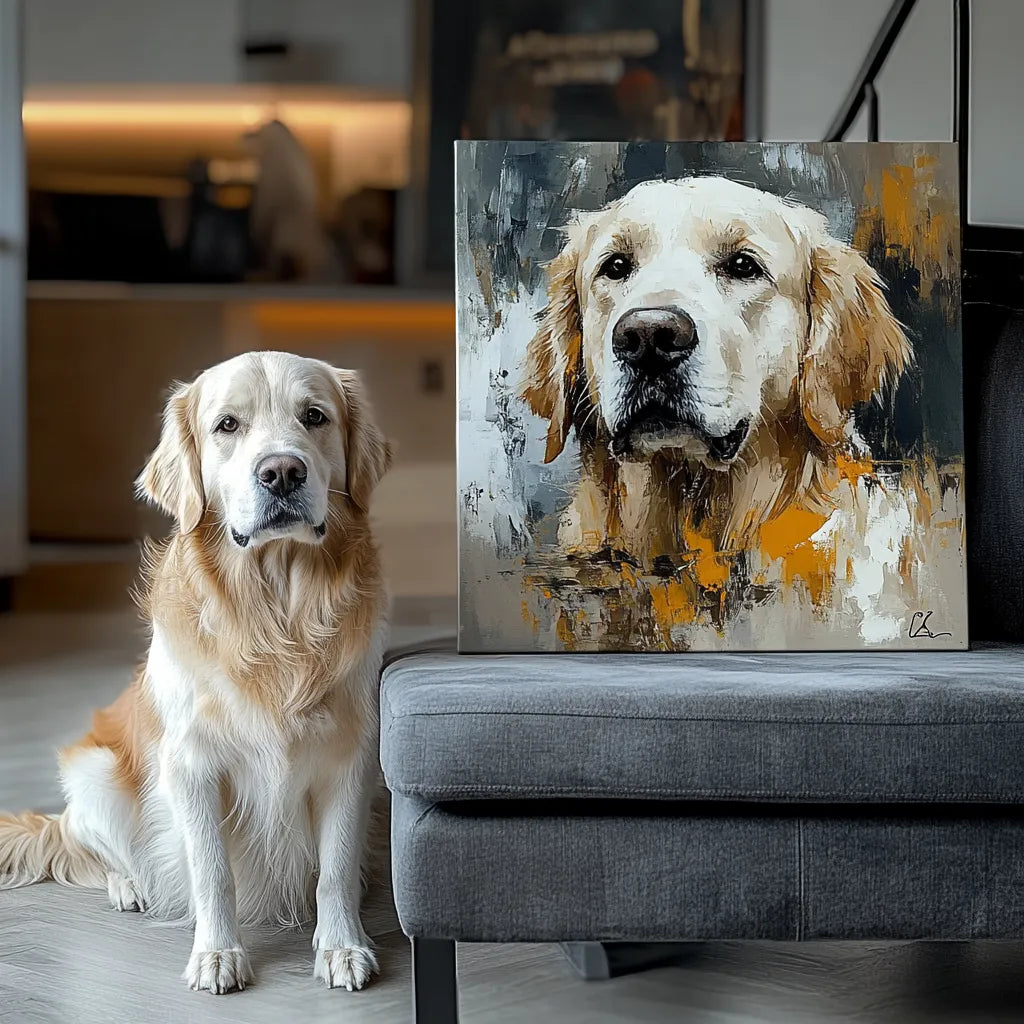
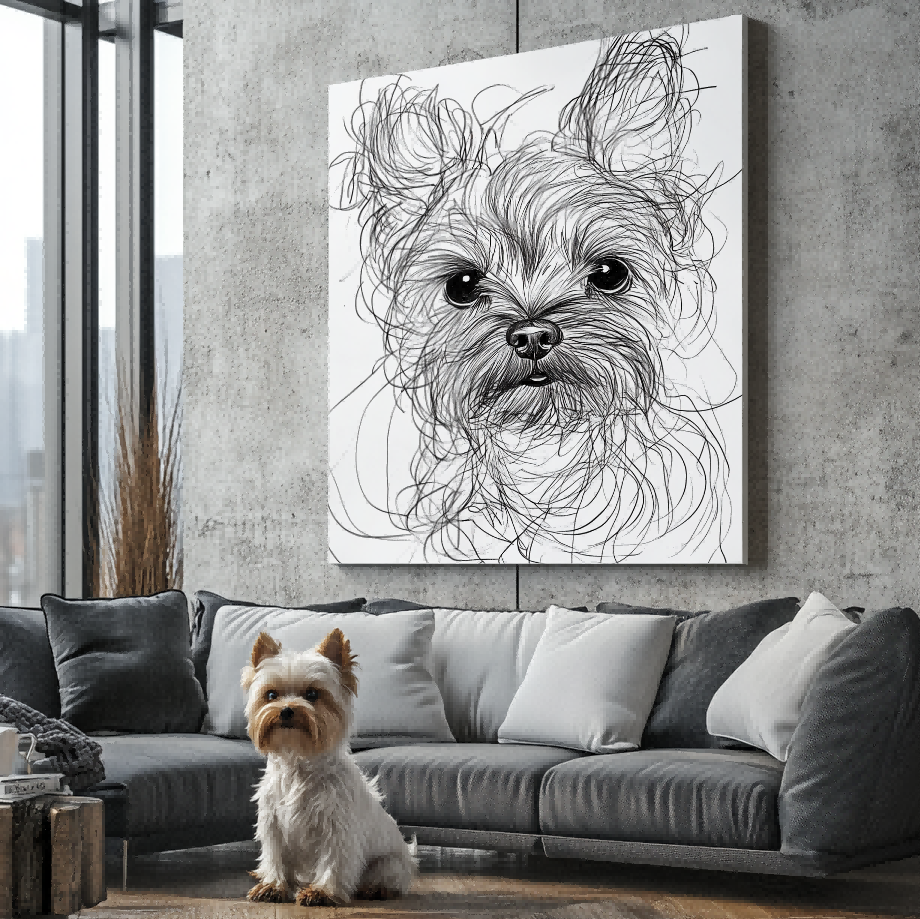
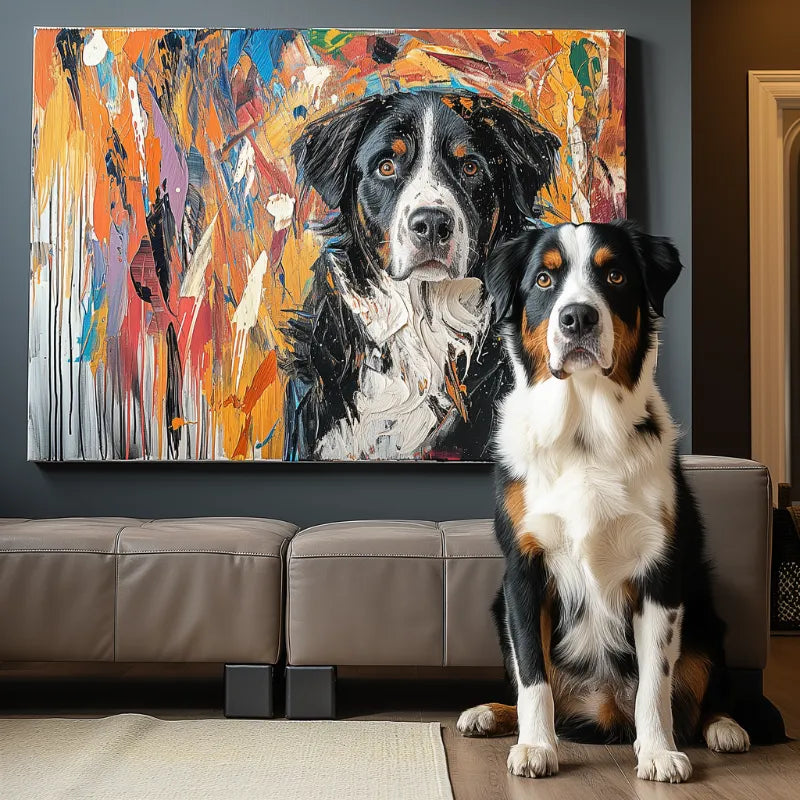


A canvas edge can change how much of your pet stays visible from the front. An image wrap continues the picture around the sides. A mirror wrap reflects image content to create those sides. A solid-color edge uses a separate border color. “Gallery wrap” is sometimes used for the stretched construction and sometimes for an image that continues around it, so the label alone is not enough.
For a pet portrait, the useful question is simple: will the ears, paws, markings, and any name remain where you expect when you look straight at the finished piece? Choose the artwork first, then check the front-facing crop and the sides separately. Available edge treatments vary by seller and product; confirm the current option rather than assuming all three are offered.
The front of the canvas is not the whole printed area
A stretched canvas has a face, sides, and material secured around the support. The image you see in a flat preview may not show where those transitions fall. A favorite photograph can look comfortably framed on screen while an ear sits close to the point where the physical canvas turns away from you.

Ask which part of the preview represents the visible front and which part, if any, becomes the sides. Do not subtract a guessed number of inches from the artwork: canvas depth and the seller’s template determine the required allowance. If the listing gives only a finished width and height, ask how the front area is shown before approving the layout.
Compare what each edge treatment actually does
Image wrap: the composition continues around the side. It can work naturally when background surrounds the pet. The trade-off is that whatever falls beyond the front boundary is seen mainly from an angle. A patch of sky is different from the tip of an ear: decide which details can leave the front without changing the portrait’s meaning.
Mirror wrap: edge content is reflected outward. That can preserve more of the original composition on the face, but it is worth checking the repeated area. A repeated background may be unobtrusive; part of a paw, a letter, or a sharp stripe can look surprising when reflected. “Keeps the image on the front” is not the same as “every mirrored edge looks natural.”
Solid-color edge: a separate color surrounds the face. This avoids reflecting recognizable details, but introduces another visual choice. Check whether the border is confined to the sides or also appears on the front. White, black, and a sampled artwork color can read differently beside the same wall.
These are general print terms, not a list of guaranteed Palette Tales options. When comparing listings, use the seller’s actual preview and description. A product called gallery-wrapped may still require a separate question about how its edges are filled.
For two pets, check both outer boundaries

With one centered face, the important details may sit well away from the edges. With two pets side by side, each pet can approach a different outer boundary. Check the left pet’s outside ear and the right pet’s outside ear independently. Then check the bottom: a lower crop can affect a collar, chest marking, or paw even when both faces fit.
Keep this separate from the broader portrait size decision. A larger piece is not automatically a better crop. The artwork arrangement and the visible front area still need to be checked together.
An outer frame does not fix the wrong front crop
A decorative frame surrounds the finished piece. It does not move a detail from the side back onto the face. Some frames reveal more of the canvas edge than others, so decide whether the sides will be visible before treating their appearance as unimportant.
If a framer mentions a floating presentation, the floater-frame explanation covers that separate construction. The edge-treatment decision comes first: what is on the side, and do you want to see it?
Four checks before approving the portrait
- Identify the exact front-face boundary, not just the outside of a flat image.
- Keep essential features and lettering within that boundary.
- Inspect mirrored or repeated areas rather than assuming they are invisible.
- Confirm the edge treatment for the specific size and format being ordered.
The Customer Preview checklist helps with likeness and composition. A preview is artwork-stage evidence; the product listing or a physical side view answers the construction question. Use both when it matters to your display.
When you explore Custom Pet Portraits, look for the expression and style that feel like your pet. Then confirm how that artwork meets the edges of the selected physical format. That small check helps keep a framing term from becoming an unexpected crop.


