

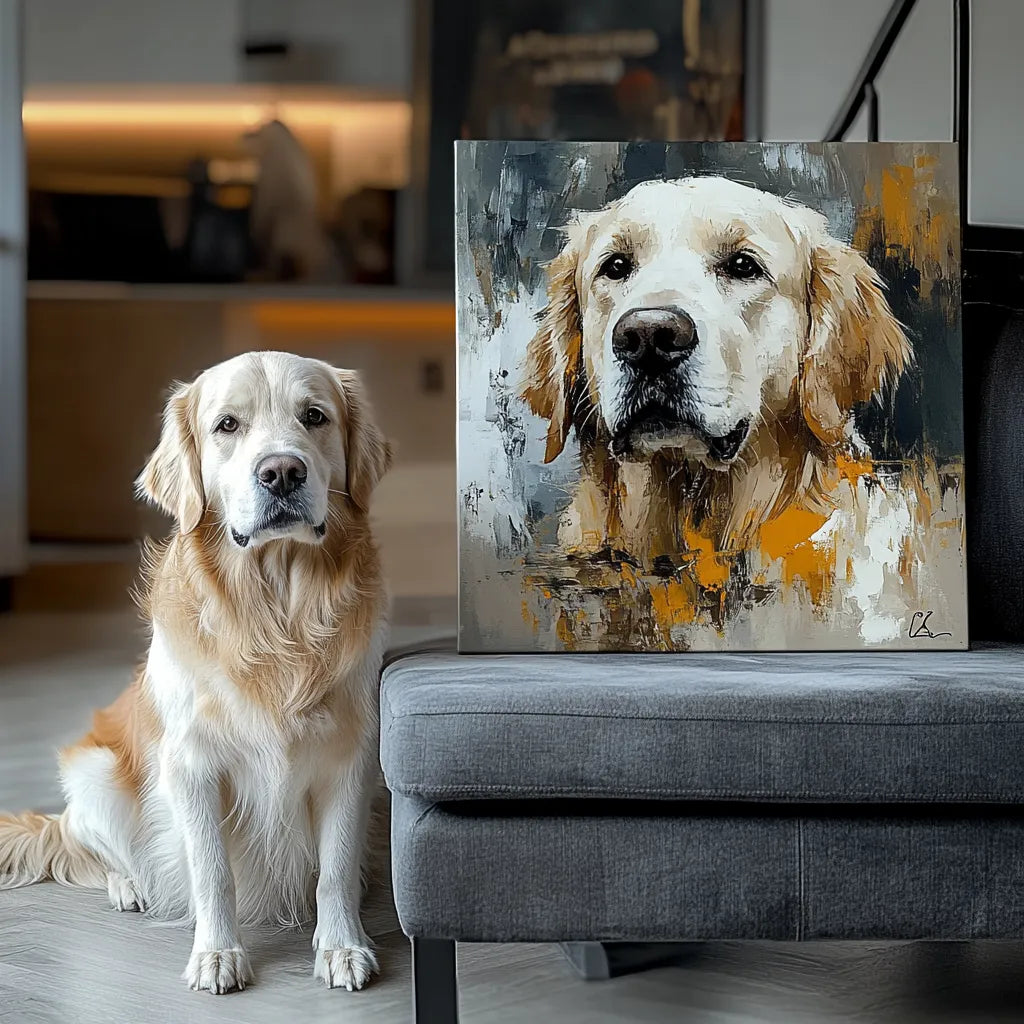
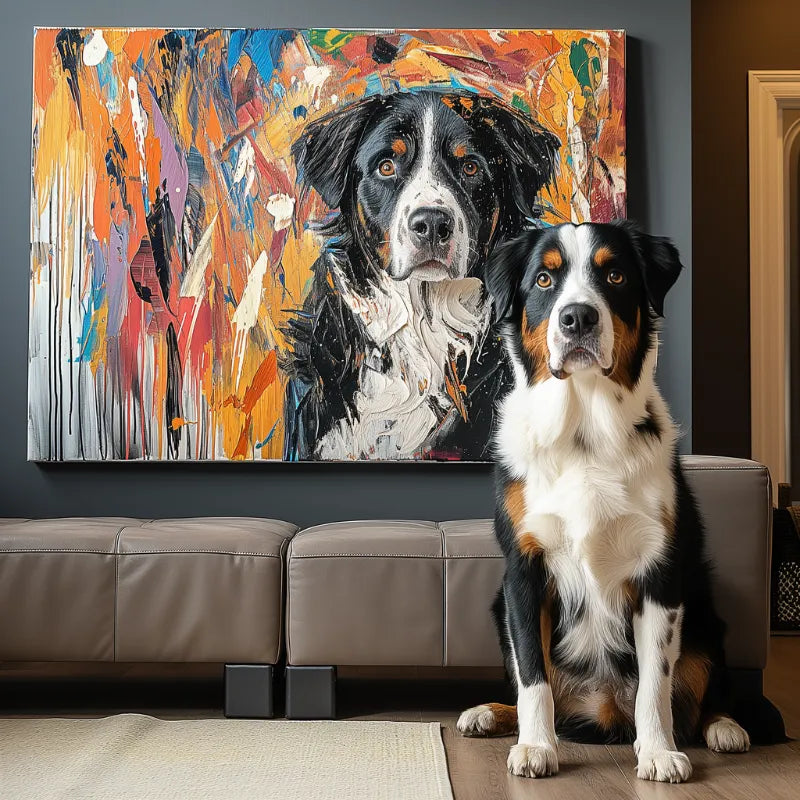

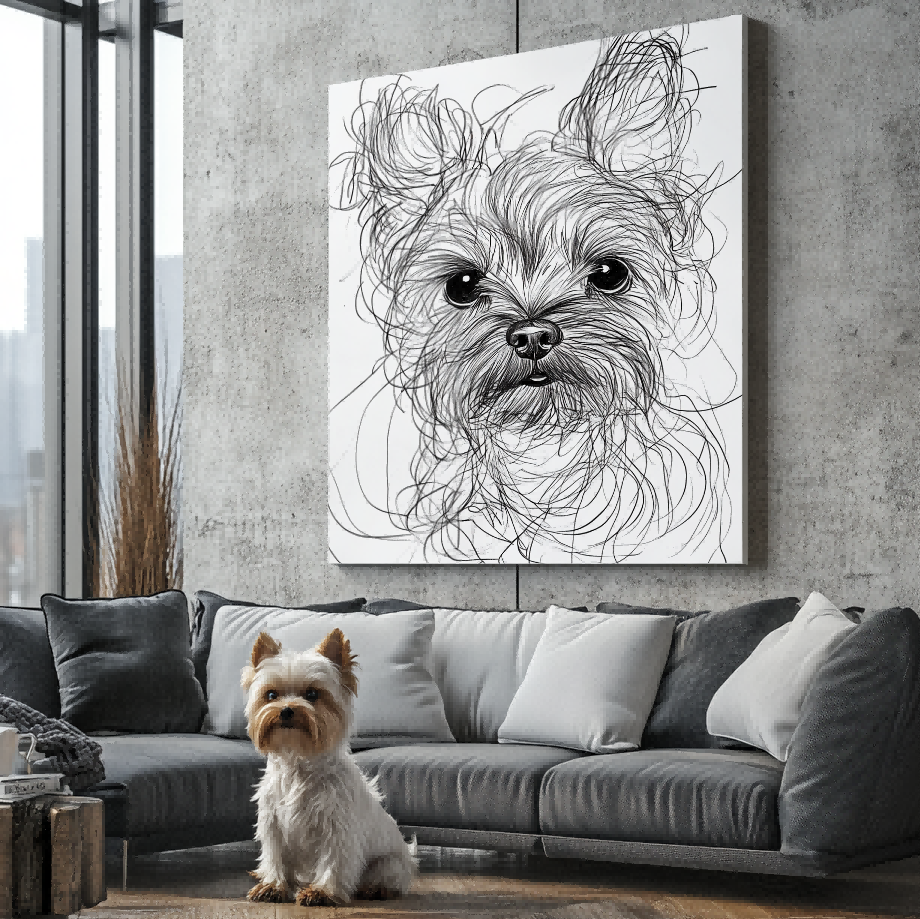

An AI pet portrait and a custom portrait service are not automatically opposites. A seller may use digital tools, manual editing, traditional media, automation, or a combination. The useful buying question is not simply “Was AI involved?” It is whether the seller clearly explains how your pet’s photo becomes the image you approve, what can be reviewed, and what physical or digital item you will receive.
This guide does not label Palette Tales—or any other seller—as AI-made, made with physical paint, or artist-drawn without verified process evidence. Instead, it gives you a practical checklist for comparing the offer in front of you.
Start with the source of the likeness
Ask whether the artwork is created from your specific pet photo or from a breed description and general prompt. A personalized result should give you a way to recognize the features that make the animal individual: markings, ear shape, eye area, muzzle proportions, coat pattern, and expression. A style label cannot replace that evidence.
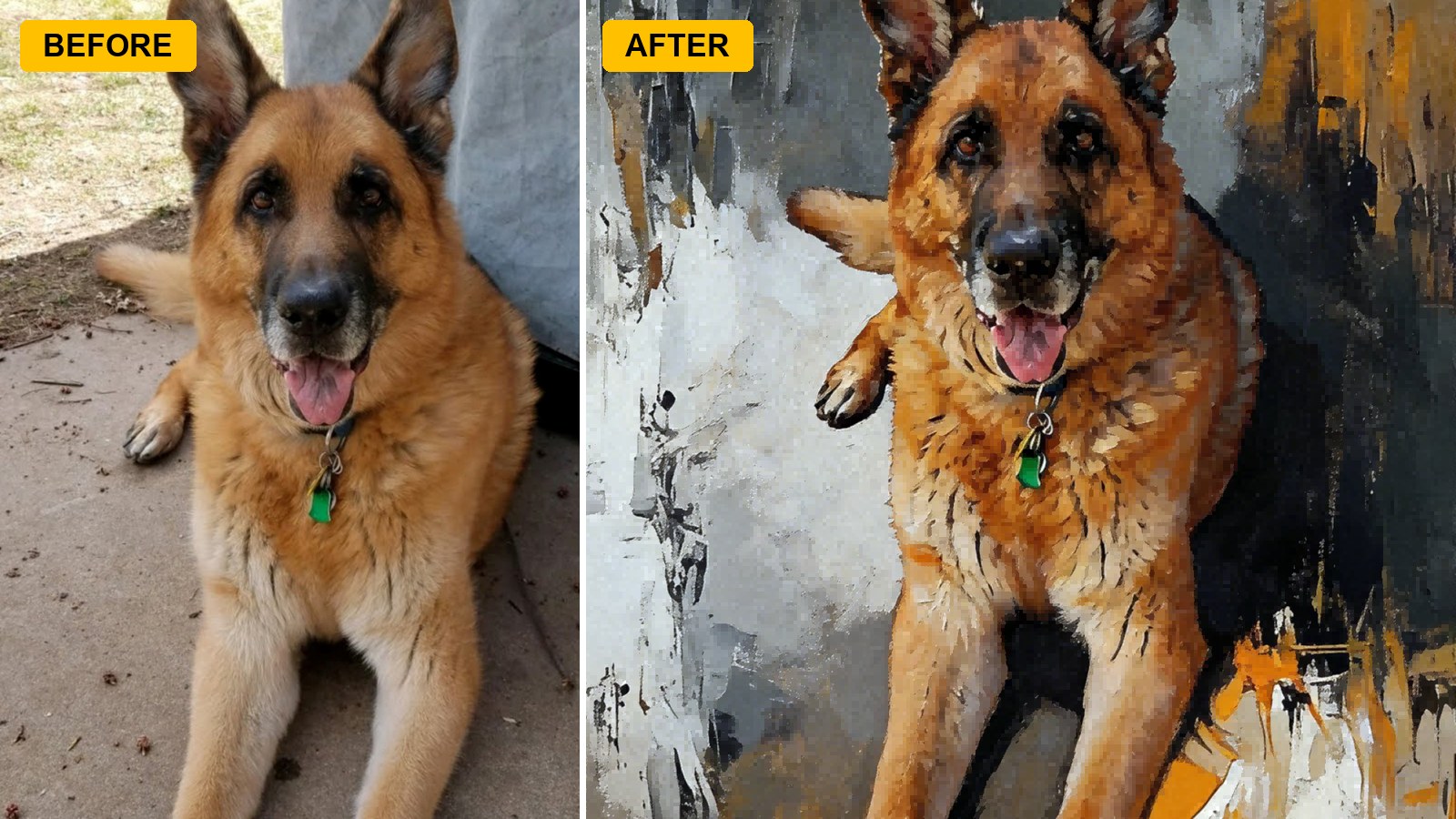
If a listing says “custom,” look for a real example that connects a source photo to a preview or finished artwork. The comparison below is useful because it lets a buyer examine the relationship between the original dog and the proposed portrait. It does not, by itself, prove which software, tools, or production method were used.
Ask what you can review before fulfillment
A preview can reduce uncertainty, but only when its purpose is clear. Find out whether it shows your own pet, whether it represents composition and style, and what happens if a recognizable detail is wrong. Do not assume that the word “preview” means unlimited changes, exact color matching, or approval before every seller begins production. Read the current terms for the specific service.
The customer preview checklist explains how to check identity, crop, markings, background, and text. Those checks matter whether a portrait is made with brushes, a tablet, software-assisted tools, or several methods combined.
Separate the artwork method from the output format
“AI portrait,” “digital painting,” “illustration,” and “made with physical paint” describe different ideas, but none tells you automatically what arrives. The purchase may be a digital file, a print, a framed item, or artwork applied to another format. Confirm the live product description, dimensions, included components, and delivery terms. Never infer a physical canvas simply because a screen mockup looks framed.
If the medium itself matters to you, ask direct questions: Is the delivered piece an original made with physical paint, a reproduction of digital artwork, or another format? Is the named artist identifiable? Can the seller show process evidence relevant to that claim? Clear answers are more useful than broad words such as “premium,” “handcrafted,” or “studio quality.”
Compare revision control, not speed claims
Fast generation can be convenient, while a longer commission may allow more discussion. Neither timing alone proves quality. Compare what can be corrected, when requests must be submitted, whether changes affect the price, and what happens after approval. Use the seller’s current policy instead of relying on an old review, a banner, or a general industry estimate.
The service comparison guide can help you record those answers consistently across sellers instead of changing criteria from one listing to the next.
Also ask what happens when the source photo is weak. A transparent service should explain the limits of blur, hidden features, harsh shadows, or extreme crops rather than promising that every image can be repaired. The pet portrait photo checklist helps you evaluate that input first.
Use real examples to judge consistency
One polished hero image may be an exception. Look for several examples that show different pets, coat colors, and styles. Check whether distinctive features stay recognizable and whether the examples clearly distinguish previews, digital mockups, and physical products. Consistency across varied cases is stronger evidence than a single dramatic transformation.
Read example captions carefully. A picture described as a preview may not be a photograph of the delivered object, while a lifestyle photograph may not reveal the original source image. The strongest evidence set answers different questions with different visuals: one connects the pet photo to the artwork, another shows the physical format, and current written facts explain what the order includes. Do not let one attractive image silently stand in for all three.

A practical decision rule
Choose the offer that is most transparent about five things: the source image, the review point, the allowed corrections, the delivered format, and the seller’s current terms. If “human-made” or “no AI” is personally important, request explicit evidence before ordering. If convenience and visual experimentation matter more, still verify likeness, rights, privacy, and the final output.
Privacy deserves its own question. Check how an uploaded pet photo is stored or reused and whether the seller explains public-example consent. A custom result does not automatically grant permission to publish a customer image, and a buyer should not infer data handling from the artistic style. Use the current privacy and order terms for the service you choose.
You do not need to decide from a label alone. Compare the process you can verify and the result you can review. When you are ready to examine current formats and real visual examples, explore custom pet portraits and confirm the live product facts before placing an order.


