

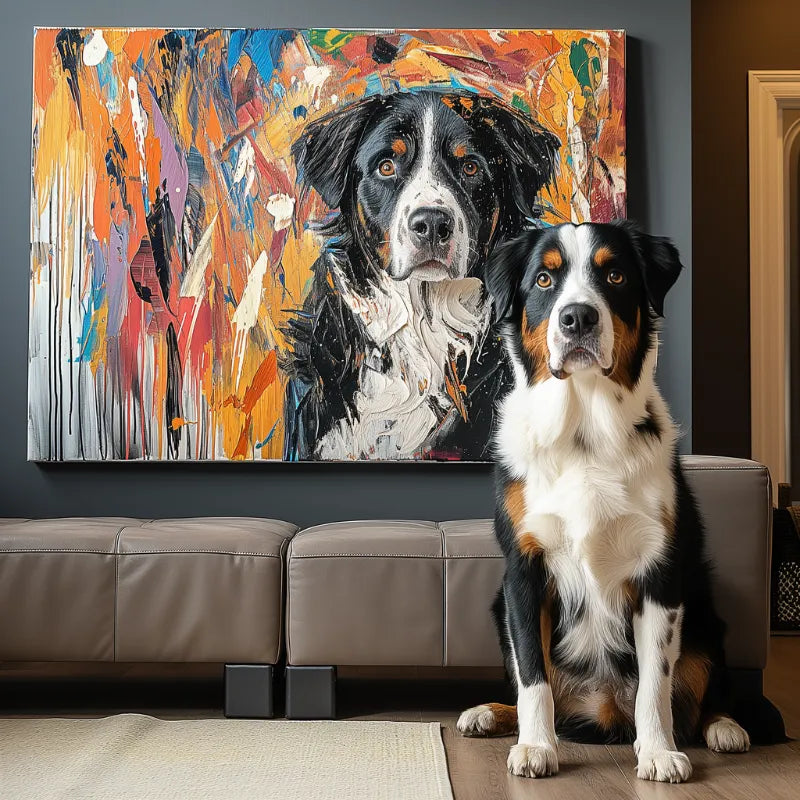


Direct answer: To photograph a black dog for a custom pet portrait, use even light that lets you see the eyes, muzzle, ear edges, and coat shape without turning the dog into a dark silhouette. The goal is not a dramatic photo. It is a reference image where the features that make your dog recognizable are genuinely visible.
Start with the best-photo checklist for a custom pet portrait. This guide is narrower: it focuses on the extra visibility questions that often matter when a dark coat absorbs detail in the original image.
Put the light in front of the dog, not behind it
Backlight can be beautiful in a casual photograph, but it often leaves the face too dark to evaluate. Try a window, an open doorway, or outdoor shade that lights the front and side of the face. Avoid relying on a bright window behind the dog, a strong overhead lamp, or a flash that changes the appearance of the eyes and coat.
After taking the photo, zoom in. Can you still separate the eye area from the surrounding coat? Can you see the line of the muzzle and the edge of each ear? If those details disappear at normal viewing size, take a second photo before choosing the reference.
Keep the eyes and expression easy to read
A black dog does not need a perfectly posed expression, but the face should be readable. Ask someone who knows the dog to identify the familiar features: the eye shape, a white patch, the curve of the ears, or a small change in the muzzle. A photo can be meaningful and still be a weak visual reference if the face is heavily shadowed or blurred.
If a favorite photograph has strong emotion but weak visibility, keep it as part of the story and compare it with a clearer second reference. The separate-photo guidance explains why each added image should clarify a real feature rather than create a competing composition.
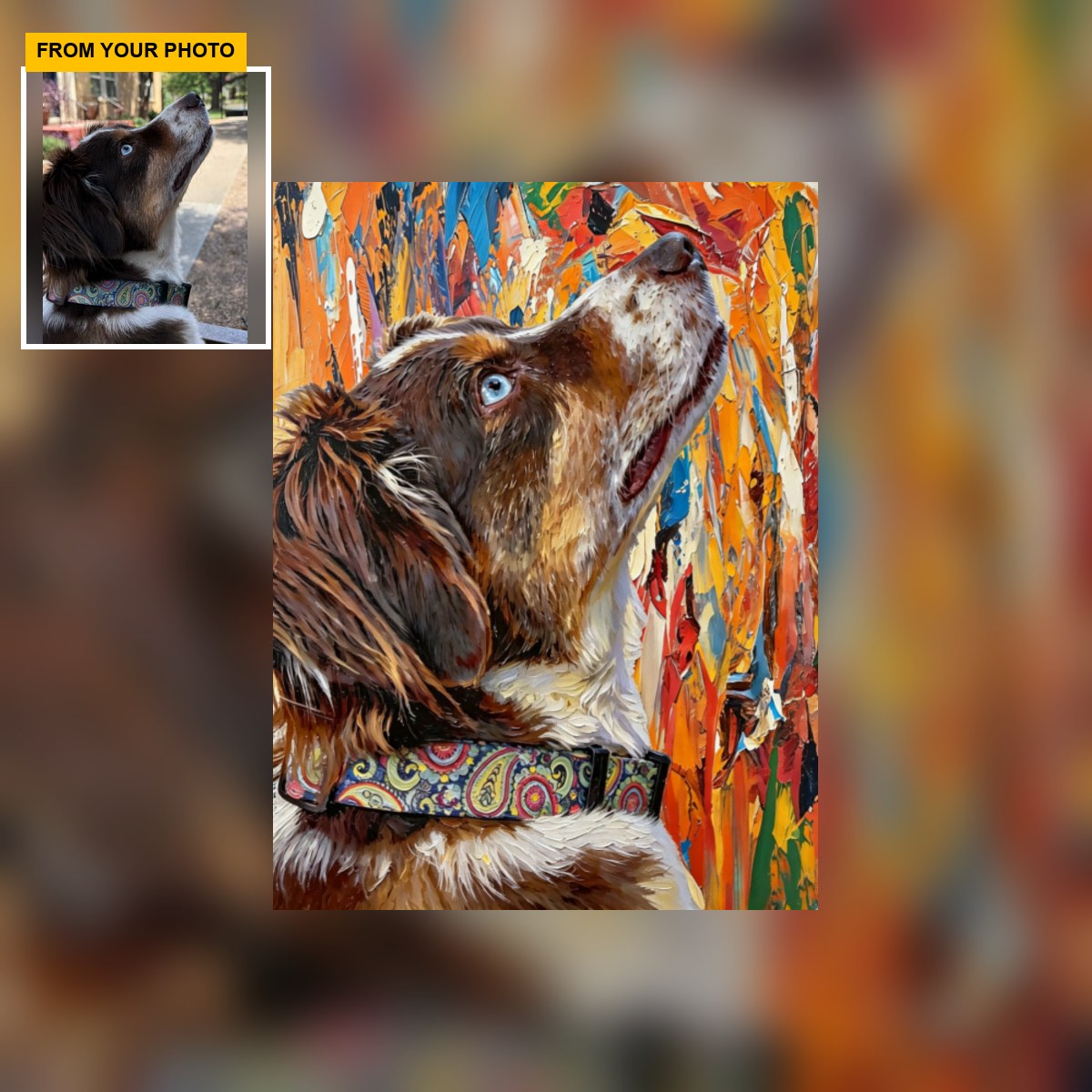
Use contrast carefully instead of editing the dog into a different color
Light editing that makes the original easier to view can help you compare photos, but avoid filters that change coat color, eye color, or the overall mood. It is better to take another photo in steadier light than to make one dark image look unnaturally bright. Check whether a collar, blanket, or background is competing with the face before assuming the coat itself is the problem.
If you are choosing a visual direction after the photo is clear, use the pet portrait style-for-home guide. It owns style selection; the photo decision should come first.
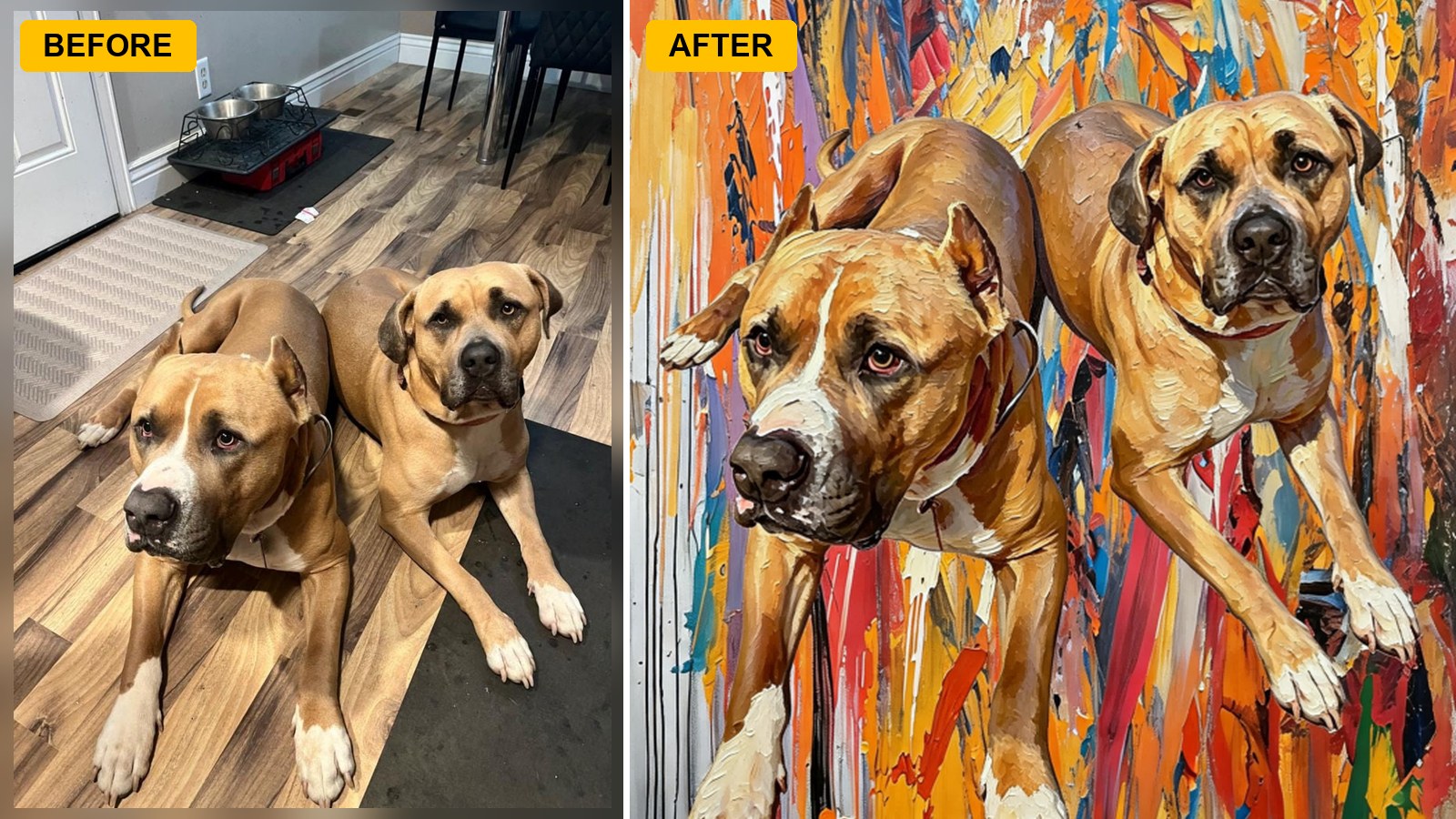
A quick black-dog photo check
- The eyes and muzzle are visible without guessing.
- The ear outline and face shape are not lost in shadow.
- Any distinctive marking is clearly shown in at least one reference.
- The image is sharp enough to inspect at full size.
- A second photo is available if the favorite image is especially dark or cropped.
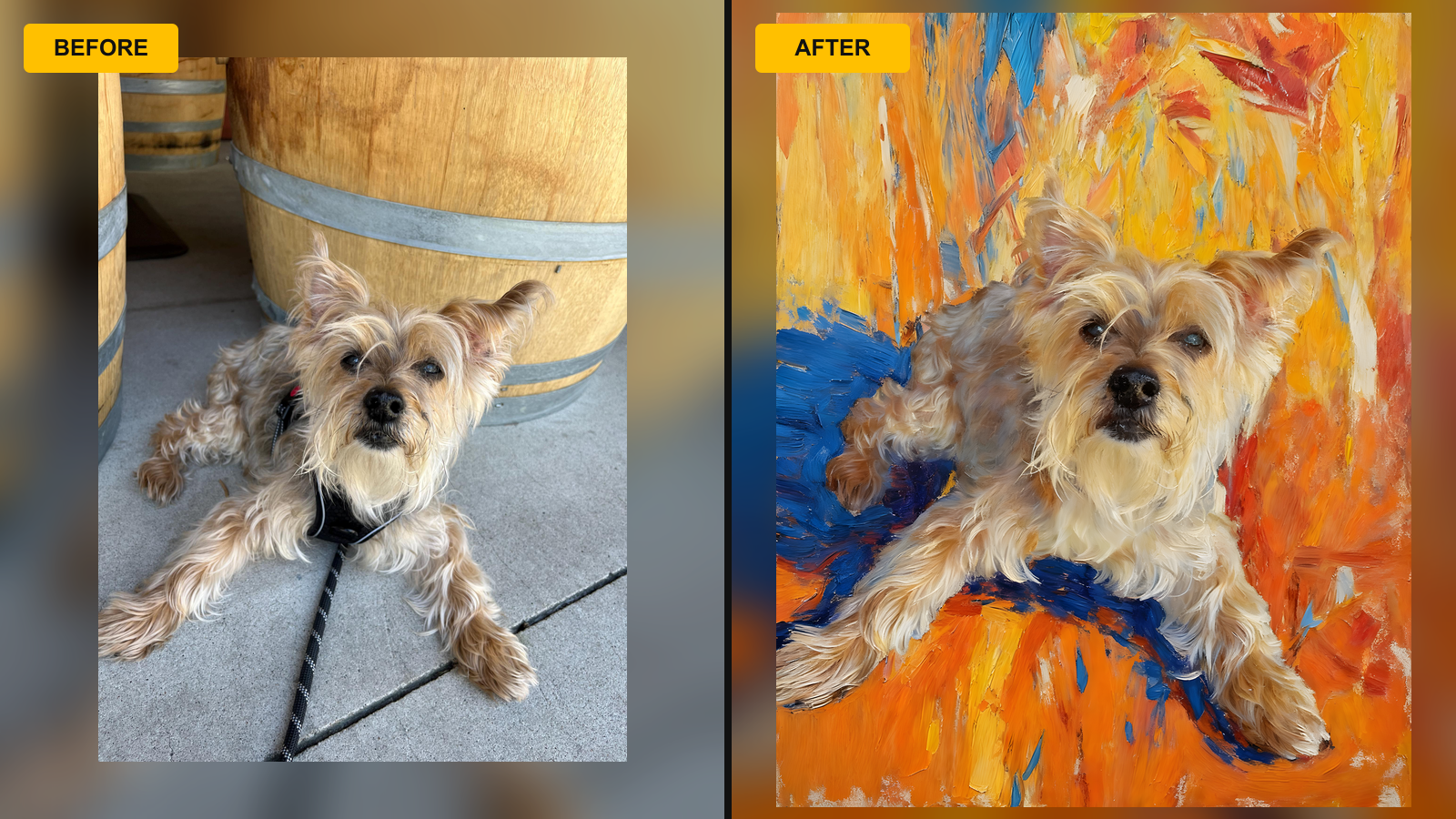
For real artwork-stage examples, visit the Customer Preview Gallery. The gallery is visual reference material; it does not replace the details of an individual order or photo.
After you have the right reference photo
Once the dog’s features are visible and the composition is clear, explore the live custom pet portrait collection. Use current collection and product information for all options and product facts. This guide only helps you evaluate a photo reference.
Frequently asked questions
Can I use a black-dog photo taken indoors?
Yes, if the face and distinguishing features remain visible at full size. Compare it with a second image if indoor shadow hides important detail.
Should I use a filter to brighten a black dog?
Prefer a new photo in even light when possible. Heavy filters can change visible color and make the reference harder to evaluate honestly.
Does a clear photo guarantee a specific portrait result?
No. A clear photo gives more visible reference information; it does not guarantee a particular artwork or physical-product outcome.
When comparing more than one photo
Place the candidates side by side at the same screen size. Choose the photo that answers the most basic recognition questions without explanation: where the eyes sit, where the face begins and ends, and which markings belong to the dog. A dramatic image can remain a favorite memory while a clearer one becomes the practical reference.
Final takeaway
The most useful black-dog photo is the one that keeps the pet recognizable: even light, readable eyes, a visible muzzle, and enough detail to see what makes the dog unique. Choose clarity over drama, and keep current product questions separate from photo selection.


