

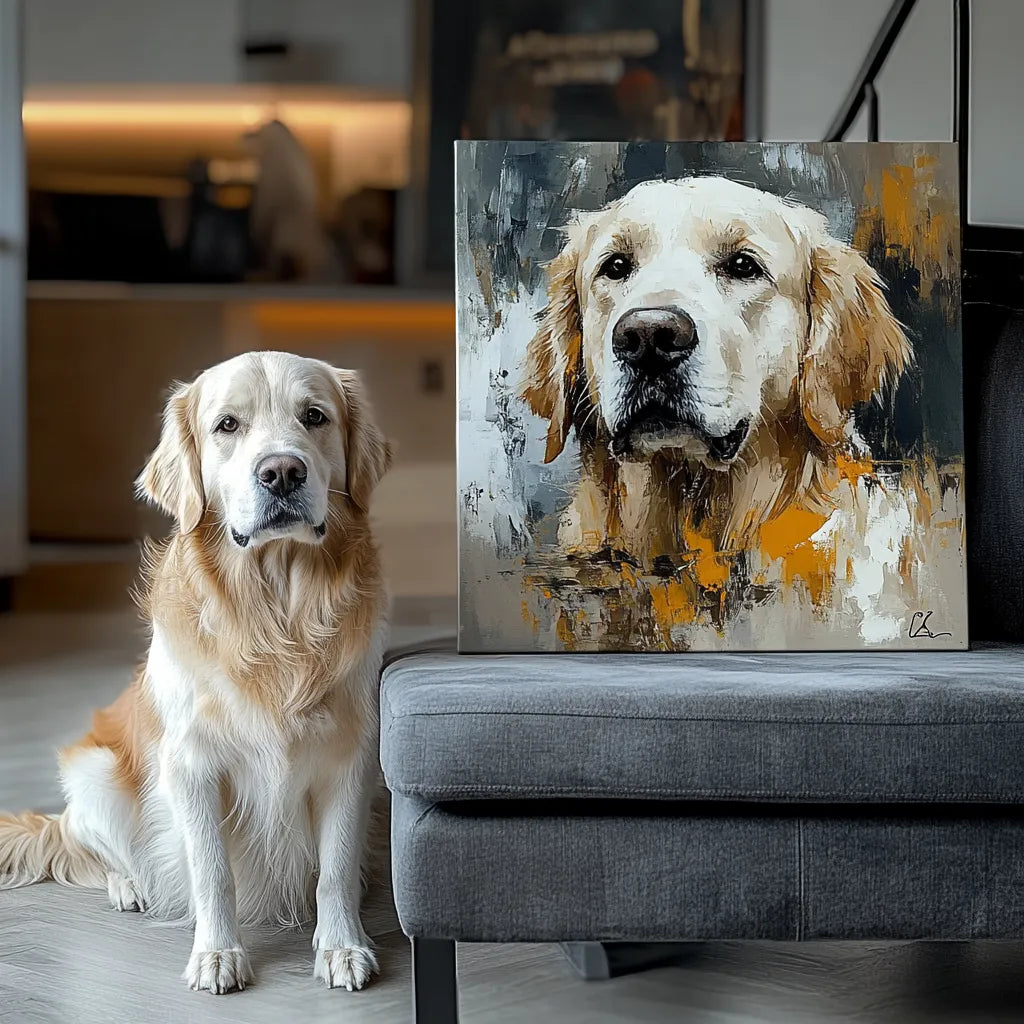
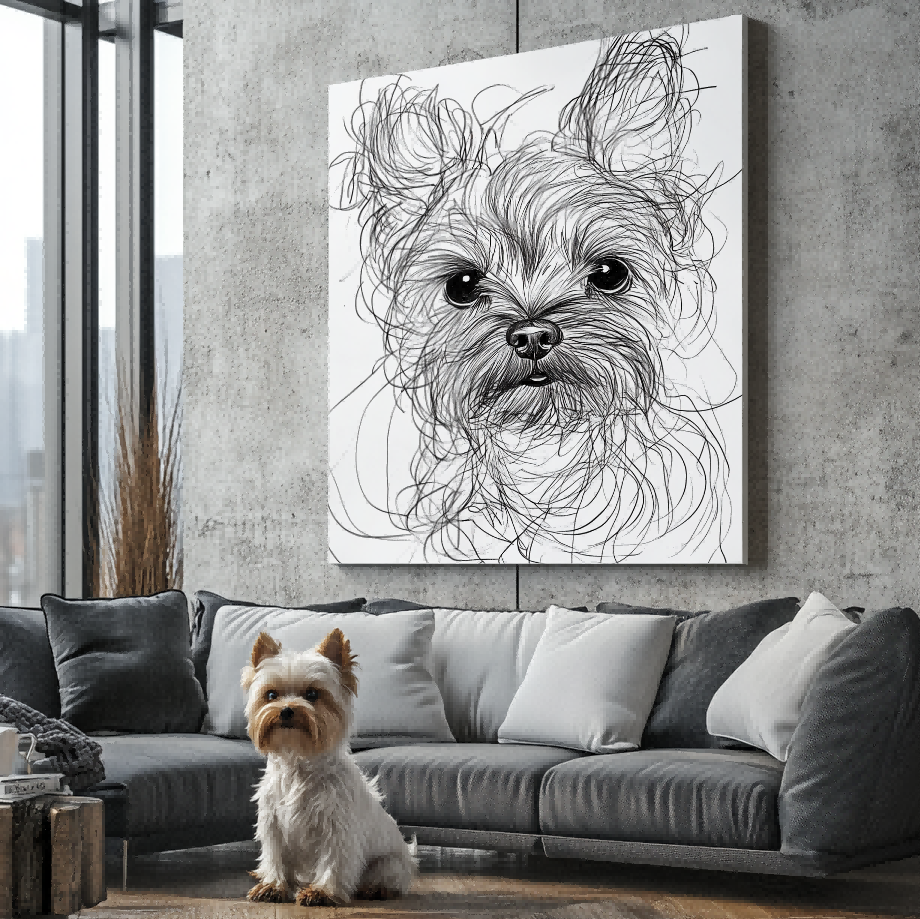
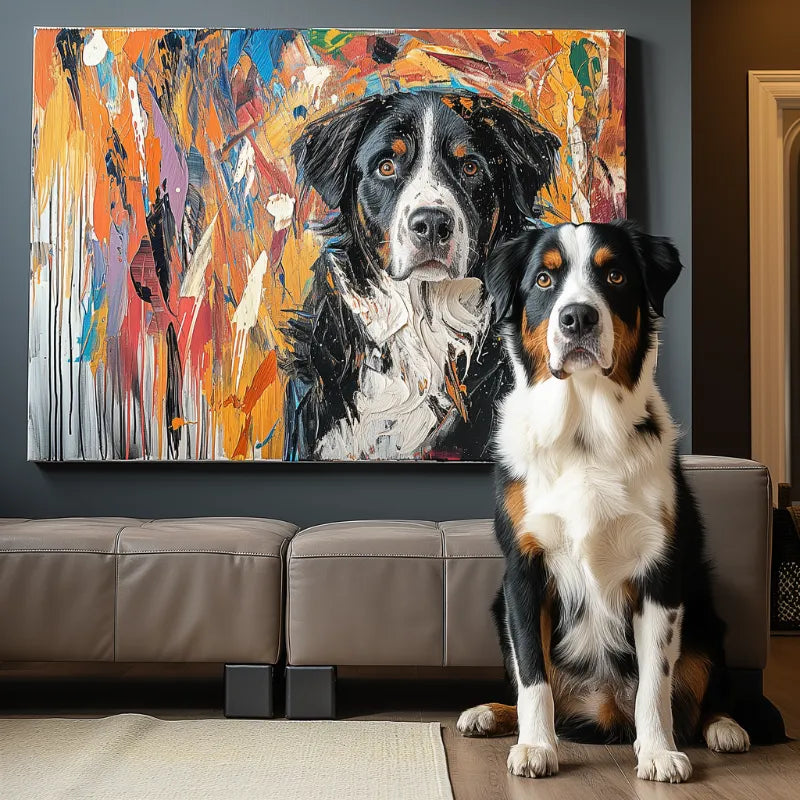


A mat is the border between a flat artwork and its outer frame. It can give a pet's face visual breathing room, or it can make a small image feel farther away. There is no universal rule that a pet portrait needs one. The choice depends on the art format, the amount of space around the pet inside the image, and how large the finished piece will look in the room.
This is an educational display comparison, not a claim that a mat is included with any current Palette Tales product. A paper print, stretched canvas, and framed canvas can have different construction requirements. Check the actual item and ask a qualified framer when physical mounting or preservation matters.
First, know what you are comparing
A mat is not the same as a broad outer frame. The frame is the structure around the outside; the mat is an additional visible window around the image within it. Some images have a printed white margin that looks similar from a distance, but a printed border is not necessarily a separate mat board. Do not infer the construction from a small online photograph. If you already know you want framed art, the framed portrait buying guide covers size and fit; this guide focuses on whether an inner border helps the image.
Look closely at the pet's face. Is it already surrounded by generous blank space in the artwork, or is the muzzle close to the edge? A mat can create another quiet zone around a tight composition. But if the pet is small within a landscape, adding a very wide mat could reduce its visual presence from across the room. Judge the whole outside size, not the image alone.
What a mat can add
A pale mat can separate a busy picture from a dark frame and give the viewer a moment to settle on the subject. It may suit a small portrait that will be viewed close up, especially if the image itself is colorful. A mat also changes the total finished footprint: the same image plus a border and frame takes up more wall space. For a narrow entryway or a shelf, measure that outside dimension before deciding that the format fits.

The photographed piece shows both a person and a dog. Its broad light border is the relevant visual feature here; the image does not establish that Palette Tales currently offers people in its custom pet portrait collection. Notice how much space the border occupies compared with the image, then consider whether that relationship would suit your own portrait.
When no mat may read better
Some artwork already has a purposeful edge. A close-to-frame treatment can make a line drawing or bold composition feel direct. It also avoids adding another color between the image and the wall. If the portrait needs to feel large and immediate at a distance, a wide mat may not help. That is a visual preference, not a judgment about quality.

This line-art dog fills much of the available space inside a slim black frame. The image feels more direct than the wide-bordered tabletop example, though its line-art style also affects that impression. Do not attribute every difference to the mat alone: compare similar image sizes and styles when you make a real purchase decision.
Do not confuse appearance with preservation advice
For a valuable original or a work on paper behind glazing, mounting materials and spacing can affect its long-term condition. Conservation guidance discusses suitable boards and contact with glazing, but those technical recommendations cannot be copied blindly to a stretched canvas or an unknown print construction. If you are buying an external frame, tell the framer what the actual artwork is made of and ask which mounting method fits it. Avoid promising yourself that a white border alone makes a piece archival.
Also check that a mat opening does not cover a pet's ear, whisker, name or signature that you intend to keep visible. The artwork may appear uncropped online but look different after a window is cut. Ask for the exact visible opening and outside dimensions before accepting a custom framing quote.
A practical decision test
- Print or display a rough image at approximately the intended picture size.
- Place plain paper strips around it to simulate a narrow and a wider mat.
- Step back to the normal viewing distance; check whether the eyes and expression remain dominant.
- Measure the full outside frame size, not just the image window.
- Verify the actual product's format and any separate framing service before ordering.
If the pet already has ample negative space and the frame feels balanced, you may not need a mat. If the image feels cramped against the outer edge, a modest border may help. Frame color is a separate decision; use the black-or-gold frame guide for that question. To see current artwork options, explore Custom Pet Portraits, then verify the listing rather than assuming a pictured mat or frame is included.


