

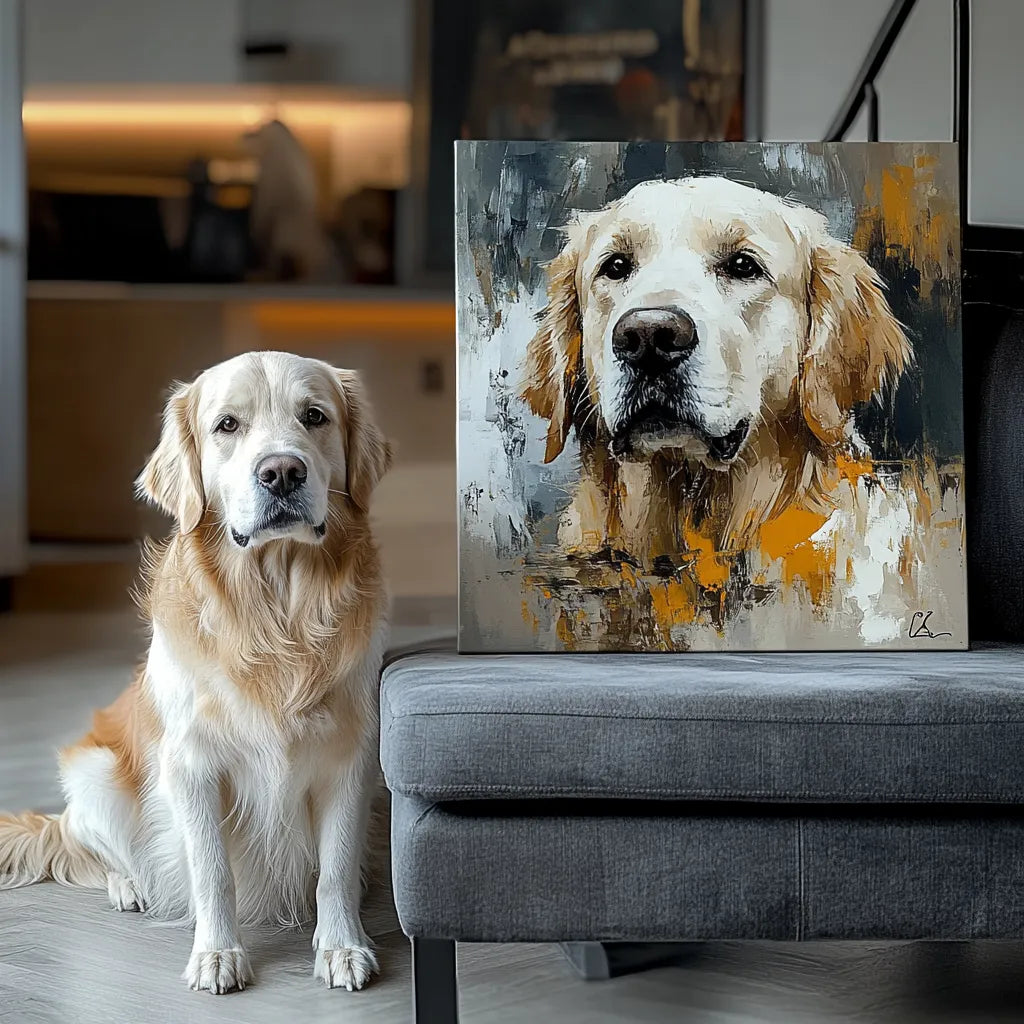
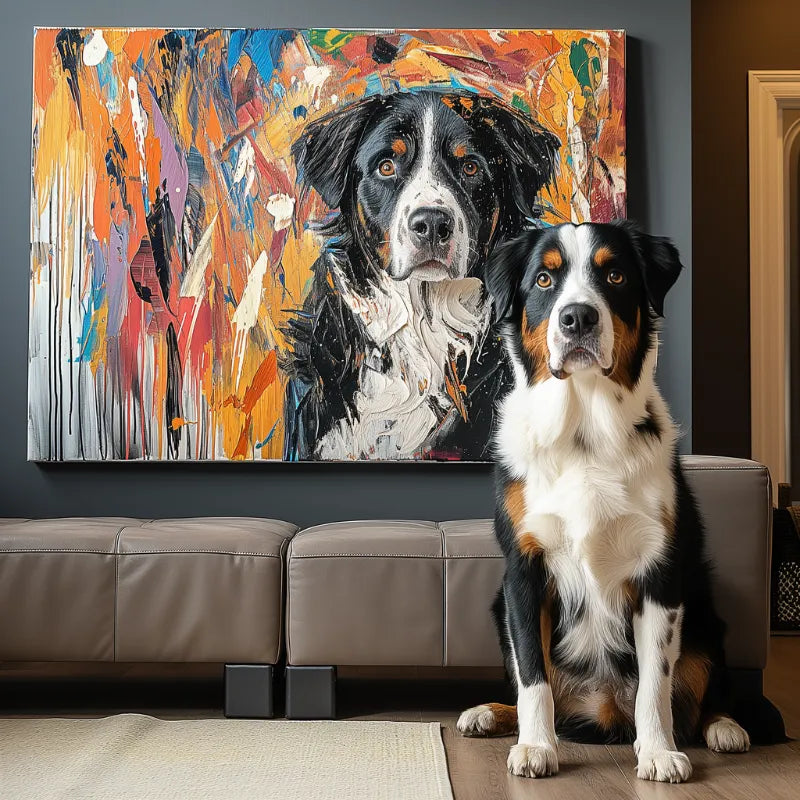

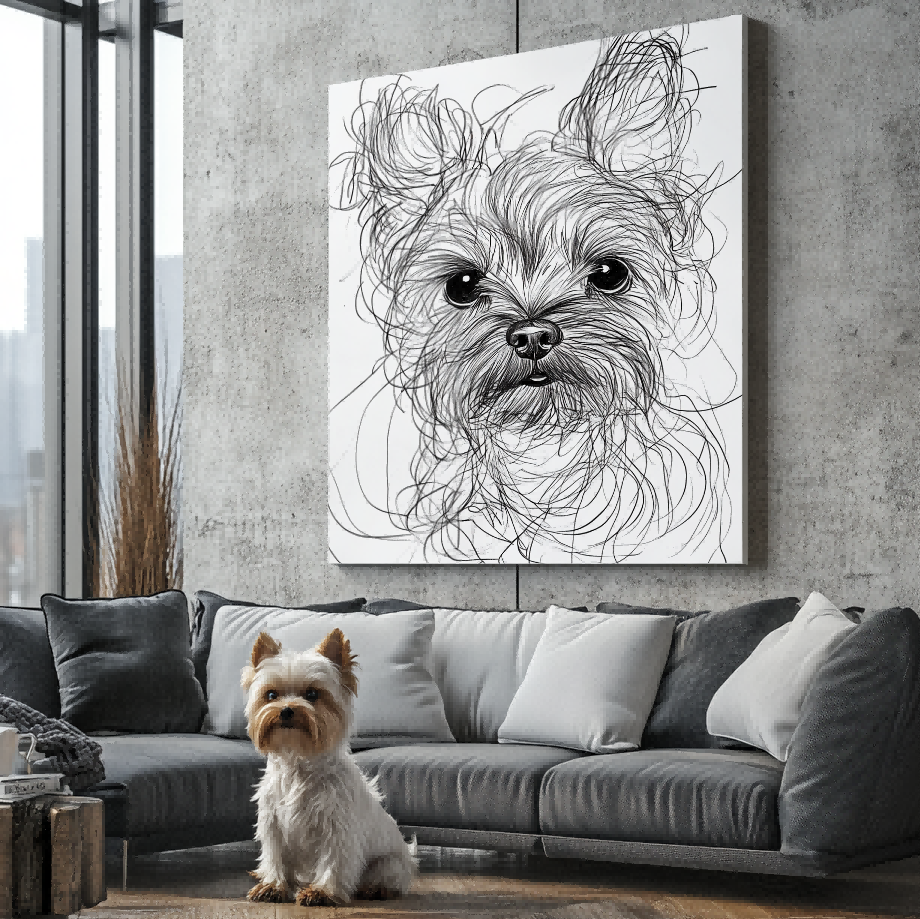

Quick answer: A minimalist direction reduces the image to a few strong shapes, lines, or colors; a detailed direction preserves more texture and small features. Choose according to which identity cues matter, how the artwork will be viewed, and whether the reference photo actually supports fine detail.
The broad Style Guide surveys named styles. This comparison focuses on the amount of visual detail, regardless of style label. The goal is to make one decision easier without turning a narrow question into another general pet portrait guide.
Start with the evidence you actually have: the original files, the pet’s recognizable features, the intended display, and the options shown on the live product page. Attractive examples help explain a choice, but they cannot verify a material, editing capability, revision allowance, delivery time, or accessory that is not stated elsewhere.
List the identity cues
Some pets are recognized by silhouette and ear shape; others depend on freckles or layered markings. Identify three cues that cannot disappear.
Use those cues to test both directions. This is a decision check, not a promise that Palette Tales or another provider can perform an unlisted edit, combine files, or guarantee a particular result. Confirm the currently published product and support information before ordering.
Match detail to the source
Fine whiskers and fur texture require visible evidence. A compressed or blurred file may support bold shapes better than microscopic detail.
Do not confuse requested detail with available detail. This is a decision check, not a promise that Palette Tales or another provider can perform an unlisted edit, combine files, or guarantee a particular result. Confirm the currently published product and support information before ordering.

Think about viewing distance
Minimal forms can read clearly across a room; subtle texture may reward closer viewing. Decide where the portrait will live.
Test the composition at approximate display size. This is a decision check, not a promise that Palette Tales or another provider can perform an unlisted edit, combine files, or guarantee a particular result. Confirm the currently published product and support information before ordering.
Avoid style-label shortcuts
Two sellers may use “minimalist” for very different results. Compare real examples rather than the label alone.
Verify the live product or collection options. This is a decision check, not a promise that Palette Tales or another provider can perform an unlisted edit, combine files, or guarantee a particular result. Confirm the currently published product and support information before ordering.

Protect likeness during simplification
Reducing detail should not erase the feature that makes the pet specific. Check ears, eye spacing, muzzle, and dominant markings.
Use preview evidence when the current process provides it. This is a decision check, not a promise that Palette Tales or another provider can perform an unlisted edit, combine files, or guarantee a particular result. Confirm the currently published product and support information before ordering.
Compare two candidates without guessing
Place candidate A and candidate B beside each other at the same on-screen size. First, cover the background and compare only the pet’s eyes, muzzle, ears, markings, and familiar outline. Next, look at the empty space around the subject and decide whether the intended crop has enough room. Finally, view both files at roughly the size the finished face will be seen, because extreme zoom can reward pixels that do not improve recognition. Record one strength and one limitation for each candidate. This makes the choice traceable and keeps a favorite emotional moment from being rejected for a minor issue—or selected when a hidden detail is essential to the requested composition.
A five-minute decision method
- Write the single outcome you want the portrait to preserve.
- Choose one main photo or visual direction and label any supporting evidence.
- Check identity, composition, and technical clarity as separate questions.
- Compare the choice at normal viewing size instead of judging only at extreme zoom.
- Verify current product facts and ask before relying on an unlisted capability.
If the decision exposes a broader problem, use the related guide 1, related guide 2, related guide 3. Those pages retain ownership of general photo quality, crop, likeness, style, preview, or display questions; this page should not replace them.
Questions to ask before ordering
Can written notes replace a missing visual detail?
No. Notes can point to a visible feature or label a file, but they cannot recreate information the image never captured. A clearer supporting photo is stronger evidence.
Does an example prove the same option is included now?
No. Examples explain visual reasoning. Current size, format, personalization, accessories, timing, and process must be verified on the live commercial destination.
Should a low-resolution screenshot be the main source?
Use the highest-quality authorized original available. Screenshots and social copies may be useful for context, but compression can remove detail that matters to recognition.
Next step
Make the narrow decision first, then review the broader photo, style, size, and display owners linked above. When you are ready to inspect currently available formats, explore custom pet portraits and verify the live facts before ordering.


