

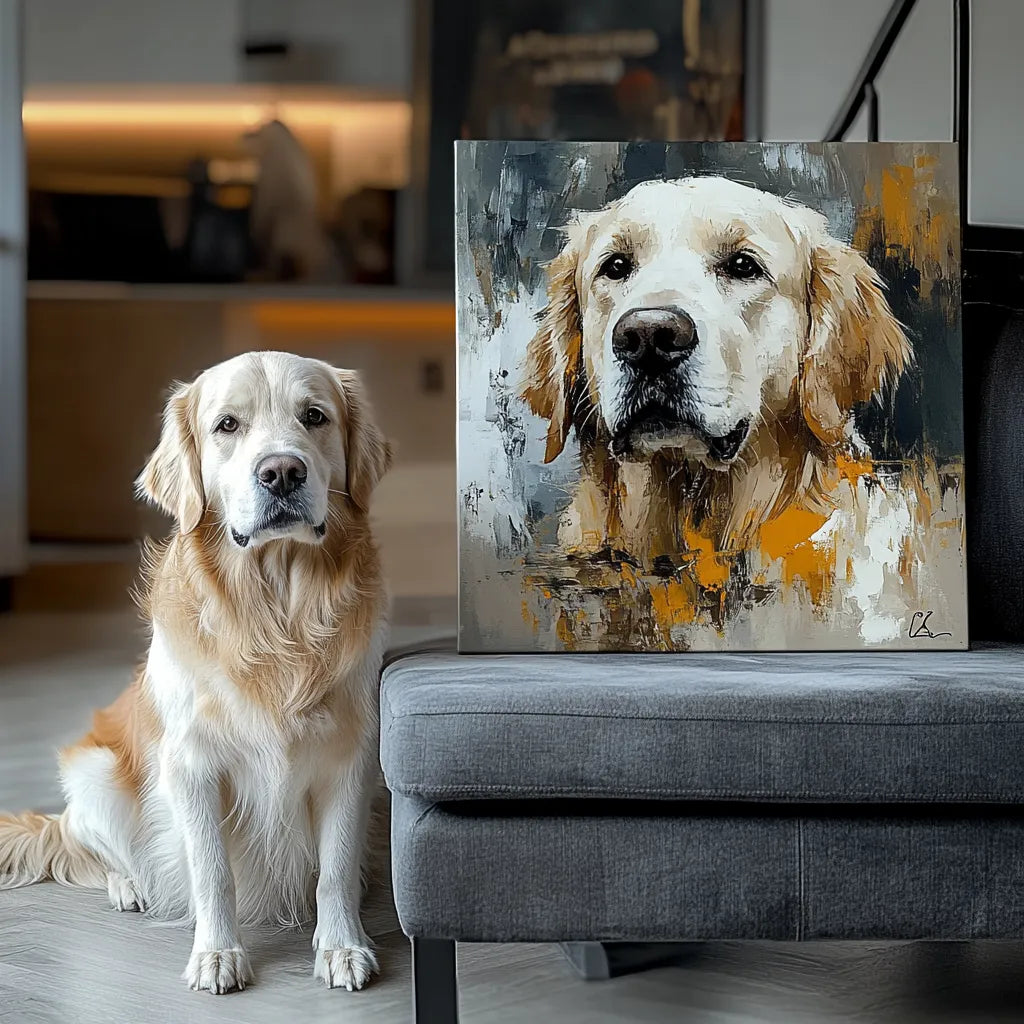
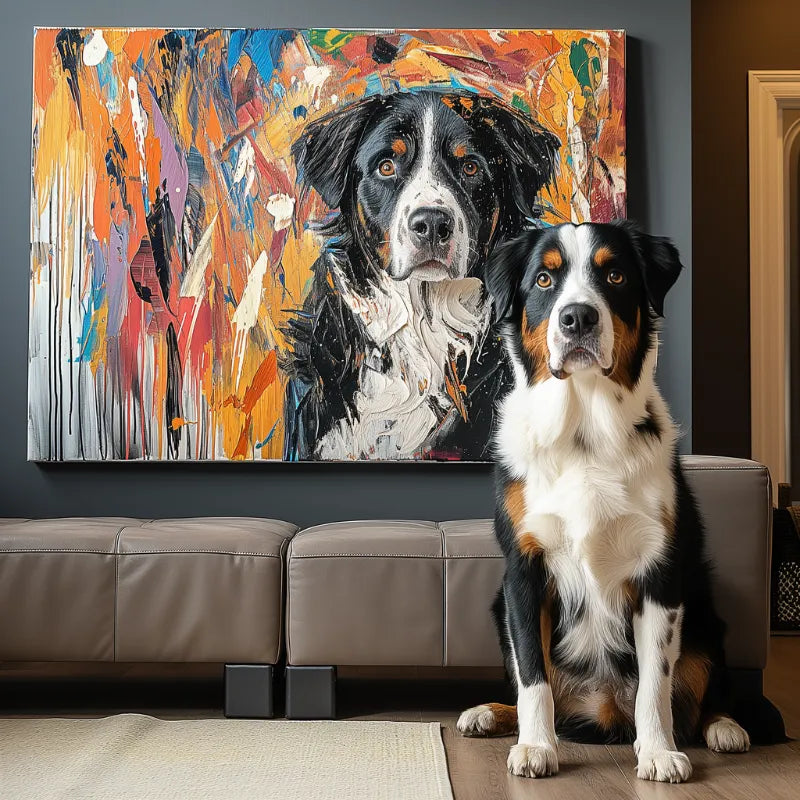

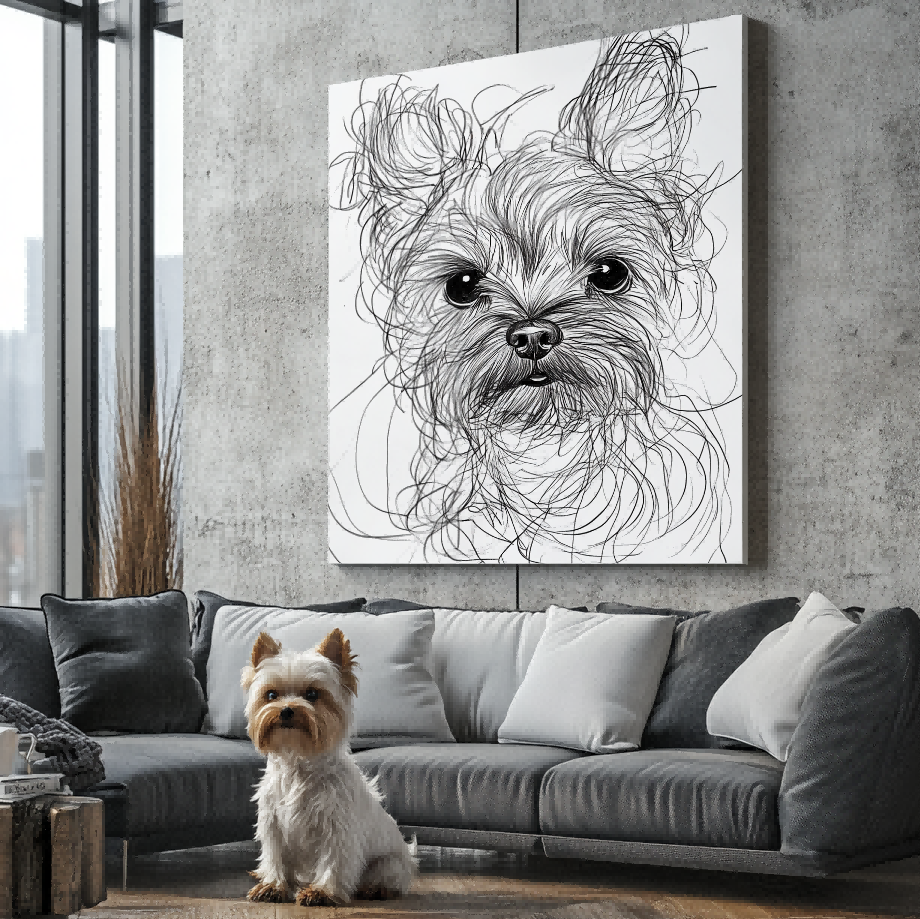

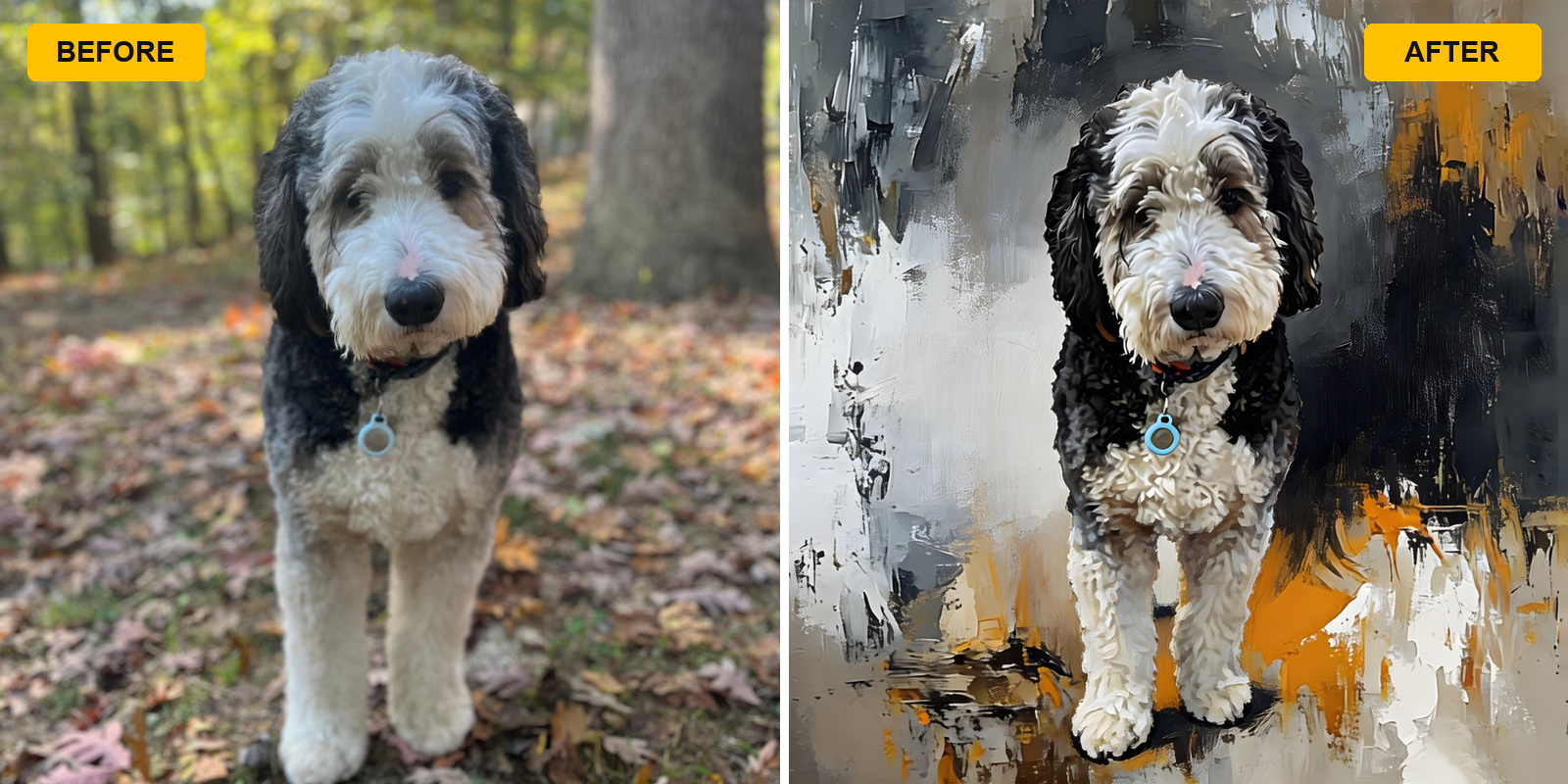
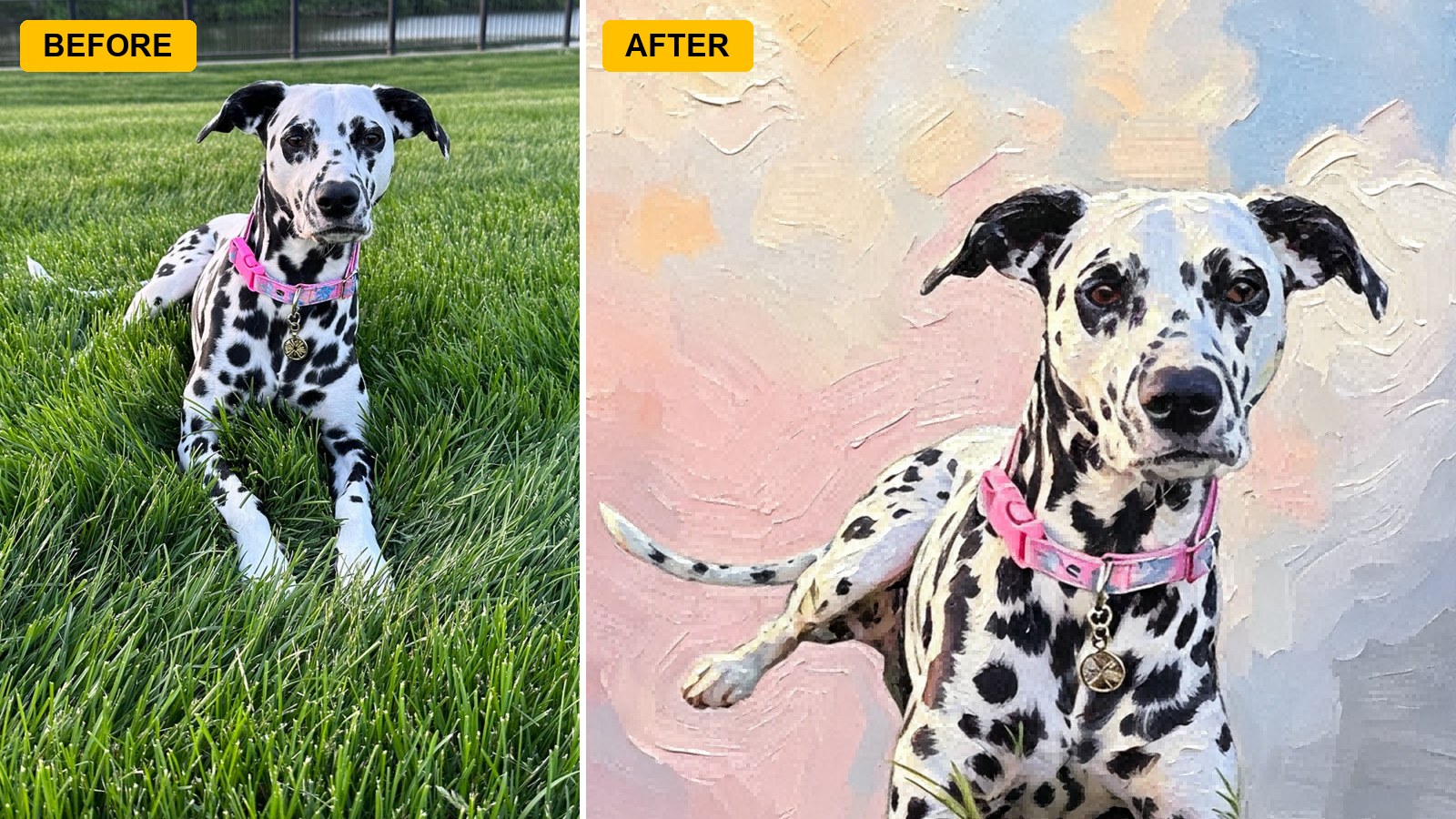
Direct answer: A clear reference photo gives you more to inspect when you review pet portrait artwork: the visible face, distinctive markings, ear shape, expression, and the amount of space around the subject. A before-and-after example is useful when it helps you compare those visible elements—not when it is treated as a guarantee that every photo or finished product will look the same.
Before choosing a photo, use the best-photo checklist for a custom pet portrait to review focus, lighting, and recognizable features. Start with the original image file when possible instead of a heavily cropped screenshot or filtered copy.
What a reference photo can show clearly
Look first for the parts of a pet that people recognize quickly: the eyes, muzzle, ear shape, coat markings, and the expression that feels familiar. A large photo on a phone can hide motion blur or a clipped ear, so zoom in before deciding that it has enough usable information.
Good light does not need to be dramatic. Even light that keeps the face visible is generally easier to evaluate than a very dark room, harsh flash, or a strong filter that changes coat and eye color.
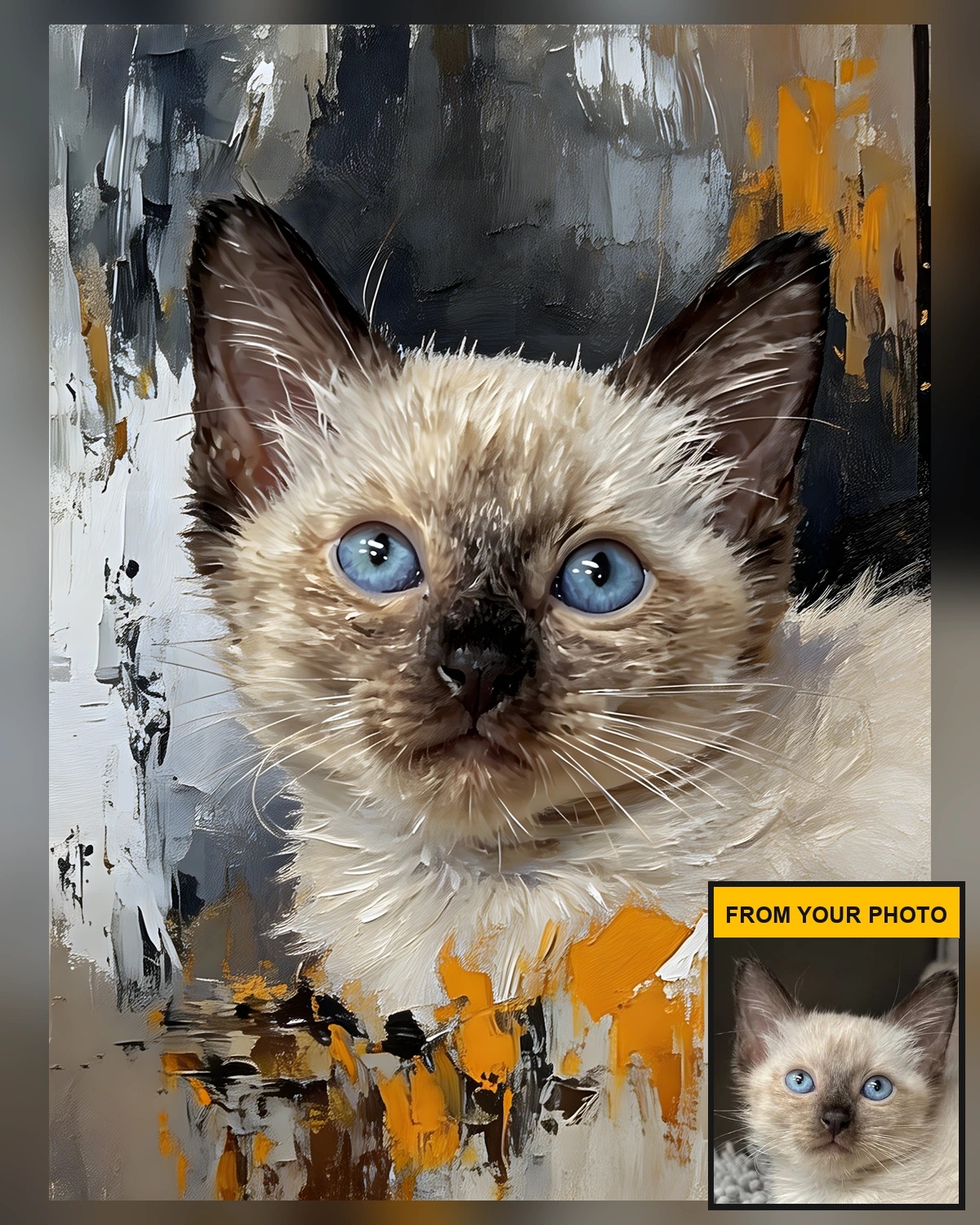
Compare visible features, not imagined corrections
In a real comparison, ask whether the pet’s identifying features remain understandable: face shape, marking placement, the relationship between ears and eyes, and the overall crop. If an important feature is not visible in the source photo, do not assume it will appear accurately later. A second photo may be useful as a reference, but it should clarify rather than create a competing composition.
For a structured explanation of the artwork-review step, read the custom pet portrait preview and revision process. That page owns the process question; this one stays focused on how a real visual example can guide photo selection and artwork review.
Keep the composition easy to recognize
Notice whether the pet is close enough to the camera for the face to remain clear and whether the crop leaves some room around ears, whiskers, or paws. A busy background is not automatically disqualifying, but it should not compete with the pet as the primary subject. The safest choice is usually the photo that makes the pet understandable before you need an explanation.
When you are also choosing a look for the room, the pet portrait style-for-home guide can help. Style is a separate decision from whether the source photo communicates the pet clearly.
When the photo is not giving you enough information
Pause when the face is too dark to distinguish, when motion blur removes the eyes or markings, or when the only available image is already cropped tightly around the head. These are not reasons to invent missing information. They are reasons to locate an original, compare a second reference, or choose a photograph that better represents the pet.
A photo can still be meaningful even when it is not the strongest visual reference. Keep it as part of the story, but make the selection decision using the image that gives the clearest view of the pet.
The Customer Preview Gallery is a separate collection of artwork-stage examples. It can help you frame a question about composition, but it cannot confirm facts that are not visible in the source image.
A practical before-and-after checklist
- Can you still recognize the pet from the face and markings?
- Are important features visible in the original photo?
- Does the crop leave enough room around the subject?
- Are you comparing artwork evidence with artwork—not assuming it proves a physical product feature?
- Is the example helping you ask a specific question about your own photo?
Where to go after you have chosen the photo
Once the photo is clear and the visual direction makes sense, explore the current custom pet portrait collection. Use the live collection and product details for current options; this guide does not establish price, material, shipping, timing, or physical-product claims.
Frequently asked questions
Does a before-and-after example guarantee my portrait will look the same?
No. It is useful for comparing visible details and composition, not for promising a specific outcome from every source photo.
What should I check first in a pet photo?
Check the face, distinctive markings, focus, lighting, and room around the subject.
Does preview artwork prove physical product details?
No. Use the current product information for physical facts and options.
Final takeaway
Real visual examples are most useful when they make a photo decision more concrete. Choose the clearest, most recognizable source image, compare visible features honestly, and use current product information for every fact beyond the artwork itself.


