

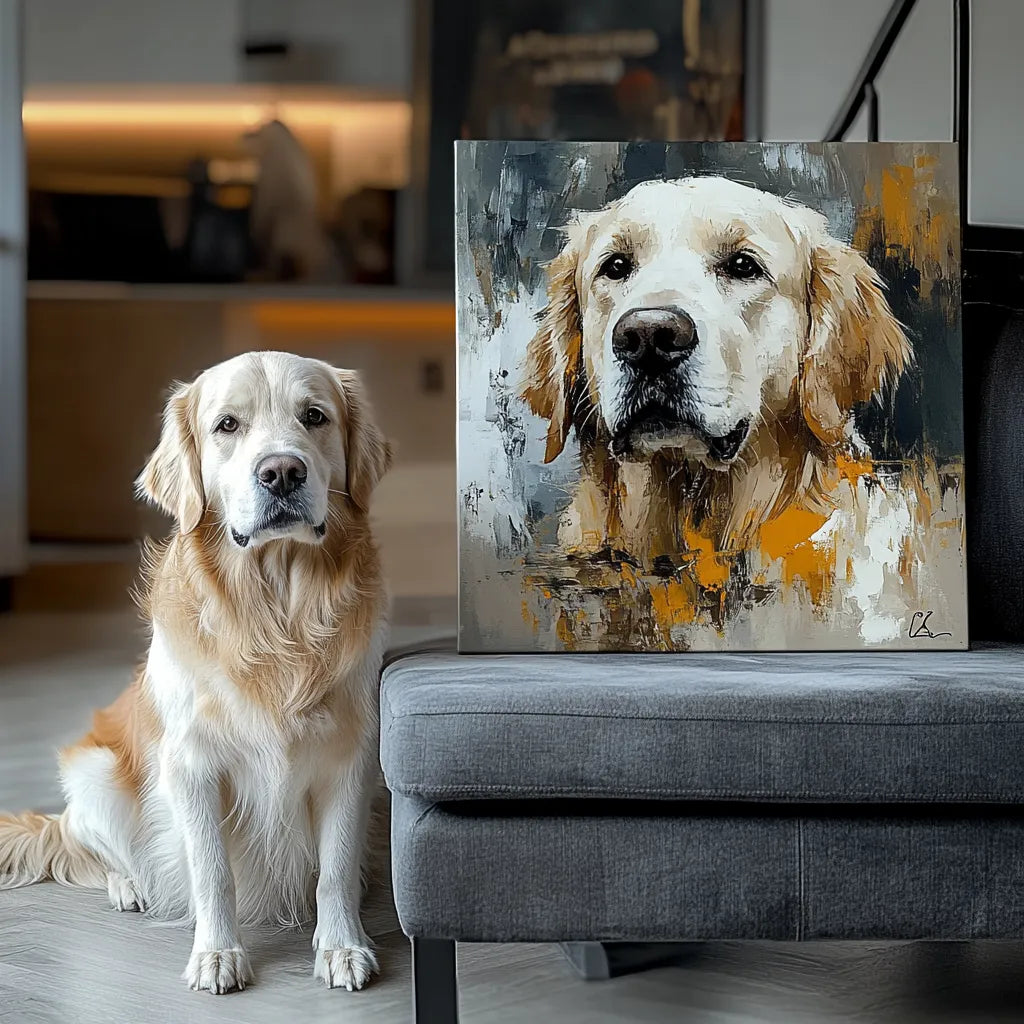
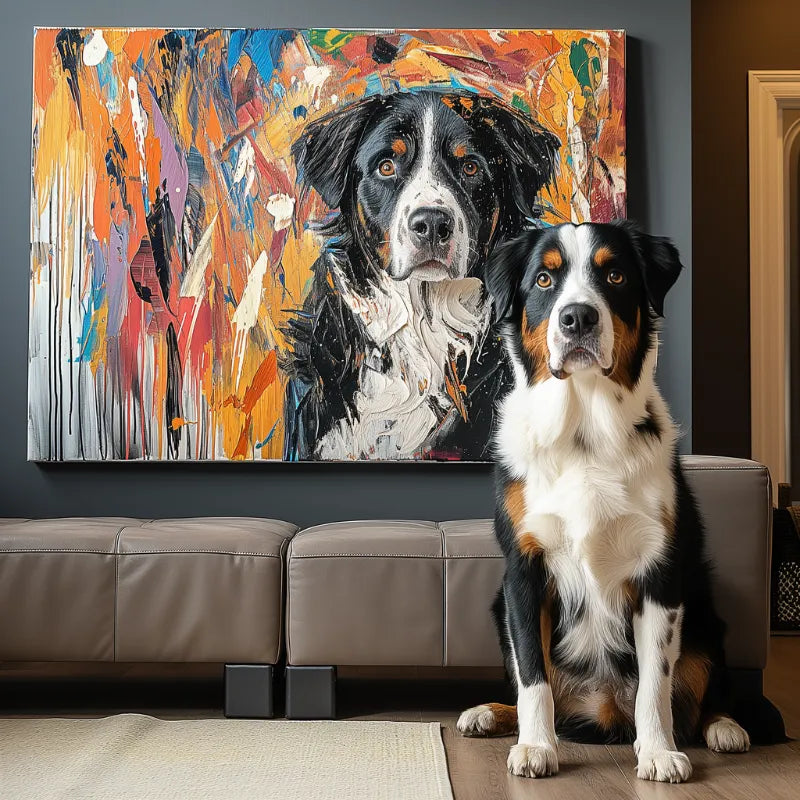

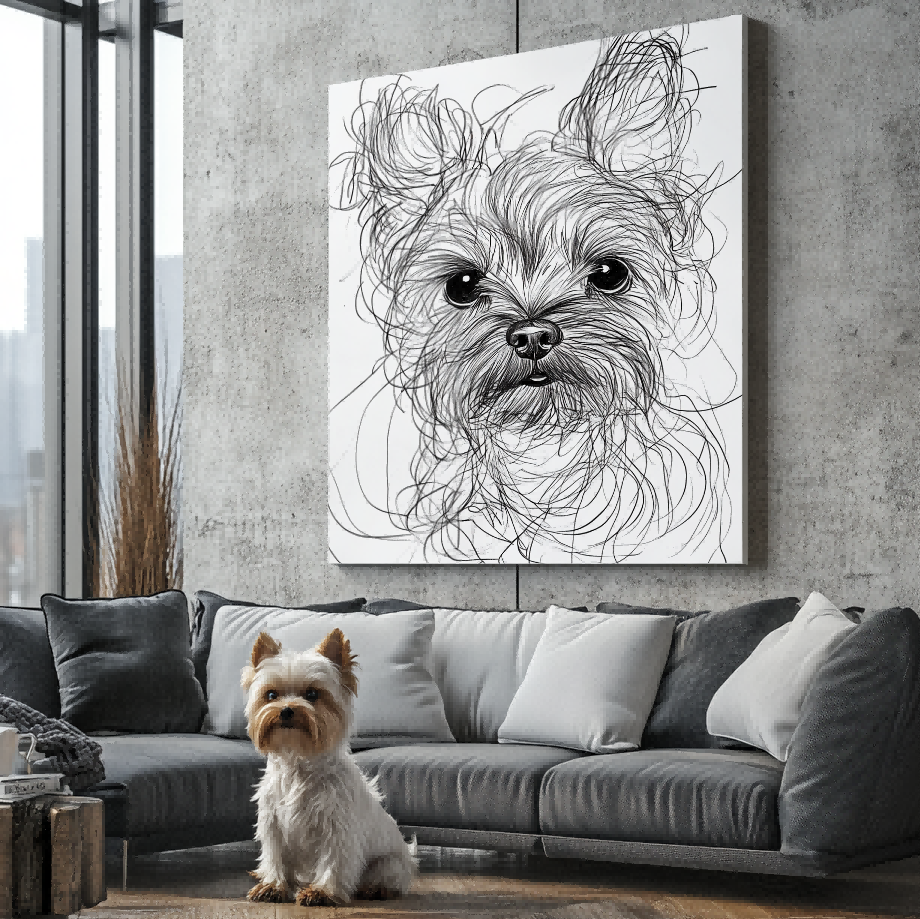

Canvas is a woven surface, but material, weave, weight, coating, and mounting can vary. Those differences matter when comparing art canvases and printed pet portraits.
A canvas print may look simple on a wall. Before choosing one, check the exact material and construction listed for the format you plan to order.
For a custom pet portrait, the useful questions are: What surface is specified for this format? How is it mounted? Does the finish match the artwork style and intended display space?
Understanding the surface helps you compare options without assuming that one fabric or weight guarantees a longer life.

The Two Big Ones: Cotton vs. Linen
When people talk about canvas material, they're usually talking about one of two things: cotton or linen.
Cotton canvas is commonly used for painting and printing. Its texture, coating, and preparation vary, so compare the surface specified for the intended technique or product.
Cotton reacts to humidity. Tension and mounting quality also affect how a stretched canvas behaves, so material alone does not establish whether a print will sag or warp.
Linen is made from flax and often has a finer surface. Its feel and price can differ from cotton, but no material by itself guarantees a particular display life or a tighter stretch.
Artists may choose linen for its surface and handling. That practice should not be confused with a claim that a specific printed pet portrait is archival or museum-grade.
Compare the actual fabric, finish, dimensions, and price offered for the item rather than assuming the higher-priced fabric will outlast another option.

Weight: The Number Nobody Talks About
Canvas weight is one specification worth understanding, but it is only one part of construction quality.
Canvas weight is measured in ounces per square yard (oz) or grams per square meter (GSM). The number tells you how much fabric is in each yard—thicker yarn adds weight, tighter weaving adds weight too.
Different weights suit different uses. A weight figure alone cannot tell you how a finished print will look or perform.
For painting, artists also consider priming and paint technique. Those factors differ from the questions a buyer asks about a printed portrait.
For a large display, check the available size, frame construction, surface and mounting specifications of the exact item; do not use a universal weight threshold as a guarantee.
For a custom print, compare the material and mounting stated on the current product listing. A heavier canvas does not automatically prevent sagging or prove that every Palette Tales format uses the same fabric.

Cotton vs. Linen: What Actually Matters for Pet Portraits
Okay, so here's where it gets practical.
For a custom pet portrait, you're not painting on the canvas yourself—you're ordering a print. So does the material still matter?
Yes. Absolutely.
Cotton can provide a visibly woven surface for a print. Its suitability depends on the specific finish, artwork, mounting, and care instructions; a fixed lifespan cannot be inferred.
If fine detail is important, assess real artwork examples and the actual print process. Linen is not automatically better for every pet portrait, and availability must be confirmed for the selected product.
Polyester and blended surfaces may have a different feel from cotton or linen. Check the exact composition and product care guidance instead of assuming a moisture or mold-resistance claim.
There is no single best fabric for every custom pet portrait. Check the current product material and artwork examples for the exact format; do not assume every Palette Tales canvas is 100% cotton or hand-stretched.

What to compare before choosing a canvas material
Useful comparisons focus on the actual surface, the artwork process, how the canvas is mounted, and where it will be displayed.
Surface: Compare the weave and finish shown for the available product, not an unsupported market-share forecast.
Artwork fit: Check whether real examples show the level of detail you want for your pet’s markings and expression.
Material facts: Confirm any organic, recycled, or other sourcing claim on the current listing before relying on it.
Finish: Distinguish a standard printed surface from an optional raised Texture Art finish where that option is offered.
Customization: Review the available style, preview process, and format for the exact portrait rather than assuming every option is available on every product.

Canvas Material for Prints vs. Paintings
Printing and hand painting place different demands on a surface, so the best comparison starts with how the artwork will actually be made.
For hand-painted art, surface texture and priming affect brushwork. A printed portrait instead calls for checking the stated print material, finish, and artwork sample.
Neither cotton nor linen is universally better for canvas prints. Evaluate the offered surface and the resulting image quality for the specific item.
For a pet portrait, recognizable details and a format that fits the room usually matter more than a generalized fabric ranking.
Canvas material questions worth asking
Use these questions to compare a current product listing without relying on an unverified personal ordering history.
Material. What fabric or blend does the exact listing specify, and can you view real examples of its finish?
Weight. Is a weight stated for this exact format? Treat it as a specification, not proof of no sagging or superior longevity.
Frame. If the format is stretched or framed, check the stated construction and available hanging details.
Preparation. For a hand-painted project, check how the surface is primed; for a printed portrait, check the finish and care guidance relevant to that product.
Print process. Review the stated process and current product specification; do not assume archival ink, fade-resistance, or a decades-long guarantee without evidence.
Practical checks before ordering
- Compare the exact material, mounting, artwork example, and total price rather than assuming price alone predicts durability.
- Check weight if listed, but ask how the finished surface is mounted and displayed.
- Review the frame and hanging details stated for the specific format.
-
Think about where you'll hang it. A canvas in direct sunlight will fade faster. Pick a spot that gets indirect light.
FAQ – Canvas Material
1. What is the difference between cotton and linen canvas? They are different natural fibers with different feel and weave. Price and suitability depend on the specific prepared surface or finished product.
2. Which canvas material is better for pet portraits? There is no universal choice. Compare the available product materials, real artwork examples, finish, and display plans.
3. What does canvas weight mean? It usually expresses fabric mass per area. It does not by itself guarantee that a finished print resists sagging or lasts longer.
4. How long does a canvas print last? No fixed lifespan can be promised without verified materials, printing and care evidence. Follow the specific care instructions and avoid harsh display conditions.
5. Is linen worth the extra cost? Only if its actual look, feel, and available product configuration suit your project and budget.
6. What is the best weight for a large print? There is no universal threshold. Confirm the available dimensions and construction for the exact product.
7. Can I use a polyester canvas for a pet portrait? It depends on the formats the seller actually offers. Compare real examples and the stated material and finish.
8. Where can I get a custom canvas print? Compare the current material, size, artwork preview and price for the exact format. Browse current Palette Tales portrait options as one option.
Material, weight, weave, finish and mounting all affect presentation, but they should be checked for the specific product rather than inferred from a category label.
If you want to turn a pet photo into artwork, compare real examples and choose a format whose stated materials and display options suit your space.
Visit the current product or collection page for available formats, live prices, and any verified offer terms.


