

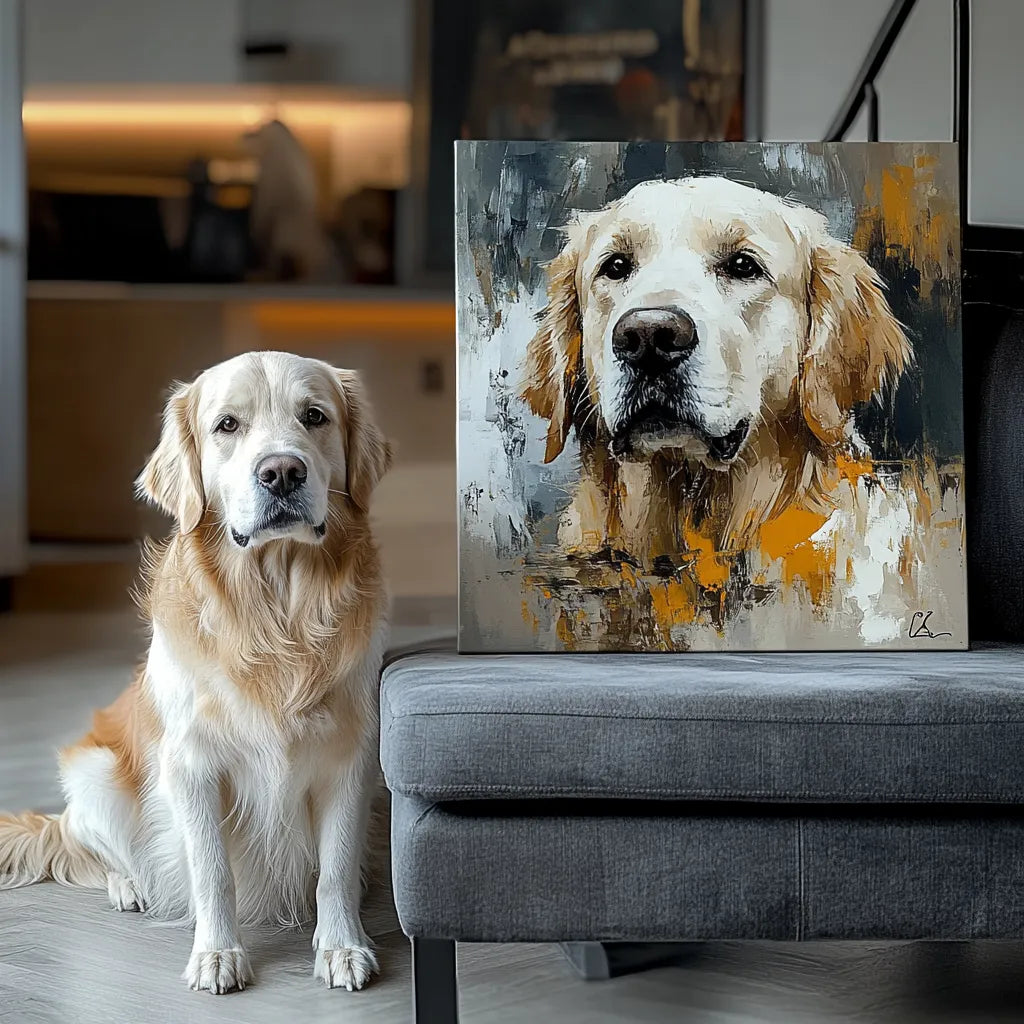
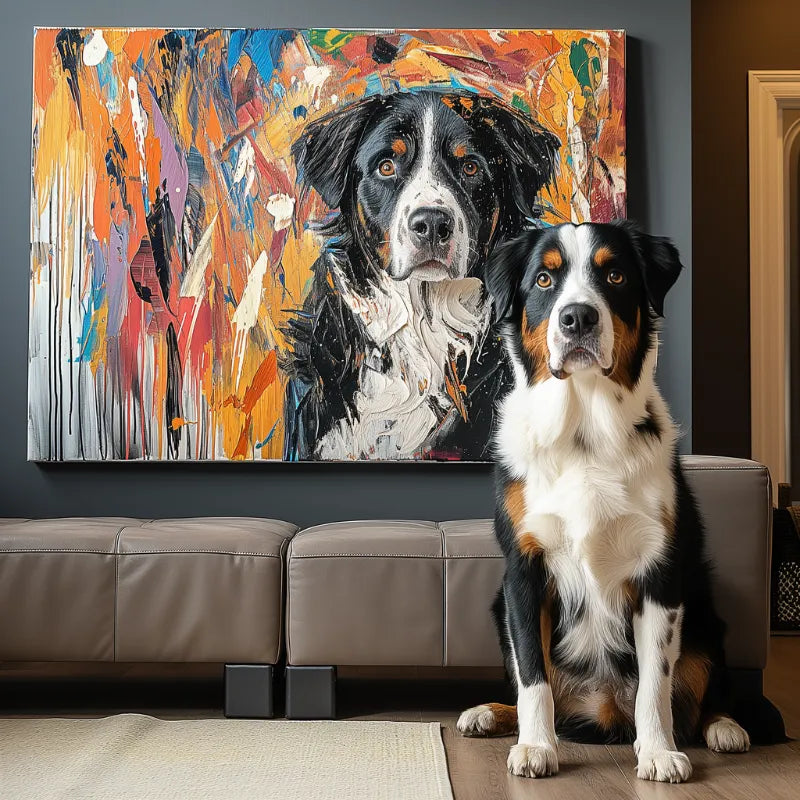

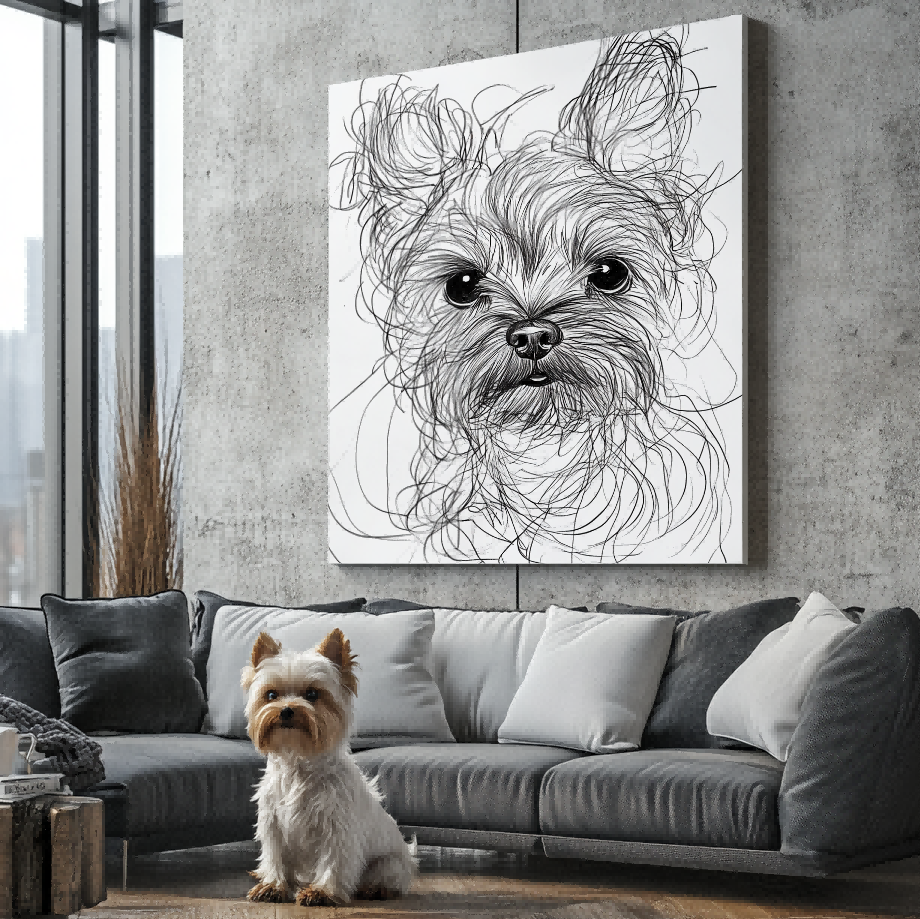

I thought buying a canvas would be simple.
Walk into a store, grab one off the shelf, done. That's what I did for my first attempt at a pet portrait. Cheap canvas, cheap frame, cheap result. It warped within months. The colors faded. My dog looked like a ghost.
So I started over. Did actual research this time. Visited big-box stores, scrolled through endless online listings, talked to people who actually know what they're talking about. And after way too many hours (and too much money), I finally figured out what to look for when you're shopping for canvases for sale.

The Canvas Market Is Bigger Than You Think
Here's something that surprised me: the global wall art and canvas print market was worth $74.19 billion in 2025** and is projected to hit **$123.40 billion by 2035. That's not a niche hobby—that's a massive industry.
What's driving it? Personalization. Nearly 58% of consumers now prefer personalized wall décor that matches their homes, style, and memories. People don't want generic prints anymore. They want something that actually means something to them.
Canvas alone holds about 45% of the wall art market share in 2026, making it the dominant medium. And the canvas segment was valued at $23.29 billion in 2024 alone. That's a lot of stretched fabric.
The residential segment accounts for the largest share of the market. Basically, people are buying canvases for their homes—not for galleries, not for offices. Just regular people wanting to make their walls look better.

What I Found at Big-Box Stores
My first stop was the obvious one—craft stores like Hobby Lobby and Michaels. Rows and rows of canvases in standard sizes. 8×10, 11×14, 16×20. Grab one, pay, go home. Simple.
The good: They're cheap. You can walk out with a canvas for under $20. If you just need something basic for a quick project, it works.
The bad: The quality is a gamble. Some are stretched too loosely. Some have rough edges. The materials are inconsistent—you never really know what you're getting until you open the package. I bought one that looked fine in the store but was already starting to warp when I got it home.
One thing I noticed: these stores stock a lot of rolled canvas—canvas that's been primed but not stretched. It's cheaper because you have to stretch and frame it yourself. Great if you're an artist who wants control over the process. Not so great if you just want something ready to hang.
Online Marketplaces: Endless Options, Endless Confusion
Then I went online.
Etsy, Amazon, Walmart—everyone sells canvases now. Search "canvases for sale" and you'll get thousands of results. It's overwhelming.
The good: Huge variety. You can find any size, any style, any price point. Some sellers offer custom sizing, which is handy if you have an odd-shaped space.
The bad: Quality varies wildly. One seller offers a "gallery-quality canvas" for $25. Another is selling the same size for $120. Both claim to be premium. Reviews help, but they're not always reliable. I ordered from a highly-rated seller once and the canvas arrived with a dent in the frame. Not worth the hassle.
Online art purchases now account for more than 67% of national demand in the US. That means most people are buying canvases online—but that doesn't mean every online seller is good.

What Makes a Canvas Actually Good?
After buying way too many canvases, here's what I've learned to look for:
Weight matters. Cheap canvases use lightweight cotton that warps and sags. Good ones use heavier cotton—around 13 oz. It stays tight on the frame and holds up over time.
The frame matters. Inside every stretched canvas is a wooden frame. Cheap ones use soft wood that bends. Good ones use wood, knot-free wood that stays straight.
Priming matters. Most canvases come pre-primed with gesso, which helps paint adhere and prevents bleeding. Cheap ones skimp on this, and you can tell—the paint doesn't sit right.
Ink matters. If you're getting a custom print, the ink quality is everything. Archival, fade-resistant inks keep your portrait looking good for decades. Cheap inks fade within a few years.
Here's a stat that surprised me: canvas prints can last 75 to 100+ years with proper care and quality materials. That's not an exaggeration—good canvases are built to last.
 Canvas vs. Paper: What's the Difference?
I wondered this too. Why pay more for canvas when you could just print on paper?
Canvas is more durable. It resists fading, humidity, and UV light better than paper. Paper prints are delicate—they need glass and UV protection to last. Canvas doesn't.
Canvas has texture. The woven surface adds depth. Paper is flat. Canvas feels like art.
Canvas doesn't need a frame. Gallery-wrapped edges give that modern look with no glass glare. Paper needs a frame, glass, and matting—which adds cost and weight.
Canvas is easier to clean. Varnished canvas prints have a durable surface that you can wipe down. Touch a paper print and you'll leave a mark.
Paper prints have their place—they're sharper and better for detailed photography. But for durability and that premium feel? Canvas wins every time.
The Custom Canvas Option
After striking out with stores and marketplaces, I started looking at custom canvas shops.
This is where things got interesting. Instead of buying a blank canvas and figuring out what to do with it, you upload a photo and they print it directly onto the canvas. Done.
The good: Professional results without the hassle. No stretching, no priming, no guesswork. Just upload, pick a style, and wait for it to arrive.
The bad: It costs more than a blank canvas. But when you factor in the time and materials you'd spend doing it yourself, the price difference isn't as big as you'd think.
The custom pet portraits market alone is estimated at $1.2 billion in 2026** and expected to hit **$2.5 billion by 2033. That's a lot of people who decided the DIY route wasn't for them.
If you're curious what a custom canvas looks like, browse the full portrait collection here.

What I Ended Up Doing
After all that shopping around, I ended up going with Palette Tales.
Here's why:
The canvas quality is solid. They use 13-oz cotton, hand-stretched over wooden frames. No warping, no sagging.
The print quality holds up. The print quality has held up well for me. My oldest portrait from them still looks as good as the day it arrived.
They offer framing options starting at $29. No separate trip to the framer. Just pick a frame and it shows up ready to hang.
They do more than just canvases. Phone cases, tote bags, doormats, caps—same pet portrait, different products.
The whole process is easy. Upload a photo, pick a style, approve a proof, done. No back-and-forth emails.
Is it the cheapest option? No. But for the quality and convenience, it's worth it.
A Few Things I Learned the Hard Way
-
Measure your wall before you order. I bought a canvas that was too big for my hallway once. Looked ridiculous.
-
Use a high-resolution photo. The better the original, the sharper the print.
-
Don't go too cheap. I bought a $20 canvas from a big-box store and it warped within months. You get what you pay for.
-
Consider the frame. A good frame makes a good canvas look great. A bad frame ruins it.
FAQ – Canvases for Sale
1. Where can I find canvases for sale?
You can find canvases at craft stores (Michaels, Hobby Lobby), online marketplaces (Etsy, Amazon), and custom print shops like Palette Tales.
2. What's the difference between stretched and rolled canvas?
Stretched canvas comes ready to hang on a wooden frame. Rolled canvas is just the fabric—you need to stretch and frame it yourself.
3. How much do canvases cost?
Blank canvases range from $10–$50 depending on size and quality. Custom printed canvases typically run $75–$250.
4. What size canvas should I buy?
Standard sizes include 8×10, 11×14, 16×20, and 24×36. For a living room statement piece, go bigger. For a gallery wall, mix sizes.
5. How long does a canvas print last?
With proper care—out of direct sunlight, away from moisture—a good-quality canvas can last 75–100+ years.
6. What's the best canvas material?
Cotton is the most common and versatile. Linen is more durable but costs more. For most purposes, high-quality cotton (around 13 oz) is the sweet spot.
7. Can I get a custom canvas of my pet?
Yes. Palette Tales specializes in custom pet portraits on canvas. They use 13-oz cotton and archival inks.
8. Where can I buy a custom canvas online?
You can find custom canvas options on Etsy, Amazon, and specialty sites. Browse Palette Tales' full portrait collection here.
I spent way too long hunting for canvases. Big stores, online marketplaces, custom shops—I tried them all. And after all that, I learned that cheap canvases aren't worth it, good materials matter, and sometimes the easiest option is the best one.
If you've got a favorite photo and you want it to look like art, don't overthink it. Just get a good canvas and hang it up.
Visit www.palettetales.com to see their custom canvas options. Code WELCOME gets you 10% off your first order.


