



A camera-shy pet does not need to perform for a portrait reference photo. If the phone or lens makes a dog or cat turn away, look tense, or leave the room, a quieter candid image may be a better starting point than repeatedly asking for a direct stare. The aim is a clear, recognizable pet—not a perfect studio pose.
Work within the animal’s comfort. Keep the camera at a non-intrusive distance, use an ordinary moment the pet already enjoys, and stop if the attempt is making them uneasy. This is photo-selection guidance, not behavioral or veterinary advice. For broader welfare-oriented photography guidance, Battersea’s dog-photography advice emphasizes allowing a nervous dog to become comfortable with the camera rather than forcing a pose.
Start with a moment, not a command
Think of times when your pet is relaxed: resting near a window, watching someone familiar, or pausing during a normal walk. Prepare the camera before that moment, rather than bringing the pet into a newly staged scene. Avoid flash if it makes the pet react. An image taken from a comfortable distance can still be a useful portrait reference if the face is sharp and the distinctive markings are visible.
There is no rule that the pet must look directly into the lens. A slight side gaze can carry the expression you know best. The separate eye-contact versus side-gaze guide helps choose between those looks; here the problem is how to get a clear source image without pressuring the animal.
Let light do some of the work
Soft daylight can help show the eyes and coat without bringing a bright light close to the animal. Look for a place where the pet would naturally stay, then turn your own position so the face is readable. If the pet is in front of a bright window, the face may become too dark; move yourself or wait for a more even angle rather than chasing them around the room. Keep the original camera file, because a screenshot may hide the fine detail you need later.

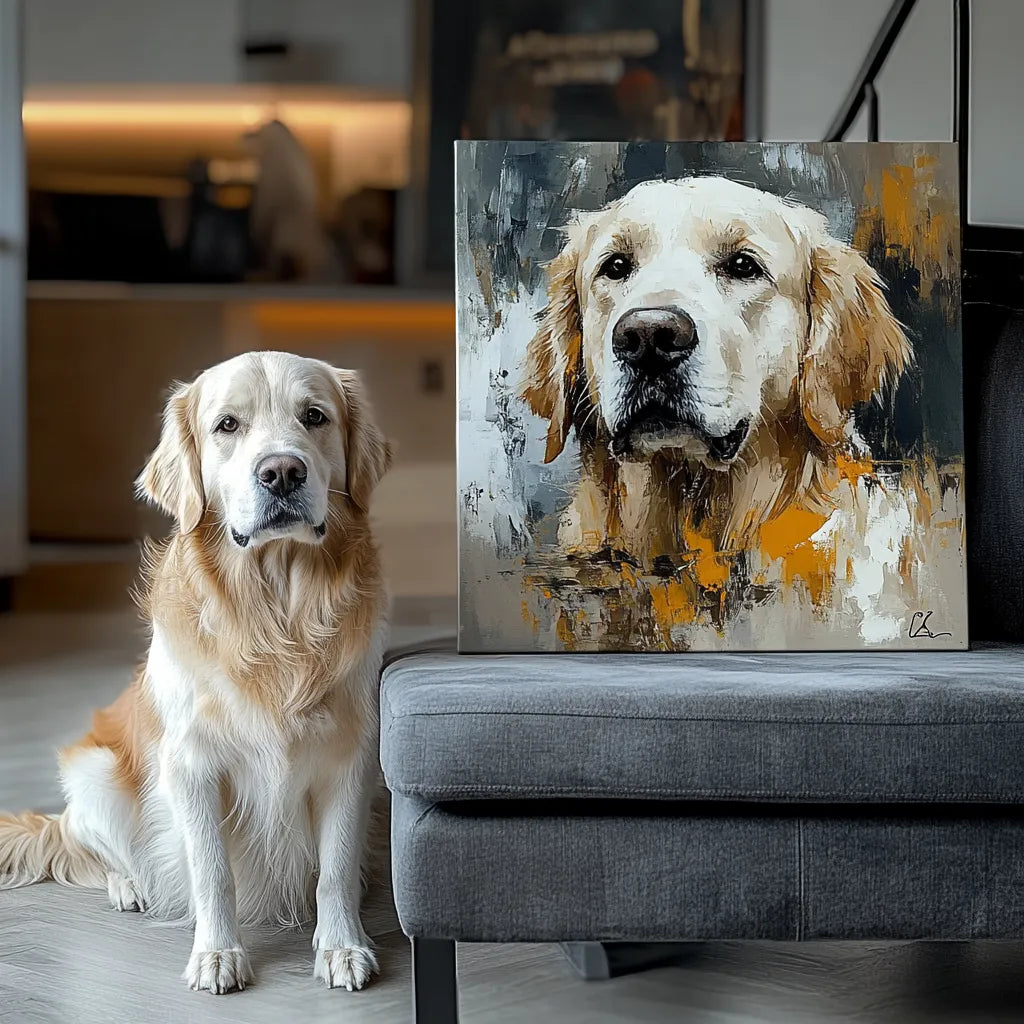
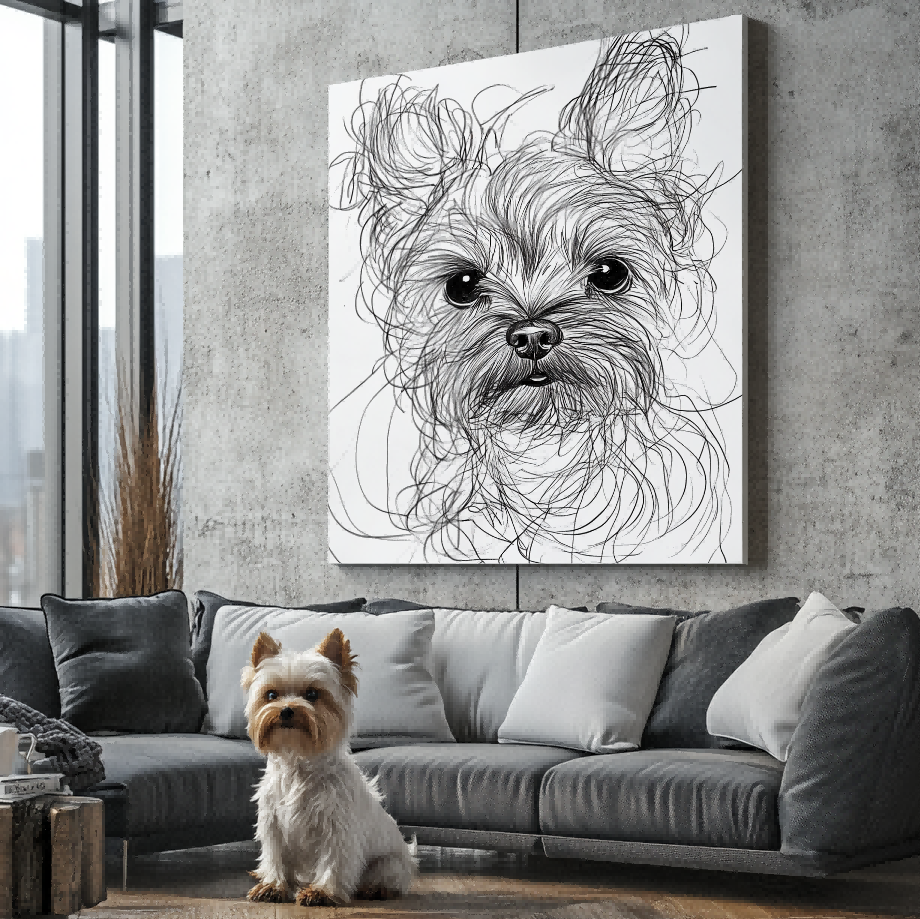
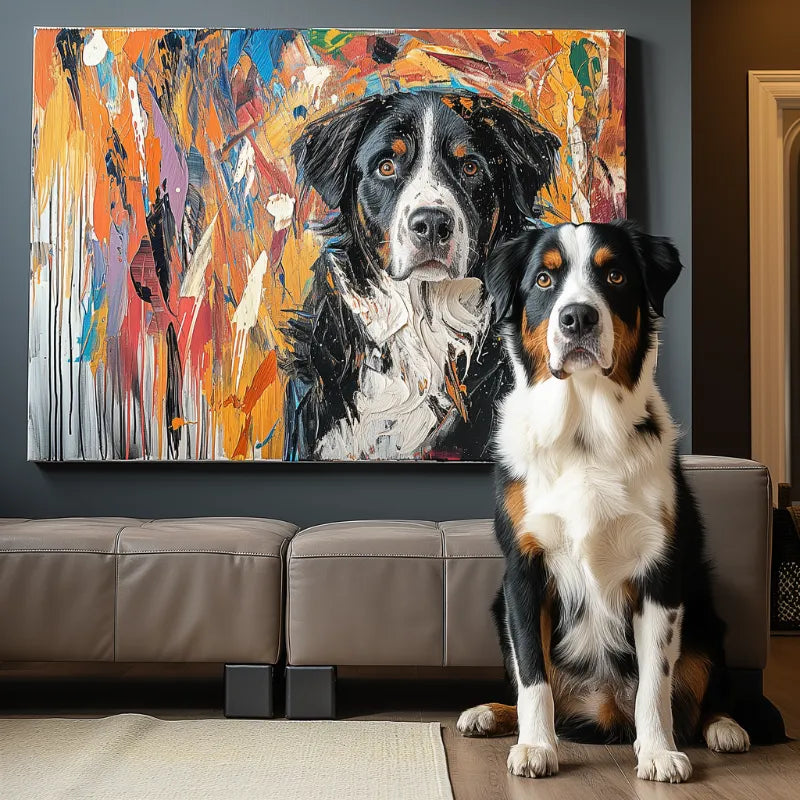
The example above illustrates what usable detail can look like in a familiar setting. It is not an instruction to copy the dog’s pose, and it cannot tell you how that animal felt when the photo was taken. For your own pet, keep distance and setting comfortable first; assess technical detail afterward.
Choose the frame that carries identity
From several candid photos, compare the shape of the head, ear position, eye color, muzzle, and coat patches. A perfectly centered picture is less useful if it makes the pet look unlike themselves. A slightly off-center image can still be informative if the most recognizable features are not hidden or cut off. If none of the photos has a clear view of a particular marking, do not expect the artwork to invent that feature accurately.

Dark coats can hide the muzzle and eyes when the background is bright. The black-dog photo guide covers that exposure problem in depth. This page does not ask you to repeat a stressful photo session for a technical ideal; it asks you to notice what an existing comfortable photo actually shows.
If the pet avoids the camera entirely
Use the clearest image you already own before planning a new shoot. A previous photo taken by a family member may show a natural expression better than an attempted portrait session. If someone else took it, confirm that you have the right to use that image for a custom product. If only a low-resolution social post remains, try to find the original from the person or device that captured it rather than relying on the compressed copy.
Do not force a pet to sit still, hold a pose, or look into a camera for the sake of a future print. If a photo is missing the details you care about, keep a second reference showing those details and check the seller’s actual policy on multiple photos. The reference-photo set guide explains that decision without promising that separate images will automatically be combined.
A reference that feels less polished can still be the right personal choice. Before rejecting it, compare the face against a sharper alternative and ask whether the sharper file actually represents the pet more faithfully. Do not confuse a pleasing background with a usable view of the animal.
A gentle selection checklist
- Was the pet comfortable when the photo was taken, as far as you can tell?
- Are the eyes, ears, muzzle, and distinctive coat details visible?
- Is the original file available, not just a screenshot or forwarded thumbnail?
- Does the pose feel familiar to people who know this animal?
- Are any missing features shown in a separate, authorized photo?
If you have several acceptable images, use the broader Best Photo checklist to choose a lead reference. You can then explore the current Custom Pet Portrait Collection and verify its live photo requirements. The pet’s comfort and recognizable features matter more than forcing a pose for a generic portrait ideal.


