



Should the pet in a custom portrait have an open mouth or a closed one? Neither expression is automatically better. The useful question is which clear photo looks most like the animal you know. A tongue-out dog can feel lively and familiar; a closed-mouth pose can feel quiet and attentive. The decision belongs to the pet’s real expression, not to a rule that all portraits should look cheerful or formal.
This guide helps you choose a reference photo. It does not promise that Palette Tales can redraw a closed mouth as an open one, invent a tongue, or combine facial features from different files. If a change to the selected photo matters, ask about the current service options before ordering.
First, recognize the pet before judging the mood
Look at the eyes, ears, muzzle, markings, and head shape in each candidate photo. A relaxed open mouth may be characteristic of one dog, while another pet may usually be seen with its mouth closed. Choose an expression that relatives or friends would recognize without being prompted. If one image has a wonderful expression but hides an eye or cuts off a distinctive ear, that loss of information matters.
Check the photo at thumbnail size, then at its original size. The small view approximates how quickly a portrait might read in a room or on a product card; the full view reveals whether the lips, tongue, and eyes are actually sharp. Our best-photo guide owns broader sharpness and lighting questions. This page is narrower: how the mouth contributes to the specific pet’s recognizable expression.
When an open mouth feels like the pet
An open mouth can preserve a familiar greeting, play expression, or tongue position. But it is not enough to choose any smiling-looking frame. Look for a clear eye line, a natural muzzle shape, and a tongue that does not obscure important markings. A low-resolution action shot may show a terrific moment yet offer too little facial detail. Compare it with a calmer frame before deciding.

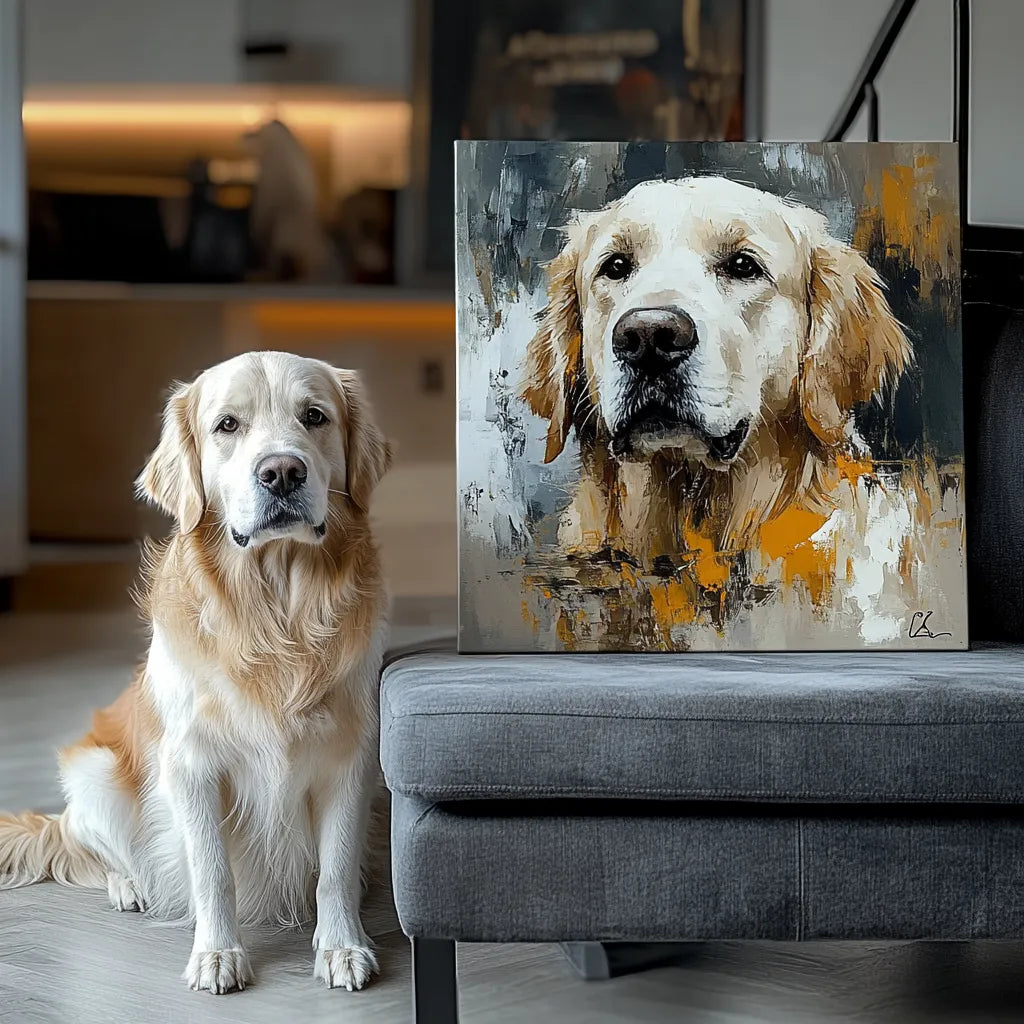
The open-mouth example above shows how a visible tongue can remain part of the pet’s identity after stylization. It does not prove that the expression was added later or that another pet’s mouth can be edited to match it. Compare your own source photo rather than treating an example as a service guarantee.
When a closed mouth is the more familiar choice
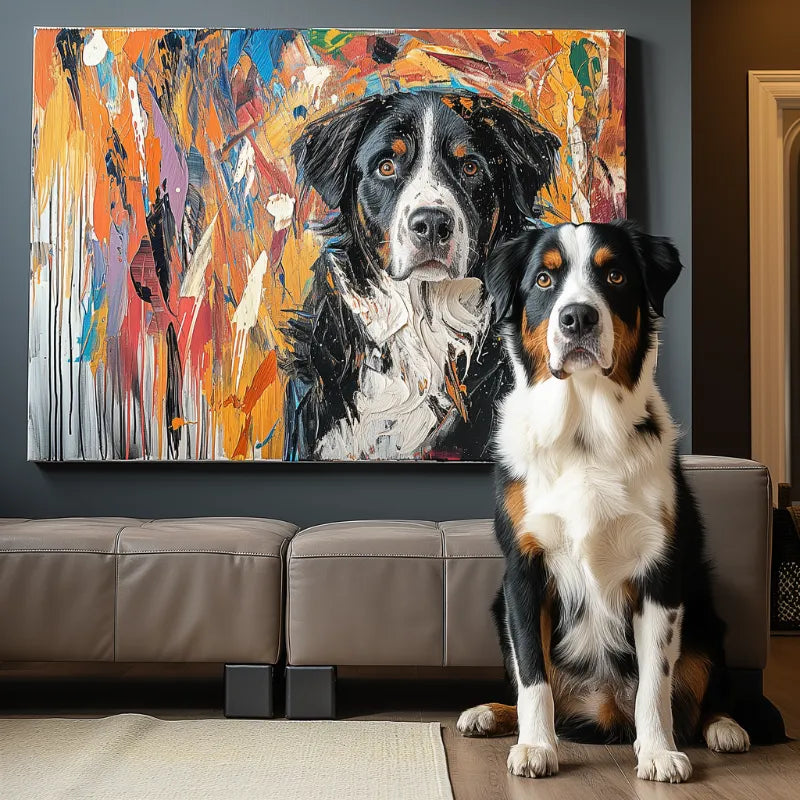
A closed-mouth photo can bring attention to the eyes, ear position, and silhouette. That can suit a pet whose familiar look is observant, calm, or gently curious. It can also avoid making an unfamiliar tongue-out expression the dominant feature of the portrait. The aim is not to make the animal look serious; it is to keep the everyday face that feels like this individual pet.

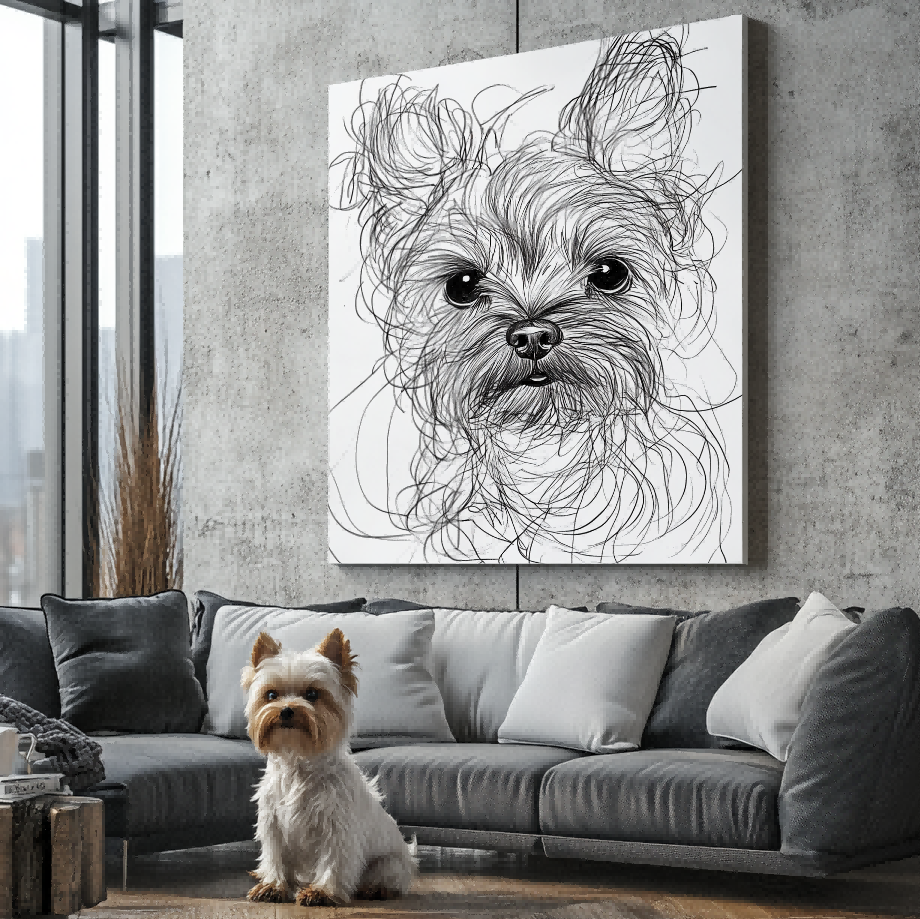
Here the facial read depends more on the eyes and small muzzle than on an open-mouth gesture. Notice that the source and artwork are not identical photographs; use the comparison to judge which features remained recognizable, not to infer a guaranteed result for every order.
Do not confuse mouth expression with gaze direction
A pet can have an open mouth and look away, or a closed mouth and make direct eye contact. These are separate choices. Our eye-contact versus side-gaze guide addresses the direction of attention. Here, focus on the mouth and how it changes the familiar character of the face. If the photos differ in pose, light, and crop as well, isolate one decision at a time instead of assuming the mouth caused every difference.
Check the source photo before asking for a change
If your favorite image is sharp and the expression already feels right, it is usually the clearest starting point to evaluate. If one photo shows the preferred mouth but another shows the pet’s markings better, keep both as references and ask what the current ordering process actually accepts. Do not assume two photos will be blended or that an unseen expression can be recreated from a written note.
Use the reference-photo set guide for the one-versus-several-files decision. If a preview is provided for your selected item, inspect it for the mouth shape and other identity anchors before responding; the Customer Preview checklist explains how to give specific feedback. A preview shows artwork at that stage, not a physical print or a promise of a particular edit.
A practical two-photo test
- Place the best open-mouth and closed-mouth originals side by side without filters.
- Ask which face a person close to the pet would recognize first.
- Check that both candidates show sharp eyes, the correct markings, and enough space around ears and muzzle.
- Imagine each image in the intended portrait size and display position.
- Choose the better original, then verify the live product’s current photo and preview requirements.
If the two photos are equally clear, preference is a valid tie-breaker. An energetic living-room portrait may feel different from a quiet remembrance piece, but neither context requires one expression. A pet’s real personality is broader than any single pose.
Explore the current Custom Pet Portrait Collection when you are ready to compare available formats. Bring the original photo that best preserves the pet’s actual face. Treat the examples above as visual evidence for making a choice—not as proof of an unlisted editing service or an identical outcome.


