

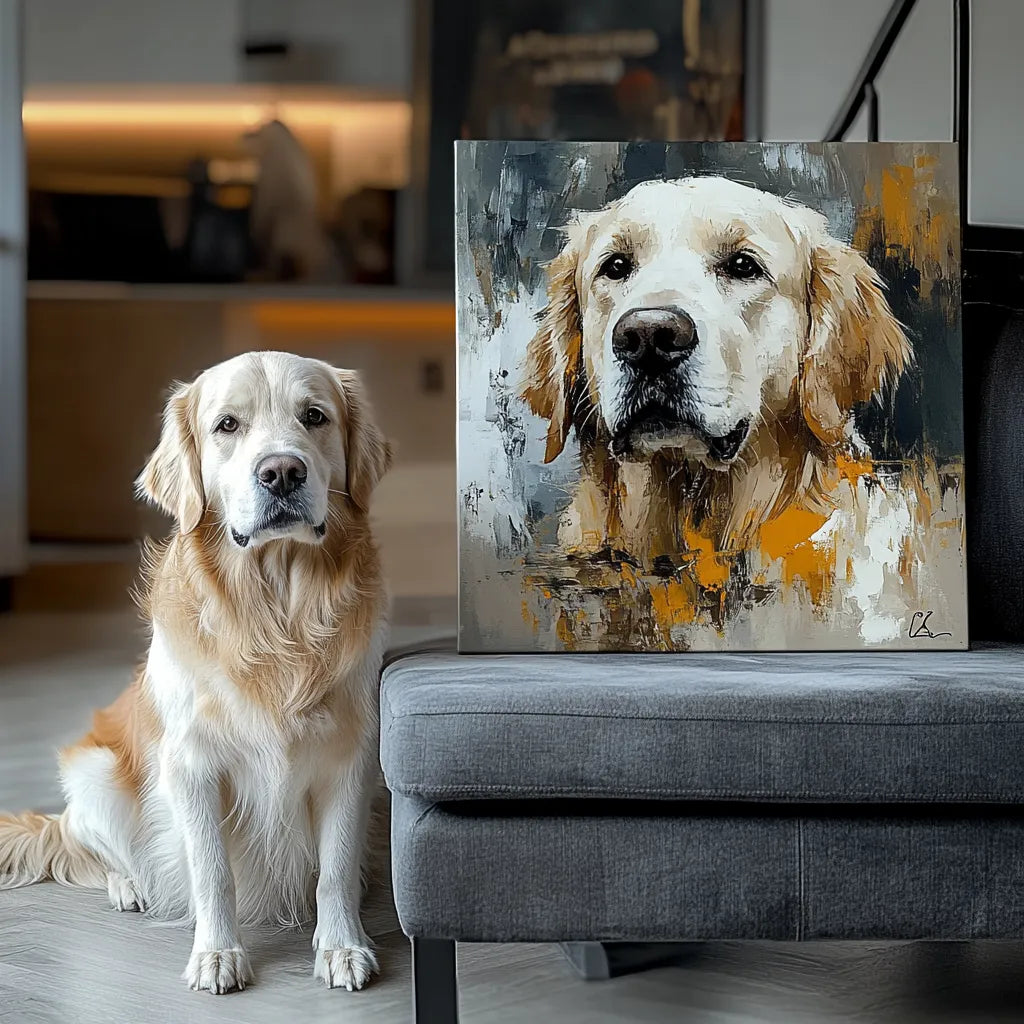
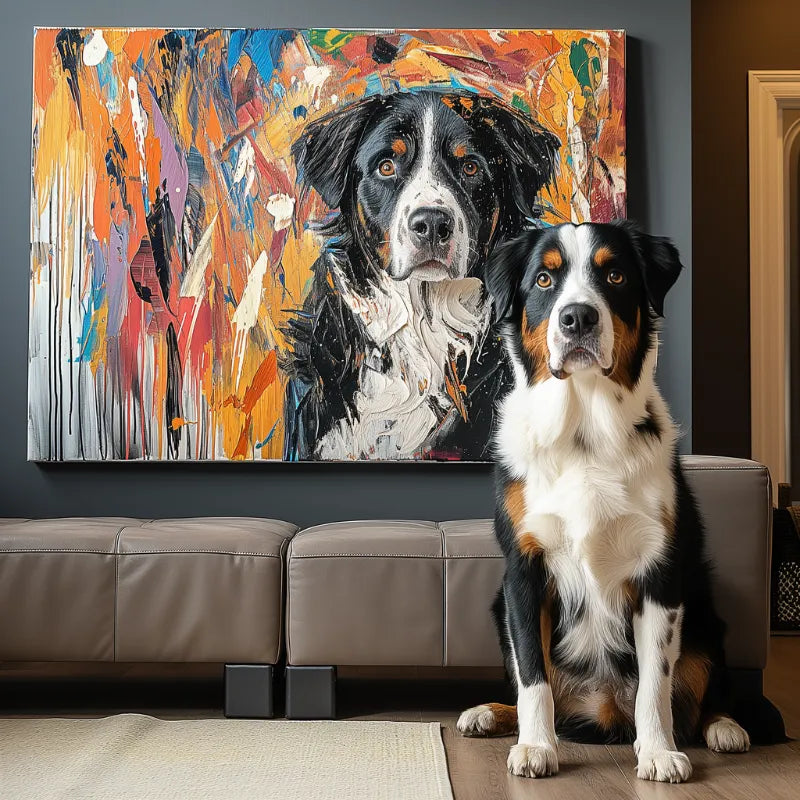

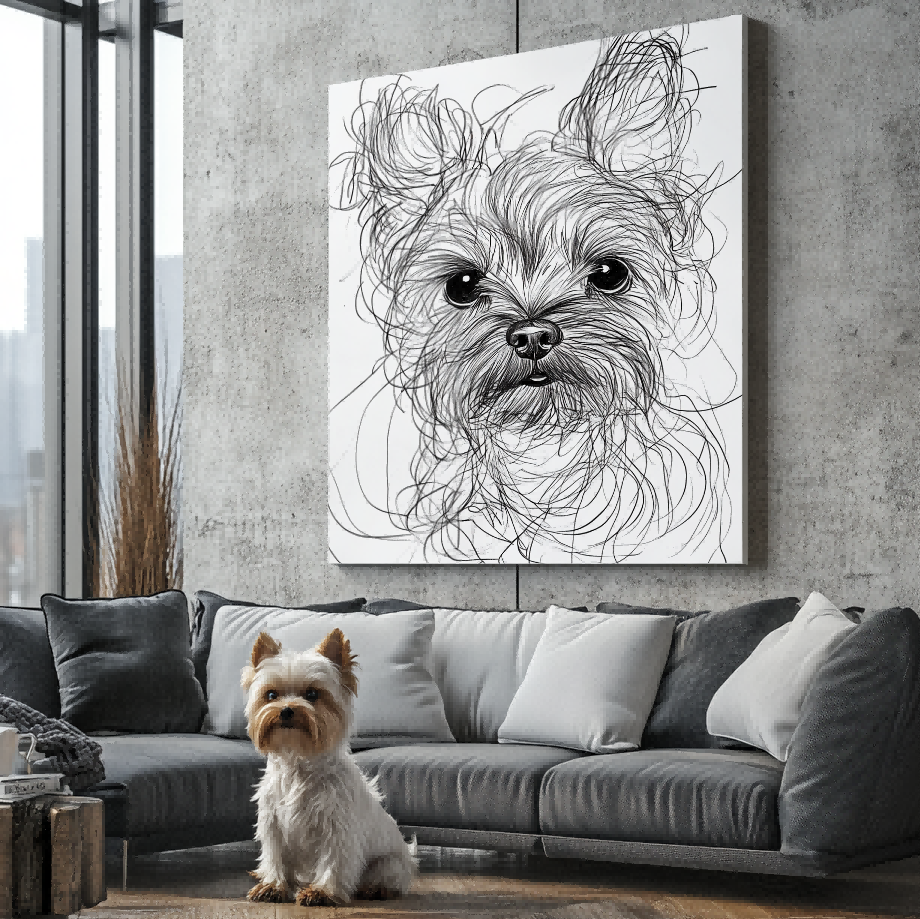

Direct answer: Plan a pet portrait gallery wall by choosing one focal piece, limiting the number of competing sizes, and testing the arrangement with paper templates before hanging anything. Consistent spacing and a clear visual hierarchy matter more than making every portrait identical.
Use the custom pet portrait size guide to understand viewing distance and wall area. This gallery-wall guide owns the multi-piece arrangement decision, not the individual product-size answer.
Start with one focal portrait
Choose the pet, pose, or composition that should attract attention first. The focal piece can be larger, more centrally placed, or visually stronger. Supporting portraits should reinforce it rather than compete at equal intensity.
If every piece uses a different size, frame, color, and style, the wall can feel accidental. Repeat at least one element, such as spacing, frame color, background family, or orientation rhythm.
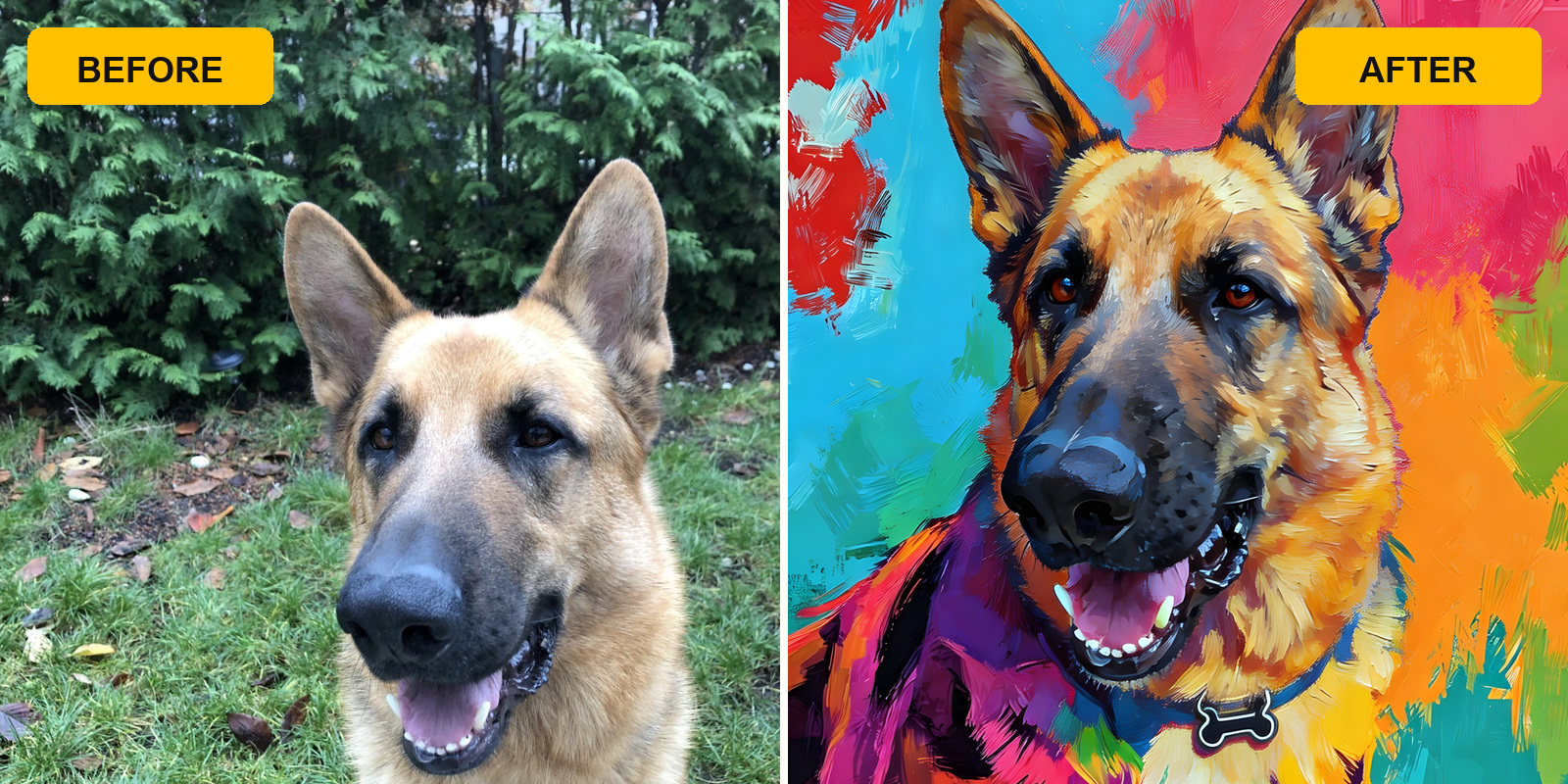
Use orientation to create rhythm
The size and orientation guide explains the Width × Height convention. Alternate orientations only when the wall shape and pet compositions support it.
A long horizontal wall can handle a row or loose grid. A narrow vertical area may work better with a stacked arrangement. Do not rotate artwork merely to fill space.
Decide between one multi-pet piece and several portraits
The multi-pet portrait guide helps when several pets may share one artwork. A single group portrait creates one focal story, while separate portraits can give each pet more individual emphasis.
Use separate source photos only when their angles, lighting, and detail can form a coherent group.
Test the wall with templates
Cut paper to the planned outer dimensions and place the templates on the wall with removable tape. Step back from normal viewing distance. Check the group against furniture, trim, doors, and nearby art.
Record the center point and spacing before removing the templates. This reduces last-minute adjustments and helps keep the layout level.
Use customer artwork as inspiration, not proof
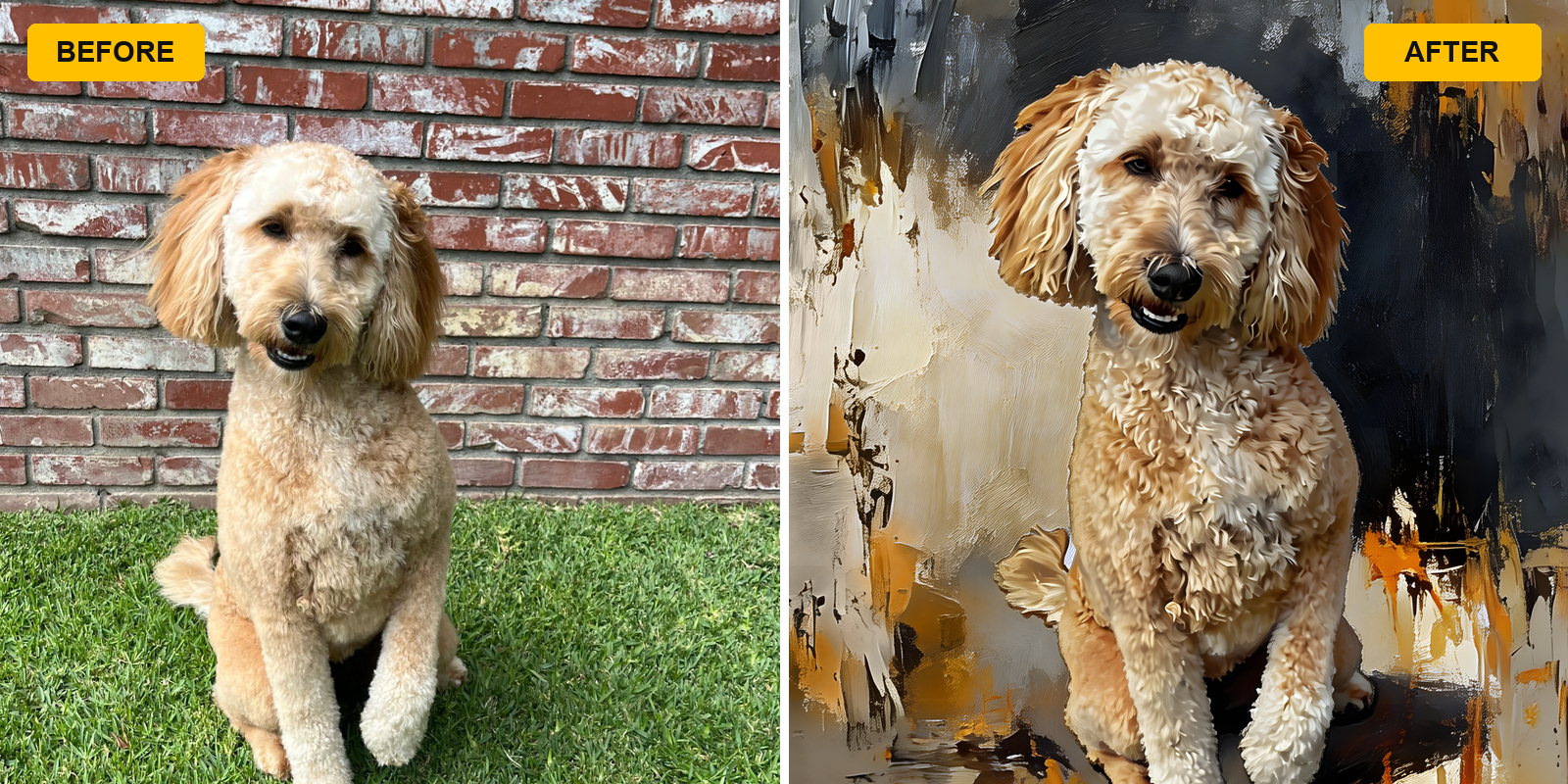
The Customer Preview Gallery can show composition variety. It does not prove that several images belong to one order or were displayed together on a wall.
Choose products only after the arrangement works
Once the wall plan is stable, compare the current custom pet portrait collection. Confirm actual sizes, optional frames, and assembly details from current product information.
Gallery wall checklist
- One portrait has a clear focal role.
- Spacing is consistent.
- Sizes repeat or follow a deliberate hierarchy.
- Orientations fit the wall shape.
- Paper templates have been tested.
- Current product facts are verified before ordering.
Plan for additions without leaving random gaps
If more pet portraits may be added later, choose an arrangement that can expand deliberately. A straight row can grow at one end, while a grid may need a complete new column. Record the spacing and outer dimensions so a future piece can follow the same system. Do not leave an unexplained empty spot just in case; use a finished composition now and document how it can expand when another verified portrait is ready.
Frequently asked questions
Do all portraits need the same frame?
No, but repeating a color or finish can make the group feel connected.
Should every pet have the same size?
Equal sizes work for a grid; a focal layout can use one larger piece and smaller supporting portraits.
Can preview images prove the final wall?
No. They are artwork-stage evidence unless a documented installation is available.
How many portraits should I use?
Use the number the wall can support with readable spacing and clear hierarchy.
Final decision
A successful gallery wall feels intentional from across the room and still lets each pet remain recognizable up close. Plan the group before ordering individual formats.


