



A floater frame is a way to surround a stretched canvas while leaving a small visible gap between the canvas edge and the frame's inner wall. That gap creates the impression that the canvas is suspended inside the outer frame. It is a physical construction, not a digital shadow effect around an image. The term is useful when you are comparing framing quotes or looking at pet portrait displays, because “framed canvas” alone does not reveal whether a floater frame is involved.
This article does not claim that a current Palette Tales product includes a floater frame, that every canvas can be fitted into one, or that any photograph below is a floater-frame product. Verify the actual listing and measurements before ordering; if you plan to frame a separate canvas, ask a qualified framer about depth, attachment, and visible spacing.
The visible gap is the defining feature
A conventional frame may have a front lip that overlaps the artwork's edge. A floater frame is designed so the face and often the side of the stretched canvas remain visible within a recessed outer boundary. The visual effect depends on the size of the gap, the depth of the canvas, and the contrast between canvas edge and frame. A dark gap can read as a shadow; a pale frame can feel lighter. None of those effects changes the actual pet artwork.
If a listing uses the word “floating” for a digital mockup rather than a real physical frame, ask for a side view or exact construction details. The word should not be treated as proof that hardware is included. A customer preview of the artwork is a different object again: it can help judge likeness and layout, but not the physical gap in a manufactured frame.
Why the canvas edge matters

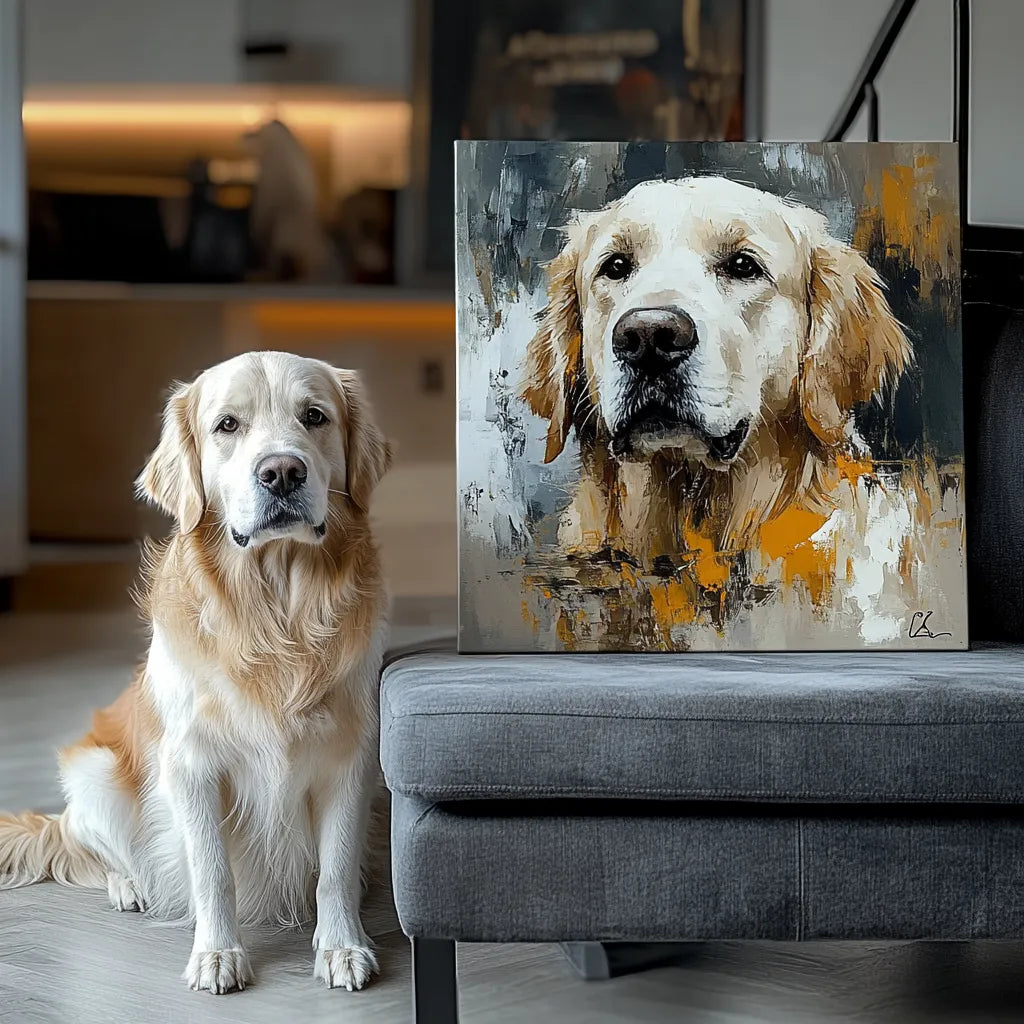
The side of a stretched canvas is part of what a floater presentation can leave visible. That makes edge treatment worth asking about. Is the image wrapped around the side, is the side a solid color, or is it another finish? Do not assume the answer from a front-only thumbnail. This approved physical image illustrates the kind of edge to inspect; it does not establish that all current Palette Tales canvases share the same construction.
A very deep canvas can require a different frame profile from a shallow one. A front view cannot tell you the depth or attachment method. If an external framer asks for measurements, give the actual finished width, height, and depth of the physical canvas, not the nominal digital image dimensions or a guessed standard size.
How a standard front-lip frame reads differently

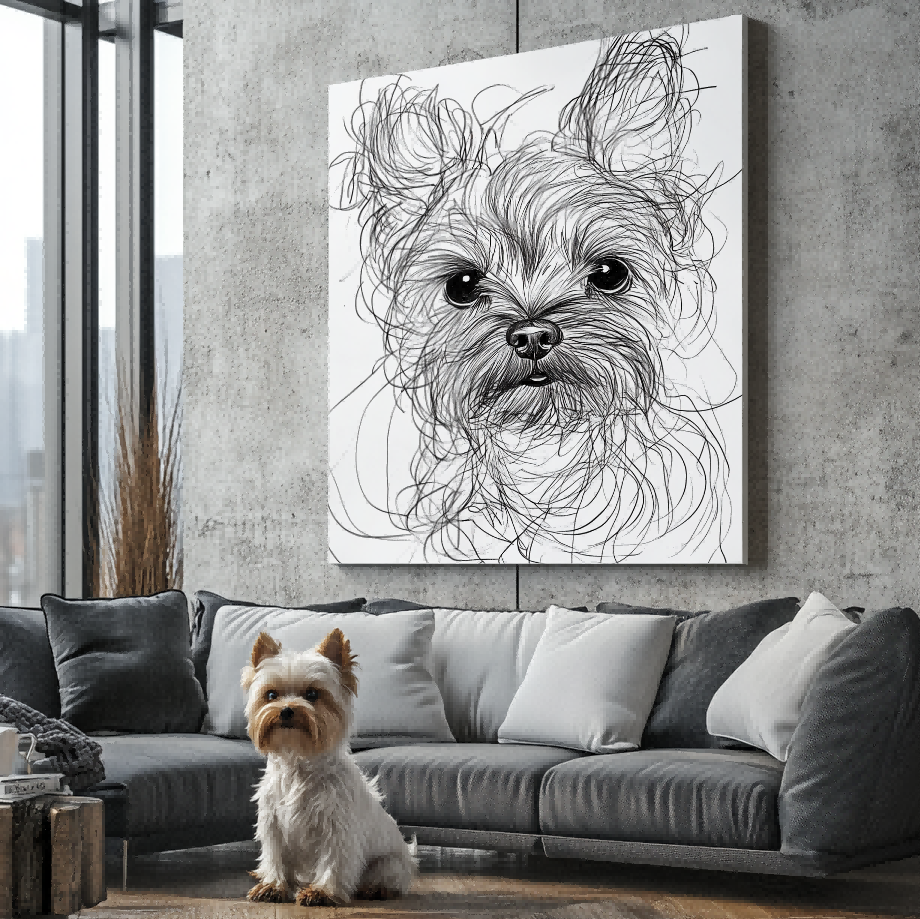
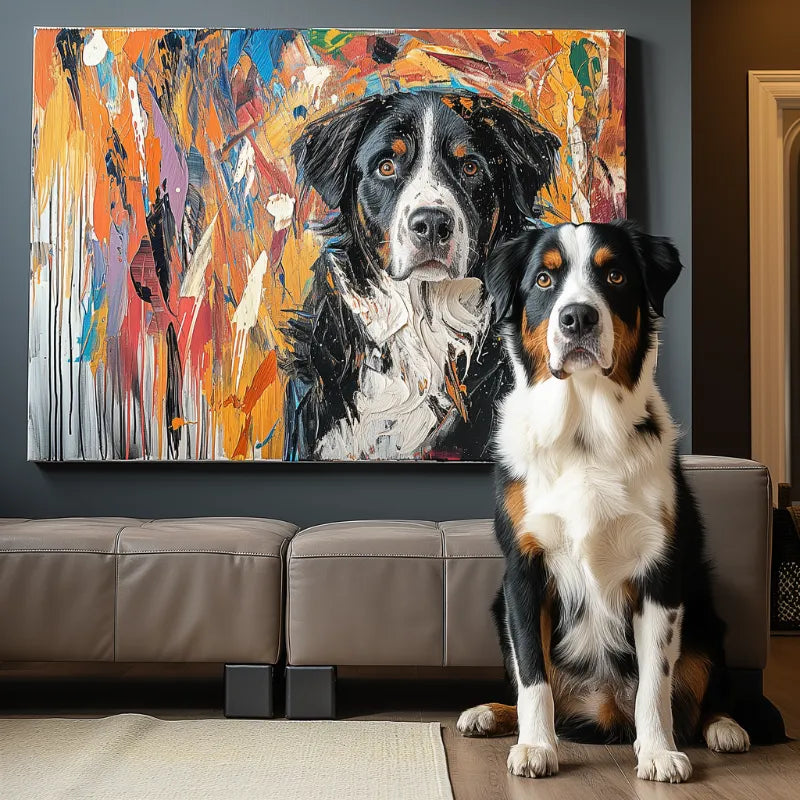
Here the frame meets the artwork close to its outer edge. It is useful as a contrast to the idea of a gap, not as a controlled A/B test: the illustration style and artwork size differ from the canvas above. The example also does not prove whether the piece has glazing. For the clear-front-sheet question, read the glass-or-no-glass guide.
Floater frame versus mat: not the same border
A mat usually sits around a flat artwork inside a frame and creates a visible window of paper-like board. A floater gap sits between the outside edges of a stretched canvas and the outer frame. One adds a visible surface around the image; the other makes a recessed separation. In a small online photo, both can look like a border. Ask for a side angle or specification when the distinction affects your purchase. The mat decision guide covers that separate choice.
When the style might suit a pet portrait
A floater frame may suit a canvas whose painted or printed edge contributes to its presentation. It can create a deliberate boundary without covering the face of the artwork. If the pet's ear, tail, or name runs close to the edge, seeing the entire face may matter to you. But do not assume a floater frame fixes an already cramped crop or makes a small face readable at a distance. Those are composition and size decisions first.
The effect can also depend on the room. A very dark frame around a dark artwork may look calm, or it may lose definition on a dark wall. A lighter frame may separate the piece more strongly. View a real sample in your room's light if possible. Frame color has its own decision path in our black-or-gold frame guide; a floater gap is about construction rather than hue.
Questions to ask before accepting a frame quote
- Does “floater” mean a physical outer frame with a visible gap, or only a mockup effect?
- What finished canvas width, height, and depth will the framer use?
- How much of the canvas edge remains visible, and will anything overlap the face?
- How is the canvas attached, and can the frame be removed without damage?
- Is the frame included with the product, or is it a separate service and price?
These questions keep a terminology search from turning into an unverified product expectation. A seller may offer only some frame styles or none at all; use the current listing and a written specification. If the artwork is a flat paper print rather than stretched canvas, a floater frame for canvas may be the wrong category entirely.
Choose the portrait artwork first, then decide whether its physical edge should be exposed, covered by a conventional lip, or surrounded by another presentation. The framed portrait buying guide covers general fit. You can explore current Custom Pet Portraits, but verify the exact frame option rather than inferring a floater frame from these educational examples.


