



I used to be scared of big wall art.
Every time I saw a massive canvas in a store or someone's house, I'd think: that's bold. Too bold for me. I stuck with small frames, medium prints, nothing that would dominate a room. Safer that way. If I got it wrong, at least it wouldn't be a giant mistake staring at me every day.
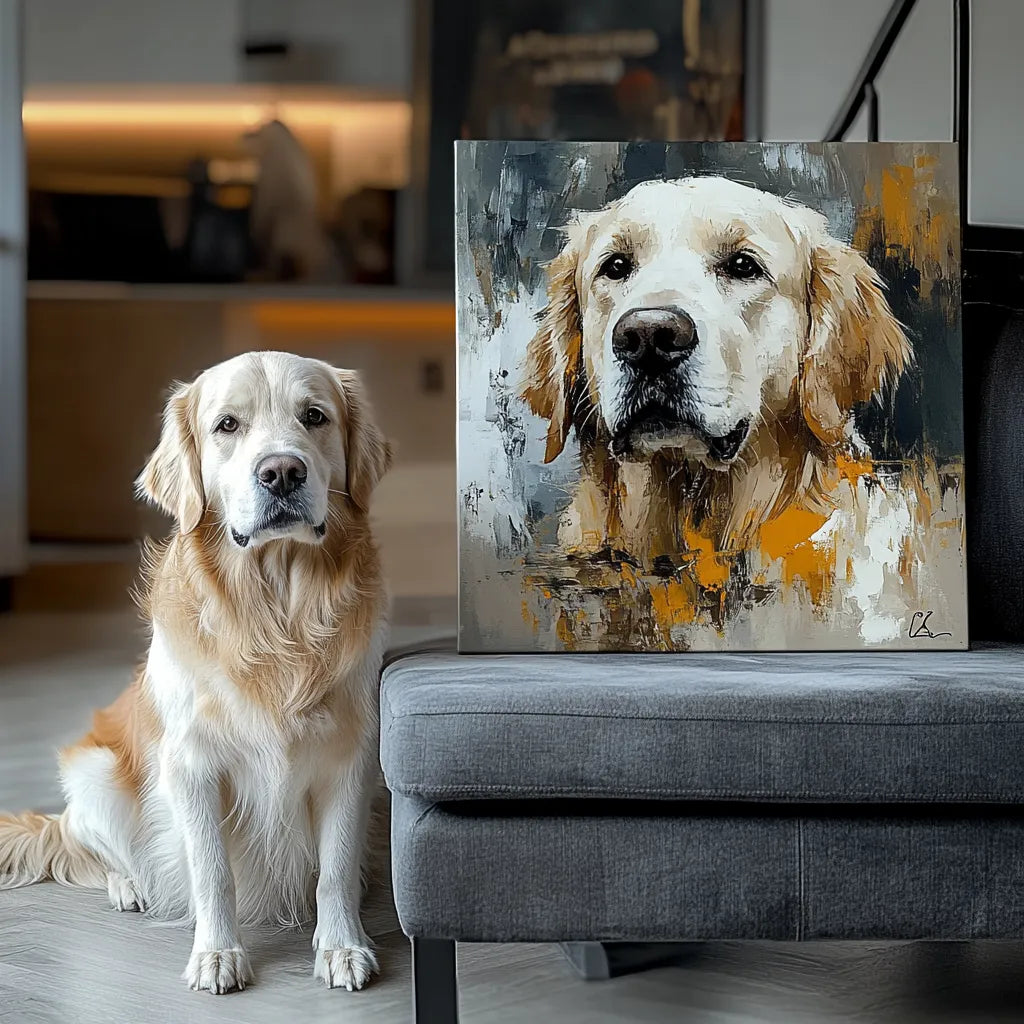
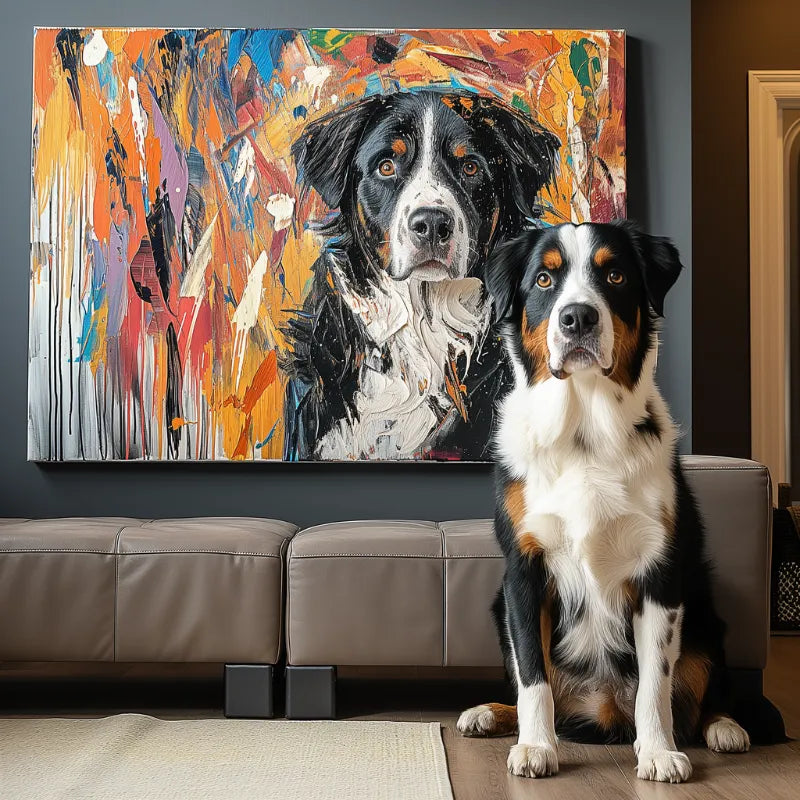
Then I finally took the plunge. Got a 24×36" canvas of my dog—full-on, statement-piece size—and put it above my sofa.
And honestly? I felt like an idiot for waiting so long.

Why Big Art Just Works Better
Here's the thing about large canvas prints: they anchor a room in a way that small pieces just can't. A big wall with small art looks scattered. A big wall with one large canvas looks intentional. Like you actually planned it, not just threw stuff up until it felt "done."
One designer put it this way: "Oversized canvas prints create a gallery-like impact in living rooms, bedrooms, and entryways". The key is a strong image, clean surroundings, and letting the art do the talking.
And it's not just my opinion—people are buying into this in a big way. The global wall art and canvas print market was worth $74.19 billion in 2025** and is projected to hit **$123.40 billion by 2035. That's serious money. Wall art searches on Google have roughly doubled over two years. People want their walls to actually mean something.
The trend in 2026 is clear: instead of filling walls with many small pieces, homeowners are choosing one large focal artwork. Designers are recommending oversized statement pieces that are 40 inches or more wide to define modern living spaces.

What Actually Counts as "Large"?
I used to think anything bigger than a sheet of paper was "large." Turns out, there's a bit more to it.
Medium-large: 16×20" or 20×24". These are big enough to stand alone but won't take over a room. Good for bedrooms, hallways, or smaller living spaces.
Large: 24×36". This is the sweet spot for most living rooms. It's bold without being overwhelming. It's what I ended up going with, and it fits perfectly above my sofa.
Extra large: 30×40" or bigger. These are statement pieces. They work best on large empty walls, above sofas, or in entryways.
One thing I learned: if you're going big, go all the way. A 16×20 on a massive wall will look tiny and lost. A 30×40 on the same wall? It'll look like it belongs there.
Palette Tales offers sizes up to 36×24" for their custom pet portraits, with frame options starting at $29.

Where to Put a Large Canvas Print (Without Regretting It)
This was the part I overthought the most. Here's what actually works:
Above the sofa. This is the classic spot for a reason. The art should be about two-thirds the width of the furniture below it. If you've got a standard 84" sofa, you're looking at a canvas around 48" to 60" wide. For most people, that means a 24×36" or 30×40" piece.
Above the bed. A large canvas above a headboard creates a focal point that anchors the whole room. Go with calming colors here—bedrooms should feel restful, not chaotic.
In the entryway. First impressions matter. A large canvas in your entryway sets the tone for the whole house. Go bold here—it's your chance to show personality.
On a large empty wall. Sometimes you just have a big wall and no idea what to do with it. A single large canvas is often better than a bunch of small ones that look scattered.
A good rule of thumb: your canvas should cover 60–75% of the available wall space above furniture. And the center of the artwork should sit around 57 to 60 inches from the floor—roughly eye level.

What's Trending in 2026 (and Why You Should Care)
I keep an eye on this stuff because, honestly, I don't want my walls to look dated. Here's what's happening right now:
Oversized single canvases are taking over. Instead of gallery walls with a dozen small frames, people are going with one bold piece that commands attention.
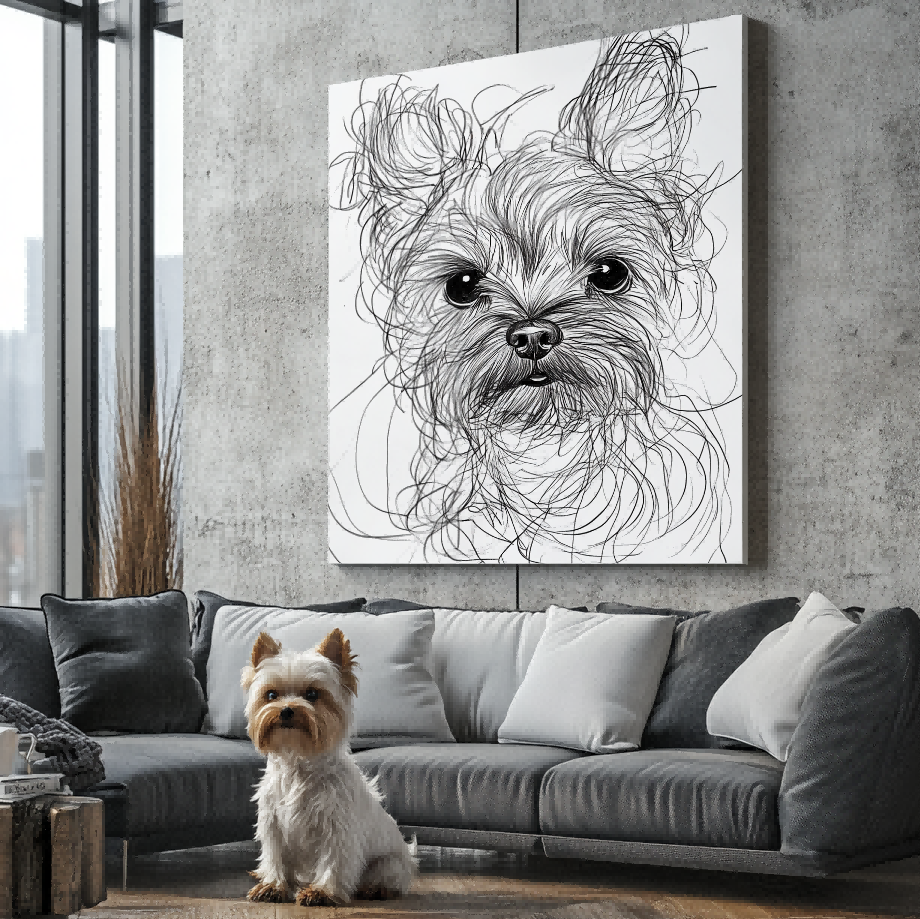
Personalization is huge. Mass-produced prints are being replaced by meaningful pieces—family photos, travel memories, and pet portraits turned into art. One report noted that customizable personal photos—from weddings, babies, and pets—are driving demand for canvas printing services.
Texture matters. Flat, glossy prints are out. People want canvases with visible brushwork and three-dimensional elements that bring sensory depth. The natural weave of canvas adds a tactile quality that paper prints just can't replicate.
Earthy tones and calming colors are leading the way. Think warm terracotta, sage green, soft clay—colors that create a calming, grounded atmosphere.

What Makes a Large Canvas Print Actually Good?
I learned this the hard way after buying a cheap large canvas that looked great in the listing and terrible on my wall. Here's what to look for:
Canvas weight matters. Cheap canvases use lightweight cotton that warps and sags over time. Good ones use heavier material—around 13 oz—that stays tight on the frame.
The frame inside matters. Every stretched canvas has a wooden frame inside. Cheap ones use soft wood that bends. Good ones use wood, knot-free wood that stays straight.
Ink quality matters. Archival, fade-resistant inks keep your portrait looking good for decades. Cheap inks fade within a few years.
Texture adds value. The natural weave of the canvas creates depth that flat prints can't match. It's what makes a canvas feel like art instead of just a photo on fabric.
High-quality canvas prints are designed to last for many years without fading or warping when produced with proper materials and techniques.

Why Custom Large Canvases Are Worth It
This is where Palette Tales comes in.
Instead of buying a generic large canvas print from a big-box store, you can get a custom one made from your own photo. For pet owners, this is a game-changer.
With Palette Tales, you upload a photo of your pet and they turn it into a large canvas print. The canvas is 13-oz cotton, hand-stretched over wooden frames. Archival inks resist fading. And they offer frame options starting at $29.
For a large canvas like 24×36", it becomes a real focal point. One Palette Tales customer said their 24×36" canvas of their golden retriever is now the centerpiece of their living room—every guest comments on it.
If you want to see what a custom large canvas looks like, browse the full portrait collection here.
A Few Things I Learned the Hard Way
-
Measure your wall first. I bought a canvas that was too big for my hallway once. Looked ridiculous. Measure before you order.
-
Use a high-resolution photo. The better the original, the sharper the print. For a 24×36" canvas, aim for about 3600×5400 pixels.
-
Consider the room's colors. If your space has warm tones, a cool-toned canvas might clash. Neutral colors—black, white, earthy tones—tend to work anywhere.
-
Don't be afraid to go big. I was hesitant at first, but now I wish I'd gone even bigger. The impact of a large canvas is worth the investment.
FAQ – Large Canvas Prints
1. What size is considered a large canvas print?
Large canvas prints typically start at 24×36". Extra large options go up to 30×40" or bigger. Medium-large sizes like 16×20" and 20×24" are also popular.
2. Where should I hang a large canvas print?
Above the sofa, above the bed, in entryways, or on large empty walls. The art should be about two-thirds the width of the furniture below it.
3. How much do large canvas prints cost?
Prices vary widely. Blank large canvases start around $30–$50. Custom printed large canvases typically run $100–$300 depending on size and quality.
4. What resolution do I need for a large canvas print?
For a 24×36" canvas, aim for about 3600×5400 pixels. Most modern smartphones can produce images suitable for medium-sized prints.
5. How long does a large canvas print last?
With proper care—out of direct sunlight, away from moisture—a good-quality canvas can last 50–100 years.
6. Can I get a custom large canvas of my pet?
Yes. Palette Tales specializes in custom pet portraits on large canvases. They use 13-oz cotton and archival inks.
7. What's the difference between a canvas print and a framed print?
A canvas print is printed directly onto canvas and stretched over a wooden frame. A framed print is paper or photo paper placed inside a separate frame with glass. Canvas prints don't need glass and have a more textured, artistic feel.
8. Where can I buy a custom large canvas print online?
You can find options on Etsy, Amazon, and specialty sites. Browse Palette Tales' full portrait collection here.
I spent years playing it safe with small art. Then I finally went big with a 24×36" canvas of my dog, and I haven't looked back. It changed the whole feel of my living room.
If you've got a favorite photo and a blank wall, don't overthink it. Just go big.
Visit www.palettetales.com to see their custom canvas options. Code WELCOME gets you 10% off your first order.


