

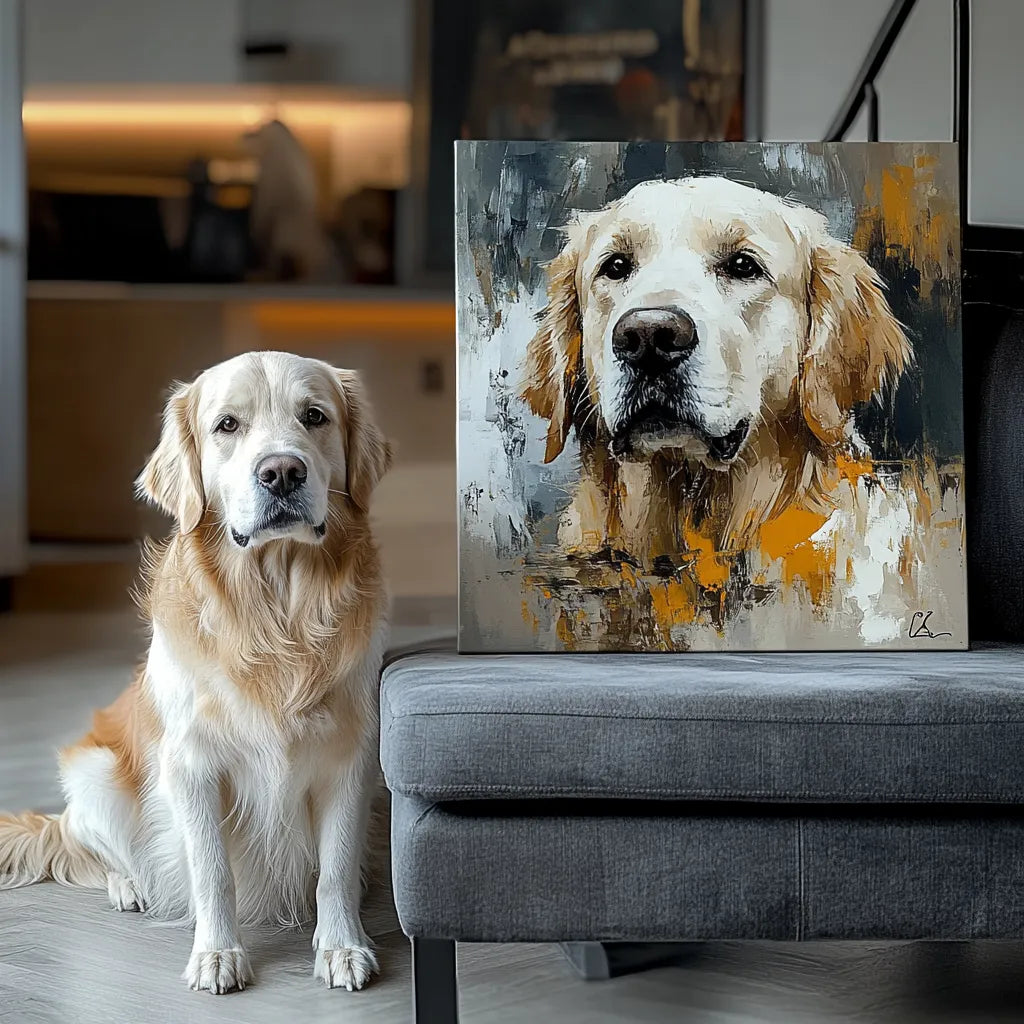
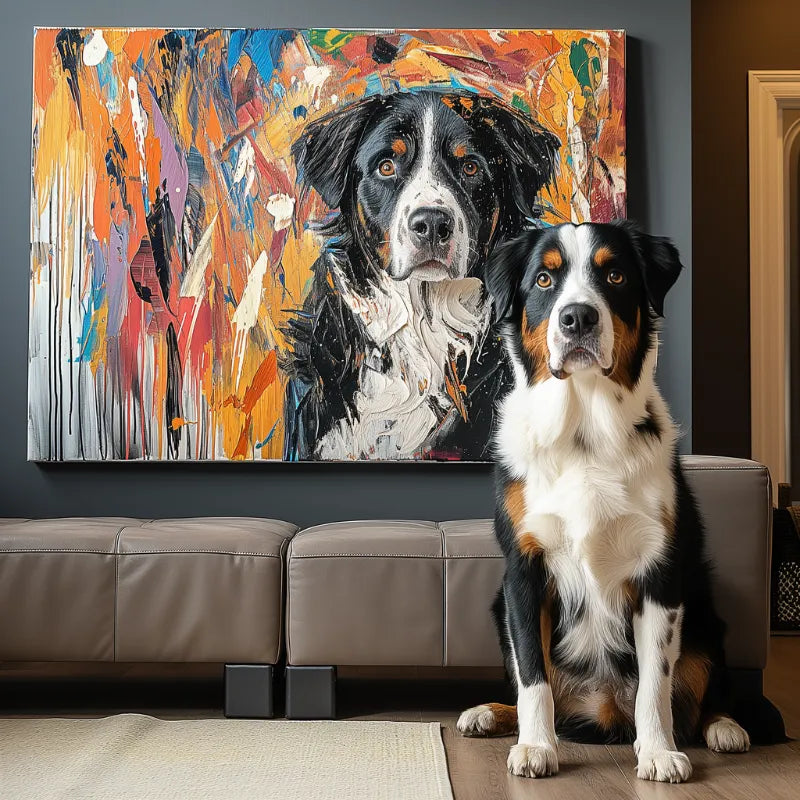

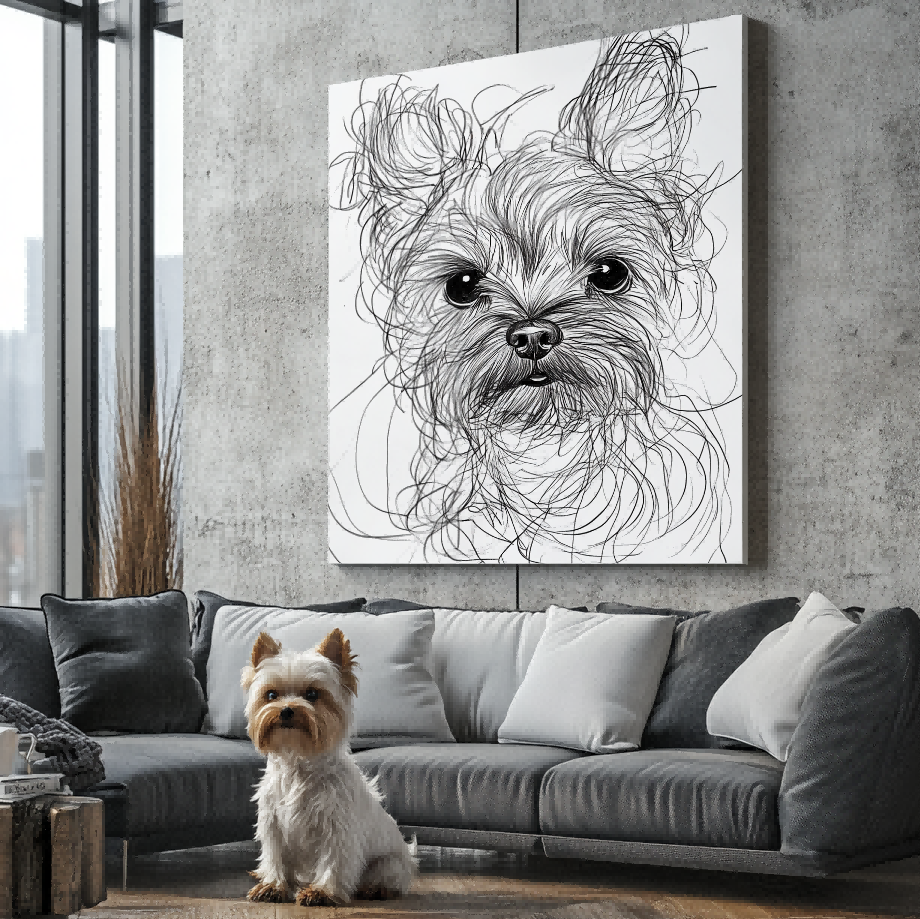

Direct answer: Art canvas is a woven fabric surface-commonly cotton or linen-that is prepared for painting and may be stretched over a supporting frame.
I used to think art canvas was just. you know, that bumpy fabric stretched over a wooden frame. The stuff paintings are made on. Never really thought much about it beyond that.
Then I started ordering custom pet portraits, and suddenly I had to actually care about what kind of canvas I was getting. Cotton? Linen? What's the difference? Why does it matter?
Turns out, there's a lot more to art canvas than I ever realized. And once you understand what it actually is, you start noticing it everywhere-not just in museums, but on walls in living rooms, offices, even tote bags and phone cases.
If you're curious what art canvas looks like when it's turned into a custom pet portrait, check out the collection Palette Tales offers here.

The Short Version: What Art Canvas Actually Is
At its simplest, an?art canvas?is a durable, plain-woven fabric-usually cotton or linen-stretched over a wooden frame and coated with a primer called gesso. The gesso seals the fabric so paint doesn't soak through and cause the canvas to decay over time.
But that definition doesn't really do it justice.
Canvas has been the dominant painting surface for over 500 years. It replaced heavy, expensive wood panels during the Italian Renaissance because it was lighter, cheaper, and could be made in much larger sizes. One of the earliest surviving oil paintings on canvas is a French Madonna with angels from around 1410. By the 17th century, canvas had spread throughout Northern Europe and pretty much replaced wooden panels entirely.
The word itself is interesting. "Canvas" comes from the 13th-century Anglo-French?canevaz, which traces back to the Latin word?cannabis-meaning "made of hemp". The first artists' canvases were actually made from high-quality Venetian hemp sailcloth. So yeah, canvas and cannabis share a linguistic root. Didn't know that until I started digging into this stuff.
Canvas isn't just for paintings either. It's used for sails, tents, backpacks, shoes, and even handbags. It's basically the heavy-duty workhorse of the fabric world.

The Two Main Types: Cotton vs. Linen
This is the question I kept running into when I was shopping for canvases.
Cotton canvas?is the most common type today. It's affordable, naturally stretchy, and easy to paint on. The downside? It stretches more than linen, which some professional artists don't prefer. But for most people-especially for custom prints-cotton is the sweet spot between quality and cost.
Linen canvas?is the premium option. It's finer, more moisture-resistant, and stronger than cotton. Professional artists often prefer it because it holds up better over time. The catch? It costs significantly more.
For most custom pet portraits, high-quality cotton does the job perfectly. That's what Palette Tales uses for their canvases-premium cotton that is selected for the intended format.
There are also specialty fibers like hemp and jute, though they're less common.

Why Art Canvas Became the Gold Standard
So why do artists (and art lovers) keep coming back to canvas after all these centuries?
For the broader material definition that supports this art-surface topic, read What Is Canvas?.
Texture.?Canvas has a woven surface that adds depth to paintings in a way that smooth surfaces like paper or wood can't replicate. On canvas, images gain warmth and texture-color fields feel deeper, and the artwork reads less like a reproduction and more like an object in its own right.
Durability.?Canvas is impressively resilient. The canvas segment alone was valued at a significant portion of the $74.19 billion wall art market in 2025, prized for its classic texture and visual depth. High-quality stretched canvas provides a durable foundation that offers a distinct woven surface compared with paper.
Versatility.?Canvas works with almost every medium-oil, acrylic, watercolor (with the right preparation), and even digital printing. It's the Swiss Army knife of art surfaces.
It just feels like art.?There's something about canvas that makes a piece feel finished and intentional. Paper prints can look like posters. Canvas looks like something you'd actually hang in a gallery.

Art Canvas in 2026: Bigger Than Ever
Here's something that surprised me: the global wall art market was valued at?$61.0 billion in 2024** and is projected to grow to **$98.76 billion by 2033. The wall art market is expected to grow at a CAGR of?5.5%?during the forecast period.
Once the surface is understood, the canvas paint selection guide answers the practical question of which paint characteristics matter.
Canvas wall art holds the largest share of the global market, accounting for approximately?34% of total revenue?in 2025. The Artist Canvas Market itself was valued at?$3.48 billion in 2025** and is projected to grow to **$5.0 billion by 2035.
And it's not just about traditional paintings anymore. Canvas prints-where digital images are printed directly onto canvas-are driving a huge chunk of that growth. Art Reproductions and Canvas Prints saw aggregate online sales of?$773 million in 2025, with expected growth of?10-20% in 2026.
Major trends shaping the market in 2026 include:
-
Rising popularity of customized and digital wall art
-
Growing online art marketplace adoption
-
Expansion of on-demand printing technologies
-
Enhanced focus on interior personalization
Nearly?58% of consumers?now prefer personalized wall d?cor that matches their homes, style, and memories.
For a less technical, experience-based follow-up, read these first-person canvas paint lessons.
If you want to see how art canvas is being used for custom pet portraits today, browse the full portrait collection here.

Art Canvas vs. Canvas Print: What's the Difference?
This is something I see people get confused about all the time.
An?art canvas?(or canvas painting) is an original work of art created by hand-usually with oil or acrylic paint directly applied to primed canvas.
A?canvas print?is a high-resolution reproduction of an image printed onto canvas fabric, which is then stretched over a wooden frame.
Canvas prints offer consistent color, professional quality, and accessible pricing across many sizes. They give you the look and feel of a handcrafted artwork without the cost of commissioning an original painting.
For a product-finish question rather than an art-history question, compare Texture Art versus regular prints.
For custom pet portraits, canvas prints are the sweet spot. You get the texture, depth, and durability of art canvas at a fraction of the price of a hand-painted portrait.

What I Look For in Art Canvas Now
After all the research and way too many orders, here's what I actually care about when I'm buying a canvas:
Material.?Cotton is fine for most purposes. Linen is better but costs more. For a custom pet portrait, good cotton does the job perfectly.
Weight.?Cheap canvases use lightweight fabric that warps. Good ones use heavier material-around 13 oz-that stays tight on the frame.
The frame.?Inside every stretched canvas is a wooden frame. Cheap ones use soft wood that bends. Good ones use kiln-dried, knot-free wood that stays straight.
Priming.?Most ready-made canvases are triple-primed with gesso, which creates a stable surface less likely to crack over time.
Ink quality.?If it's a print, the ink matters. Advances in giclee printing technology using high-fidelity current print specifications allow for fine visual detail. Print quality depends on the current production specifications and care guidance.
Canvas, Art Canvas, and Canvas Paper: A Quick Definition
Canvas is a durable woven surface, commonly cotton or linen, that is prepared for painting or for displaying printed artwork. In an art context, “art canvas” means the prepared surface or finished canvas artwork rather than every everyday use of canvas fabric.
Canvas vs. paper for art display
Canvas and paper can both carry an image, but they are different supports. Canvas has a woven texture and is commonly stretched or mounted for wall display; paper is a flat sheet support and is usually framed or mounted differently. The best choice depends on the artwork, the intended finish, and how it will be displayed.
What does “art canvas” mean?
In short, it refers to canvas used as an art surface or finished art format. The term does not promise a specific fabric, coating, frame, finish, or print method unless the product details state it.
FAQ - Art Canvas
1. What is an art canvas?
An art canvas is a durable, plain-woven fabric-usually cotton or linen-stretched over a wooden frame and coated with gesso to prepare it for painting.
After the definition and history, readers exploring a personalized application can view the Custom Pet Portrait Collection.
2. What's the difference between cotton and linen canvas?
Cotton is more affordable and stretchy-great for most purposes. Linen is finer, stronger, and more moisture-resistant, but costs more.
3. Why do artists use canvas?
Canvas has a textured surface that adds depth to paintings, it's durable and long-lasting, and it works with almost every painting medium.
4. What's the difference between a canvas painting and a canvas print?
A canvas painting is an original work created by hand with paint. A canvas print is a high-resolution reproduction printed onto canvas fabric and stretched over a frame.
5. How long does a canvas print last?
With proper care-out of direct sunlight and away from moisture-a good-quality canvas can last over time with appropriate care. Advances in giclee printing with current print specifications allow for a clear visual result.
6. What does "primed" canvas mean?
Primed canvas has been coated with gesso, a primer that prepares the surface to accept paint. Most store-bought canvases come pre-primed and triple-coated.
7. Can canvas be used for things other than paintings?
Yes. Canvas is also used for sails, tents, backpacks, tote bags, shoes, and even phone cases.
8. Where can I get a custom canvas print?
You can find custom canvas prints on sites like Etsy, Amazon, and specialty shops.?Browse Palette Tales' full portrait collection here.
I used to think art canvas was just. fabric. Now I know it's the foundation of centuries of art, the reason some paintings have lasted for hundreds of years, and the reason my dog's face looks so good on my wall.
If you've got a photo you love and you want it to feel like real art, canvas is the way to go. It's been working for artists for over 500 years. Pretty sure it'll work for you too.
Visit?www.palettetales.com?to see their custom canvas options. Code WELCOME gets you 10% off your first order.


