

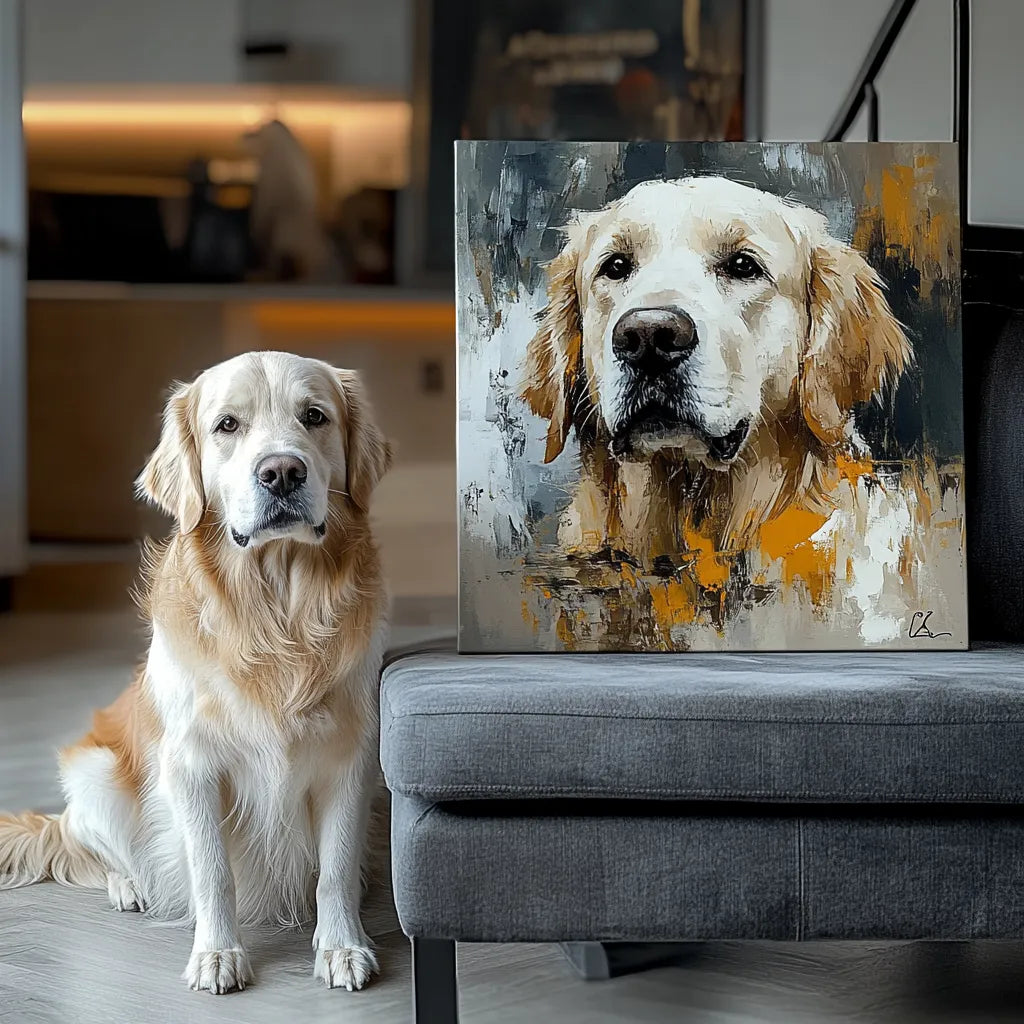
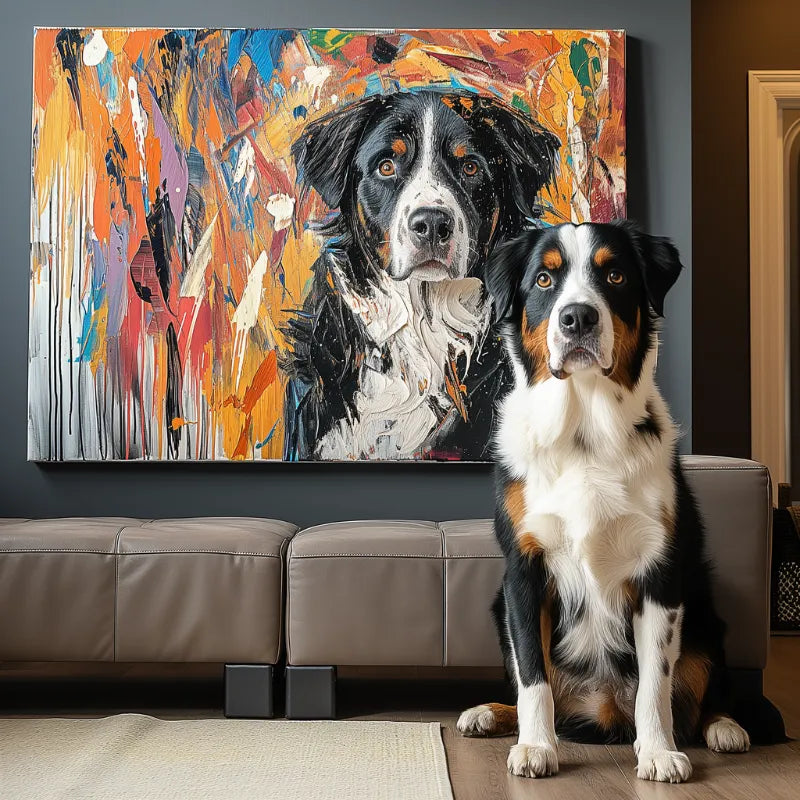

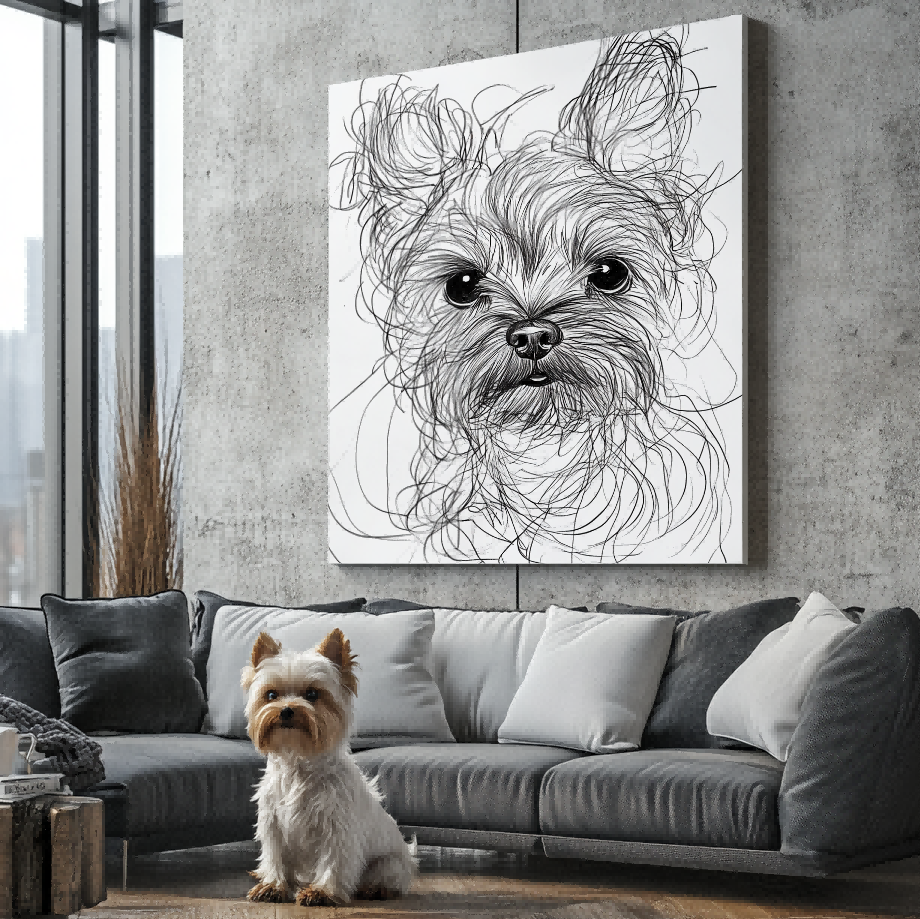

Should two pets share one portrait, or should each have an individual piece? The answer depends less on how many animals live in the home than on what the artwork needs to preserve. A shared portrait records the relationship between pets in a single composition. A coordinated set gives each animal its own visual space while letting the pieces work together on a wall.
Start by deciding what the viewer should notice first. Is the memory of the pets together the point, or does each pet deserve a distinct expression, pose, and scale? That decision clarifies the format before you compare styles or sizes. It also helps you ask a seller precise questions without assuming that every current product supports every arrangement.
When one shared portrait makes sense
A single composition can be especially meaningful if the pets have a recognizable relationship: they curl up together, walk side by side, or appear in a favorite photograph as a pair. The resulting artwork can feel like one scene rather than two separate likenesses. The challenge is balance. If one face becomes too small, or one animal visually dominates the other, the shared memory may be stronger than the individual recognition.
Look at the reference images at the size you are likely to display. Can you still see each pet’s eyes, ear shape, coat markings, and familiar expression? A photo that works beautifully on a phone may place one pet far behind the other. That does not automatically rule it out, but it signals that the composition needs a closer review. If the pets were photographed separately, ask whether the current offering supports combining them; do not infer that capability from a general example.

When separate portraits are the better decision
Two individual pieces can protect the visual identity of each pet. A shy older dog and a lively puppy, for example, may have very different expressions worth preserving. Separate artworks allow each face to remain large enough to read. They also let you choose different source photos when a strong joint photo does not exist. What ties the set together is not necessarily identical poses; it can be a consistent display height, spacing, frame treatment, or visual direction.
Separate pieces ask for a wall plan. Measure the available width and leave room between the works before settling on a size. If the display is a narrow entryway, a compact vertical pair may be easier to read than one broad scene. If the room already has several artworks, a deliberate pair may feel more at home than a new large focal piece. For a fuller layout exercise, use the pet portrait gallery wall guide; this article focuses only on the one-versus-set choice.

Use the source photos as a decision test
Before choosing either route, place the best photos of the pets side by side. Check light direction, camera angle, visible markings, and how much of each body appears. A shared image may already tell the story clearly. If it does not, separate portraits can avoid asking one composition to solve every mismatch. This is a planning test, not an assurance that a seller can merge photographs or alter a pose.
If you do have a joint photo, zoom out until it is roughly the size at which the art might be viewed from across the room. Can someone who knows both pets identify each one immediately? If yes, one image may be sufficient evidence for a shared composition. If no, consider whether the lack of detail is caused by distance, blur, shadow, or one pet blocking another. The best-photo checklist can help you assess the reference itself without turning this choice into a generic photography lesson.
Let the wall—and the memory—break the tie
For one prominent wall spot, a single shared piece can give the group a clear home. For a hallway, shelf, or growing gallery wall, an individual set may provide flexibility over time. There is no universal rule that more pets require more canvases, or that one shared canvas is always more economical. Price, sizing, materials, and format options must be checked on the current product pages; a general guide cannot establish them.
Try this final question: if only one pet’s face were visible from the doorway, would the artwork still tell the story you intended? If the answer is no, a set may protect equal attention. If the point is the way the pets belong together, a shared scene may be the more honest choice. Both routes can be personal; neither needs to be treated as the default.
What to verify before ordering
- Whether the current product can show multiple pets in one composition, and whether separate coordinated pieces are available.
- Which photographs are accepted and whether separate references can be used.
- The current format, size, frame, preview, revision, price, and delivery information on the live product page.
- Whether each pet’s identifying features are visible in the selected evidence.
The broader multi-pet portrait buying guide covers general order questions. Once you know whether one scene or a set fits the memory, explore current custom pet portrait options and verify the live choices before placing an order.


