

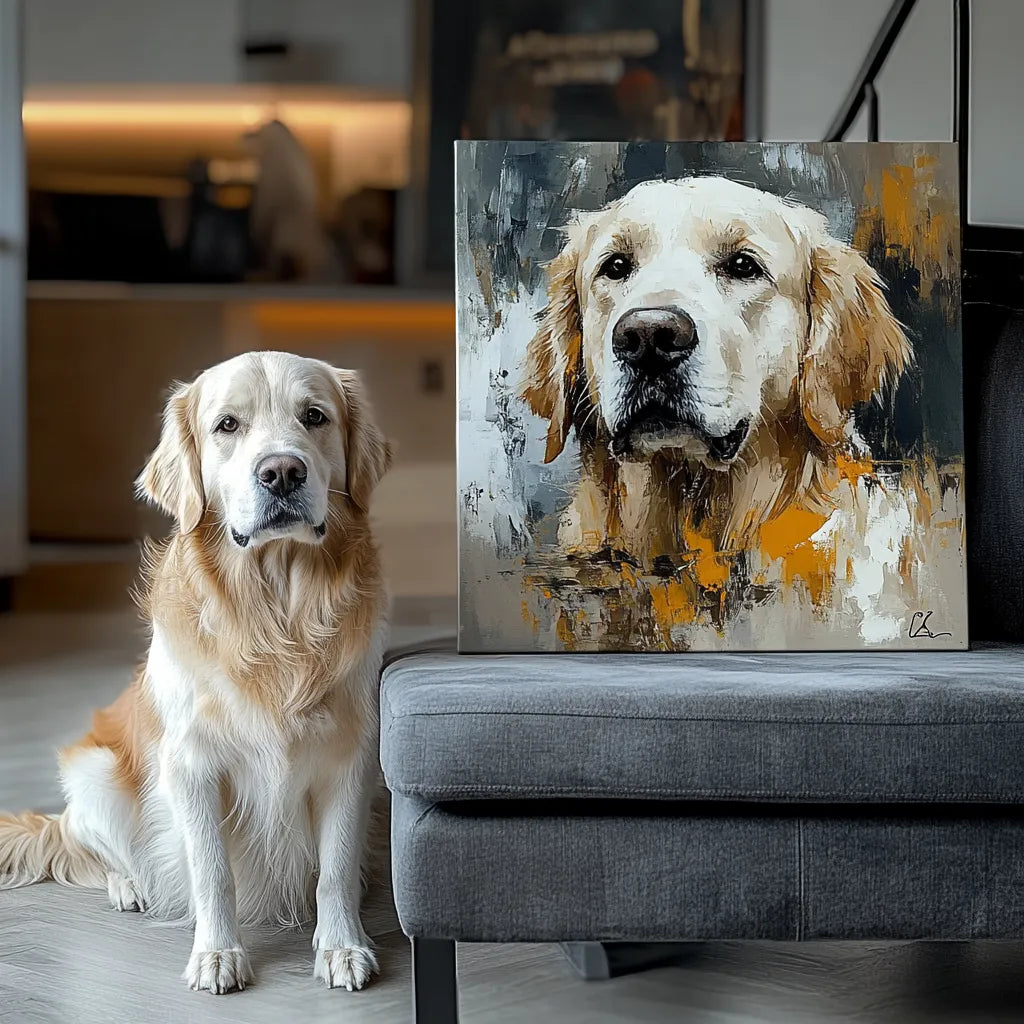
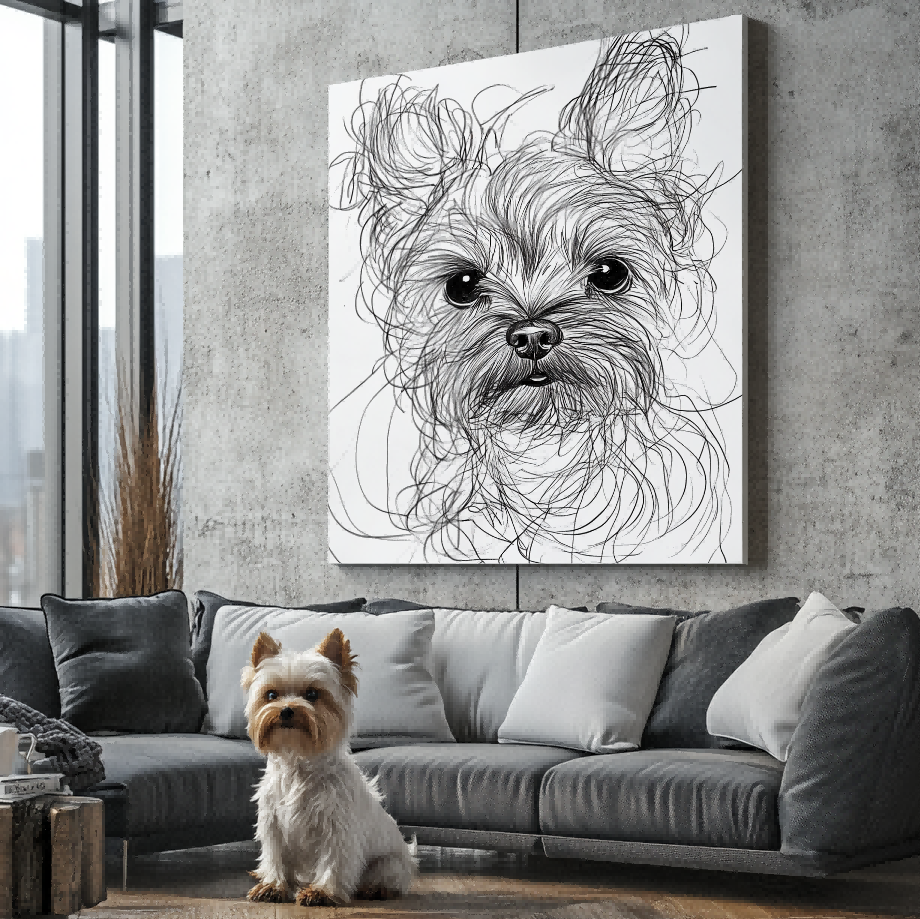
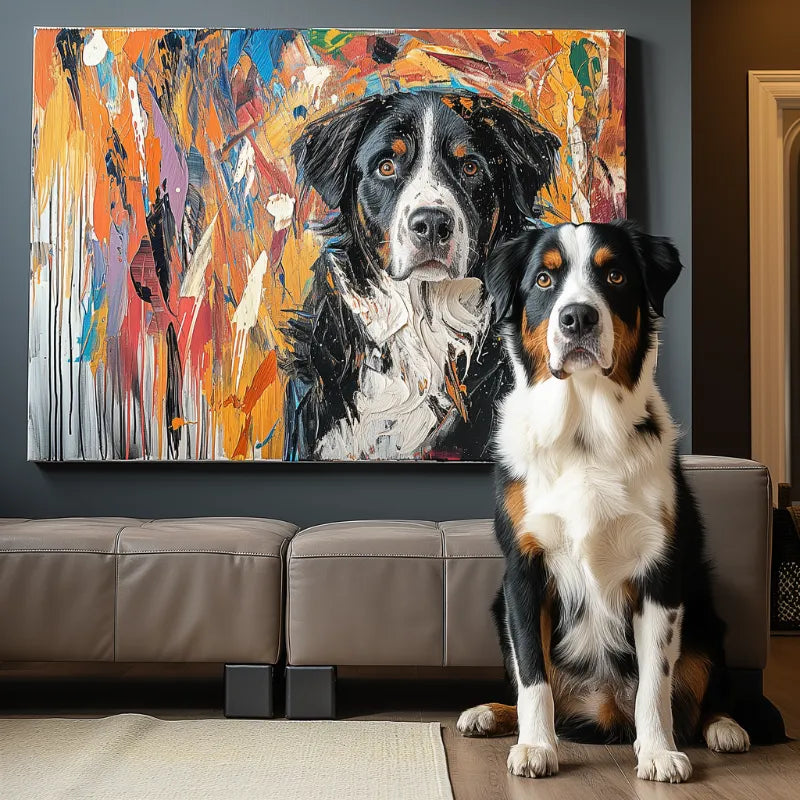


An original pet painting and a custom portrait print are not necessarily the same kind of purchase. An original painting generally means the physical work made in paint by the artist. A portrait print is an image reproduced on a support such as paper or canvas. The image can be personalized for your pet even when the delivered object is printed.
The useful question is not “Is it real art?” Both can carry artistic and personal value. Ask instead: am I buying a particular painted object, a printed version of custom artwork, or a print with an additional finish? Those distinctions help you compare what actually arrives.
Separate a unique image from a unique object
A portrait created around your dog's face can be personal without being a one-of-a-kind painted canvas. Conversely, an artist may sell both an original painting and reproductions of it. Words such as “custom” describe personalization; they do not, by themselves, explain how the physical product is produced.
Ask the seller to name the medium and the delivered format in plain language. “Acrylic painted on this canvas” answers a different question from “custom artwork printed on canvas.” If the description combines printing and hand-applied details, find out which part is printed and which part is added afterward.
A painted appearance is not proof of the process
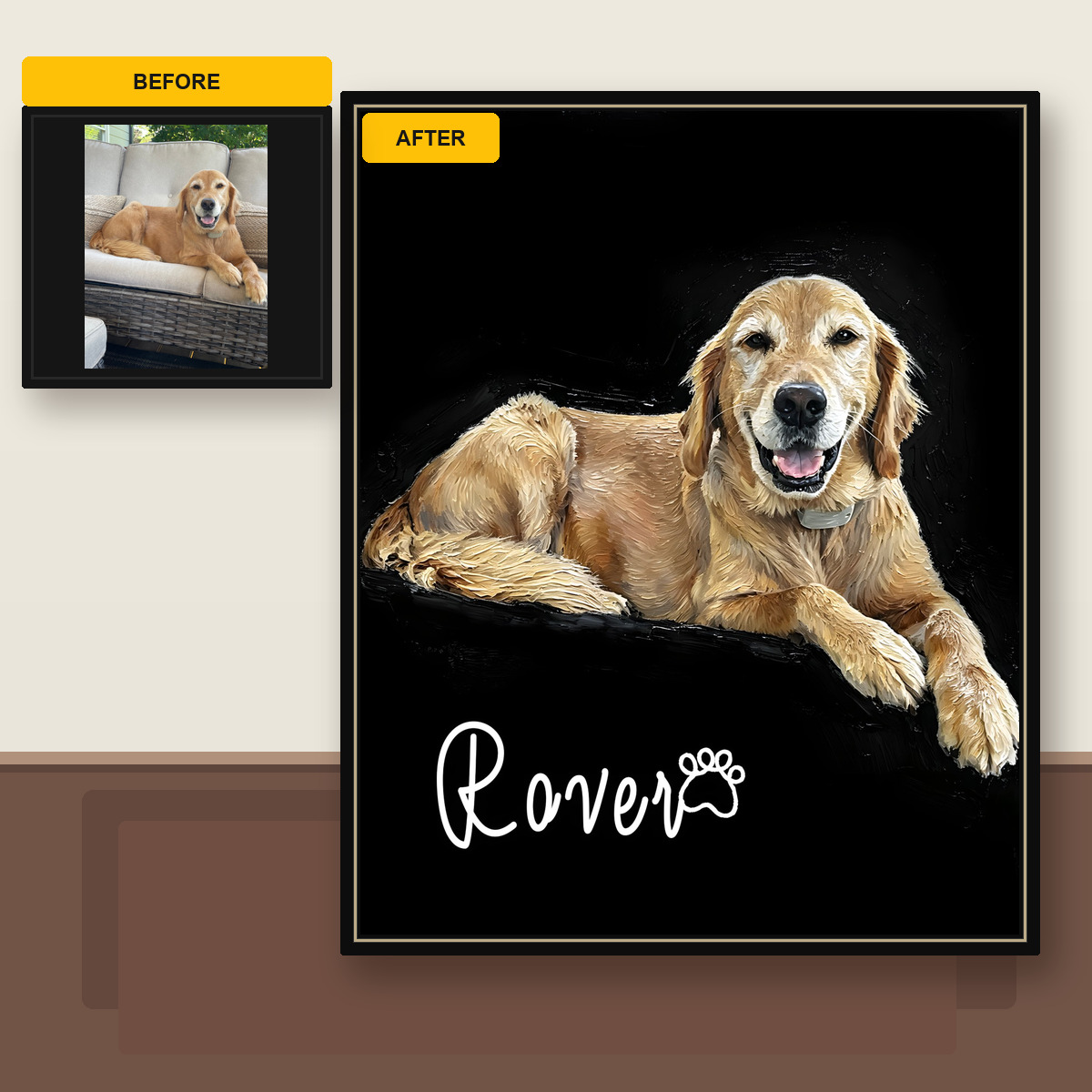
A screen image can show color, expression, and composition. It cannot establish the full production history. A picture can contain convincing brush-like marks that are part of the reproduced image. Even visible surface texture is not enough to establish that the whole work was painted from scratch; different finishes can produce different surfaces.
Palette Tales explains its own finish choice in Texture Art versus Standard Print. Use that specific information for the finish question rather than assuming a general art-market term describes every product.
Ask for evidence that fits the question
- For the object: confirm the medium, support, dimensions, and included frame or mounting.
- For the process: ask how the artwork and the physical piece are made, especially when “handmade” is used.
- For an edition: ask whether the print is open edition, numbered, or subject to a stated limit. Do not infer a limit from a signature.
- For personalization: confirm what is customized and what the artwork review covers.
A signed print is still a print. That does not make the signature meaningless; it means the signature and the production method are separate facts. Likewise, “original print” can refer to an original printmaking work, not simply a reproduction of a painting. If that term appears, ask about the actual technique instead of applying one rule to every artwork.
Choose according to what matters to you
If owning the specific object the painter worked on is central to the purchase, make that requirement explicit. If your priority is a recognizable portrait in a format that suits your home, focus on the artwork, the support, and the finished presentation. Do not assume one category is always more faithful to the pet or more durable.
For either route, separate likeness review from object verification. The Customer Preview checklist helps with expression and markings; it is not a substitute for the product specification.
A clearer next step
When exploring Custom Pet Portraits, save the artistic direction you like and check the selected format's description. Ask for clarification where process terms remain ambiguous. You can value a personal image without calling it an original painting—and make a more confident choice by knowing exactly which meaning applies.


