

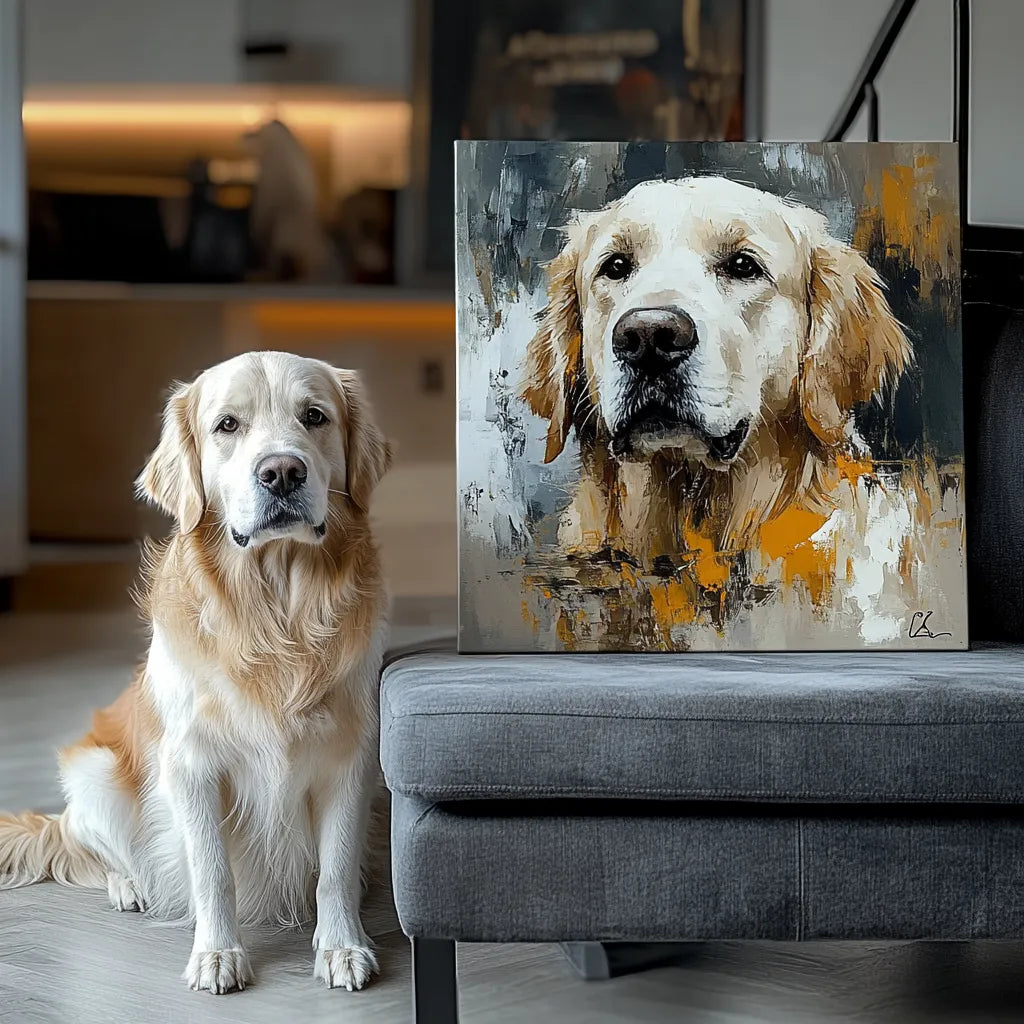
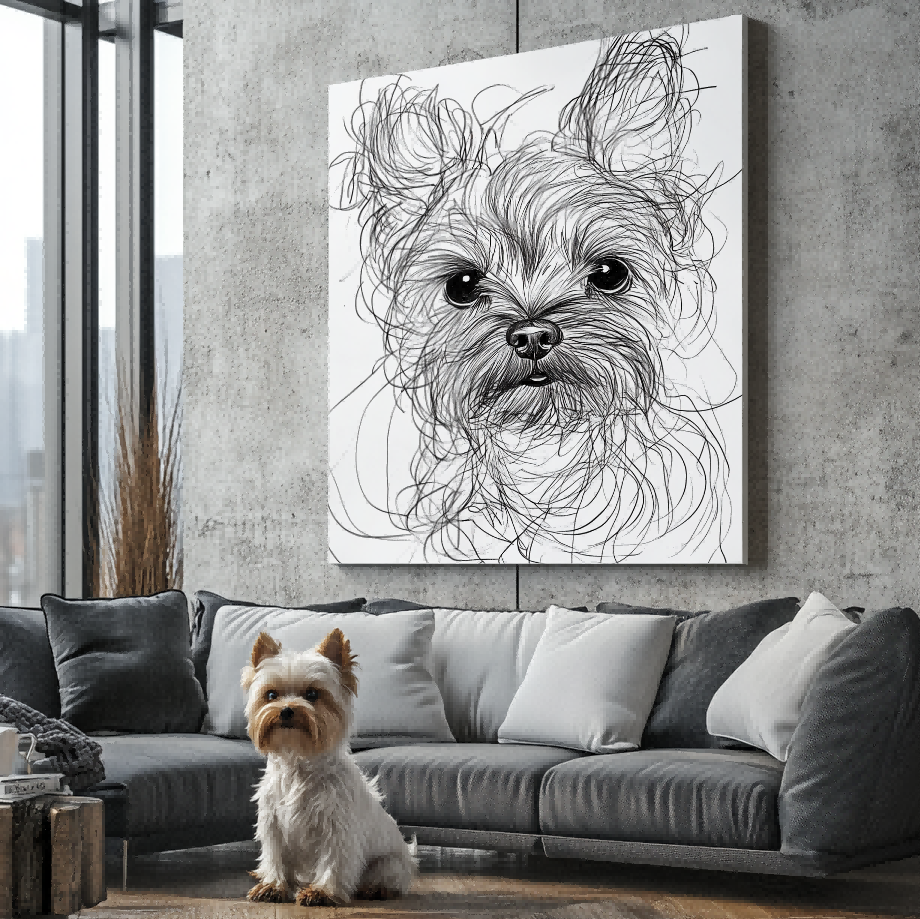
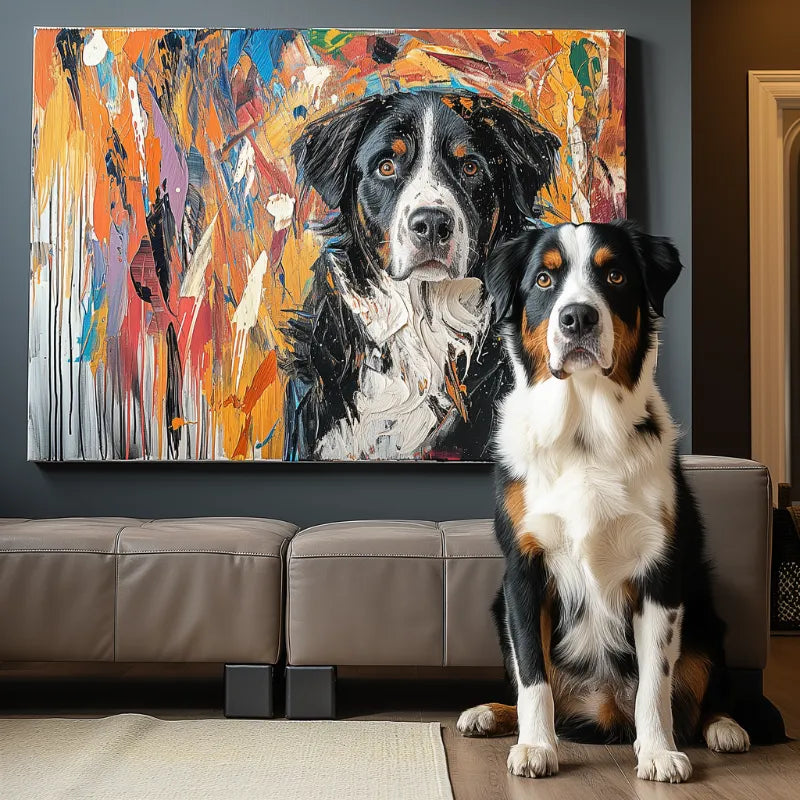


A canvas pet portrait and a poster pet portrait can use similar artwork but arrive as different objects. Canvas is a fabric support; a poster is a paper print. Your decision is about the surface, the finished presentation, and any framing still needed—not which version loves your pet more or which label sounds more expensive.
Start by picturing the portrait in its intended spot. Do you want a visible canvas edge, or a flat print inside a frame? Are you reusing a frame you already own? Those answers are more useful than assuming canvas always looks better or a poster always costs less once the whole display is complete.
Compare the finished object, not the listing thumbnail
A thumbnail may show artwork filling the screen and hide what comes with it. Read whether a canvas is stretched or rolled and whether a paper print includes a frame. “Canvas” alone does not establish that hanging hardware is included; “poster” does not establish a particular paper thickness or finish.

Compare the selected options at the same finished size. A paper print inside a mat and frame can occupy more wall space than its printed dimensions suggest. A canvas side can also affect how the image reads from the doorway. If stretching is the unresolved question, use the stretched versus rolled canvas guide rather than treating every canvas as identical.
Keep artwork quality separate from surface preference
First decide whether the pet looks recognizable. Then consider how that interpretation will be displayed. Ear shape, expression, and distinctive markings remain important on either support. A surface cannot fix a face that does not feel like your pet.
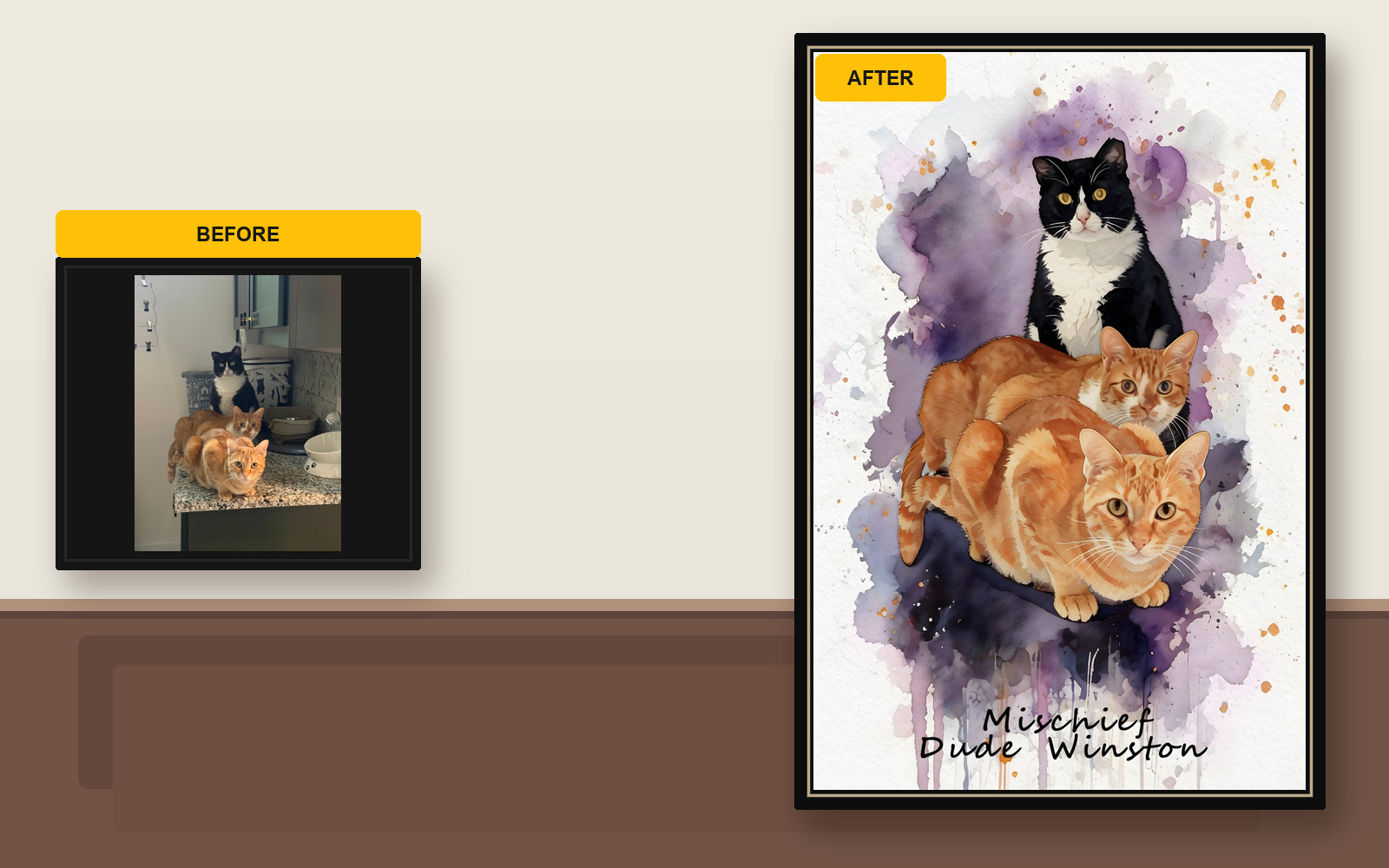
You do not need an exact canvas-and-paper pair to make the first decision. Review the portrait itself using the Customer Preview checklist. For the second decision, ask the seller for a product photograph or a clear description of the actual support and finish.
Think through the frame you plan to use
If you already own a frame, measure its usable opening and check what it accepts. Do not assume a canvas will fit a frame designed for a flat paper print. For paper, ask whether the quoted dimensions refer to the sheet or the image area. For canvas, ask about depth and edge treatment.
Include any separate frame, mat, mounting, or installation work in the comparison. There is no useful universal price rule: compare current quotes for what you actually need. Nor should a decorative border shown in an online artwork preview be counted as an included frame unless the listing says so.
Choose with three practical questions
- What should the surface look like? Inspect a close product image rather than judging texture from a screen-sized artwork preview.
- What is included? Confirm the support, selected size, framing, and hanging arrangement separately.
- What remains for you to do? Resolve any fitting or mounting work before ordering, especially for a gift.
A canvas can suit someone who likes an artwork object with visible depth. A paper print can suit someone who wants control over a separate frame. Neither preference establishes a lifespan, fade resistance, or superior likeness; those require their own evidence.
Where to go next
Explore the current Custom Pet Portraits to choose an artistic direction, then verify the selected product's actual format. This comparison explains a buying decision; it does not imply that Palette Tales offers every poster or framing option discussed. Keep the portrait decision and the display decision separate, and bring them together only after both are clear.


