

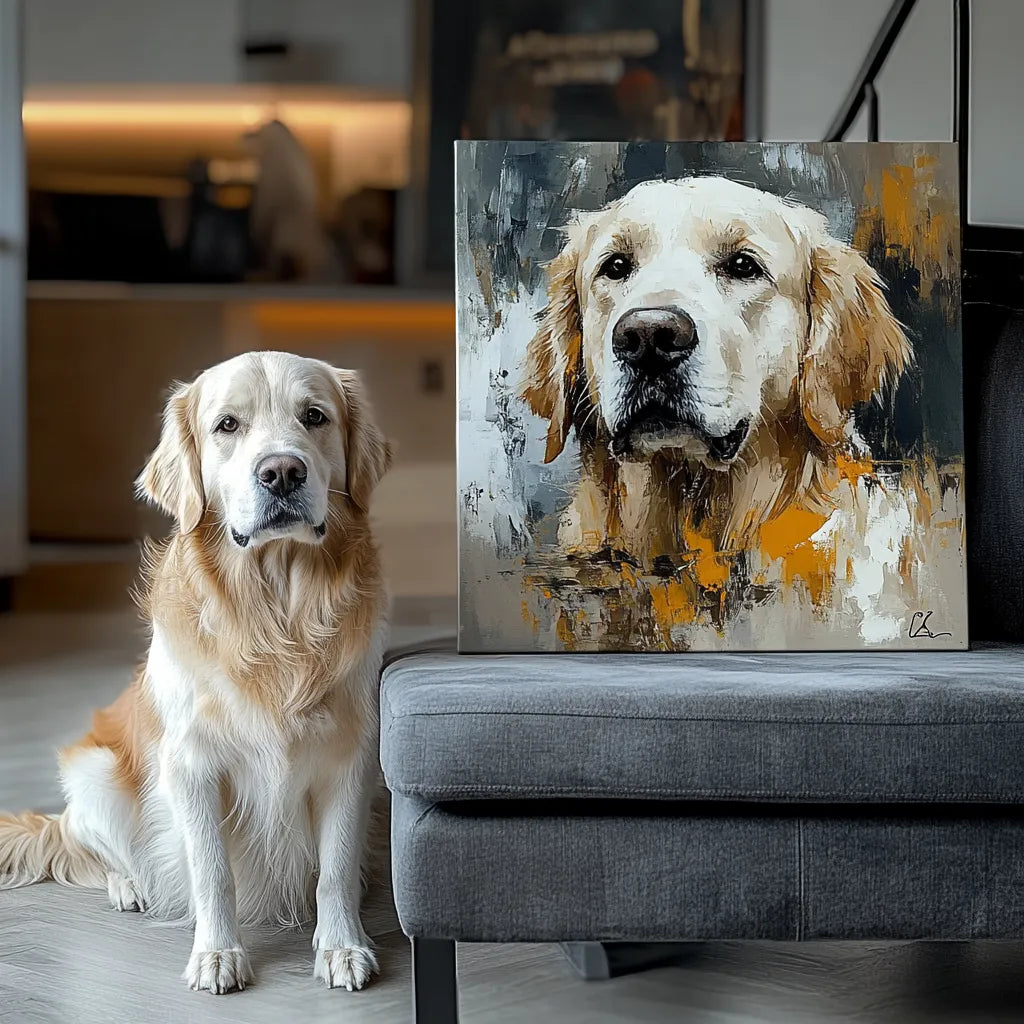
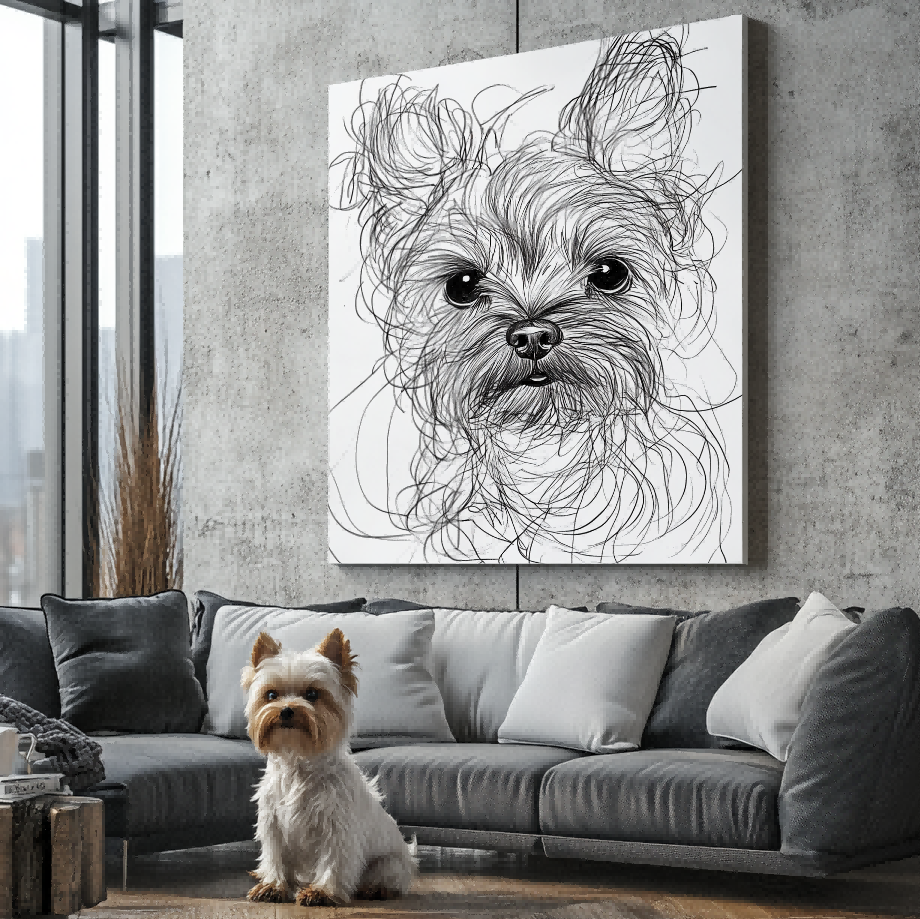
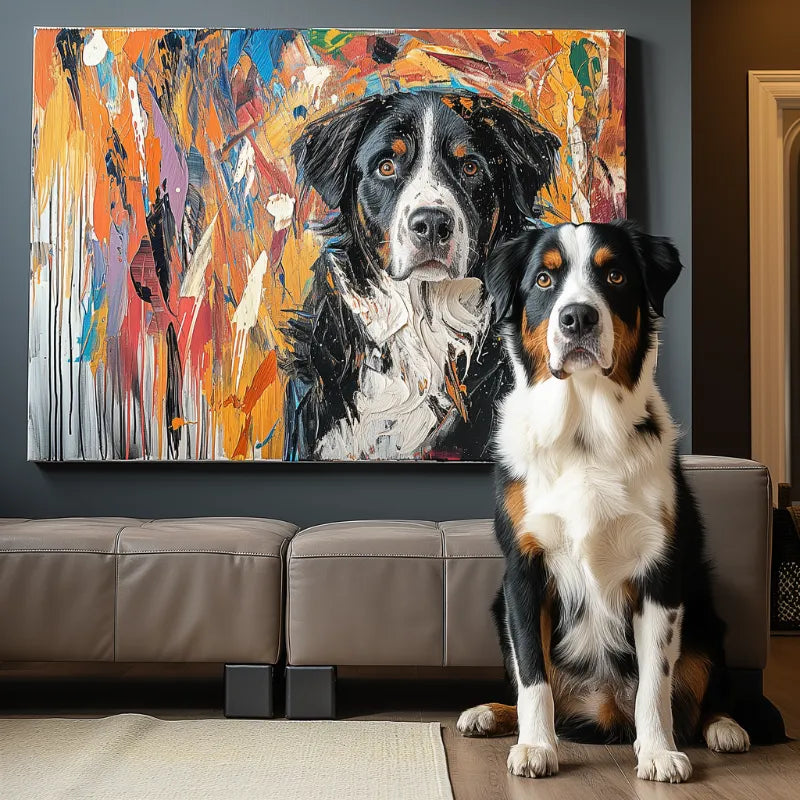


A stretched canvas is secured over a support so it has a fixed shape. An unstretched canvas is the fabric without that support; “rolled canvas” commonly describes how it is supplied. For a pet portrait, this distinction determines whether you receive a finished display object or artwork that needs another finishing step. It is separate from whether the picture has a decorative outer frame.
Do not compare two canvas listings on image size or price alone. First establish what will arrive, what work remains, and who will do it. A lower initial price is not necessarily a lower finished-display cost once mounting or framing is included.
Three things that “framed” can accidentally mix together
The support under a stretched canvas gives the fabric its shape. A decorative frame surrounds the finished artwork. Hanging hardware is a third component. A listing may include one without the others, and sellers do not always use “frame” in the same way.
Ask whether the selected option is stretched, whether an outer frame is included, and what mounting or hanging components come with it. Do not assume that “canvas print” answers all three questions. Likewise, a photograph of artwork on a wall does not prove that every pictured accessory is included.

When stretched canvas may simplify the decision
A stretched piece removes the need to arrange stretching yourself. You can assess its finished dimensions and then plan the display around the actual object. That can be useful when giving a portrait to someone who would not enjoy organizing another service before displaying it.
Still check the listing rather than translating “stretched” into “everything needed is included.” The wall, installation method, and hardware are separate matters. If you want an outer frame, confirm its fit to the canvas depth. Our floater-frame guide explains one surrounding-frame arrangement, not a stretching service.
What choosing rolled canvas asks you to arrange
With an unstretched piece, discuss the intended display with a suitable framer before ordering. Ask whether the supplied border allows the planned stretching and whether the quoted size describes the printed image, total fabric, or final visible face. Those dimensions are not automatically interchangeable.
Bring the seller’s specifications to the discussion. Guessing the required margin can put a pet’s ears, paws, or lettering in the wrong place when the fabric is stretched. Do not cut away a border because it looks unnecessary while the image is lying flat. Avoid folding the artwork or improvising a mounting method without advice appropriate to that particular surface.
Rolled delivery may suit a buyer who deliberately wants a local finishing arrangement. It is less suitable as an accidental surprise for someone expecting a ready-to-display gift. Any shipping or handling advantage depends on the actual seller and order; neither format guarantees a lower charge or faster delivery.
Check the pet’s composition at the final size
Review the image as it will appear after finishing, not only as a flat file. The visible front, the sides, and the fabric attached behind the support can serve different roles. Keep the pet’s identifying features inside the intended visible area.
The canvas-edge guide addresses what appears on the sides. The portrait size guide covers scale. Use these as separate checks instead of assuming a larger size solves a mounting or crop issue.
A short checklist before ordering
- Identify whether the artwork arrives stretched or unstretched.
- Confirm the finished visible dimensions and any additional border.
- Separate support, outer frame, and hanging hardware in the specification.
- If further work is needed, confirm the framer’s requirements and quote first.
- Check the final front-facing crop for ears, paws, names, and important markings.
This comparison does not mean Palette Tales sells every described format. When you explore Custom Pet Portraits, use the current listing for the available construction and included components. Choose the artwork for your pet’s personality, then make sure the form in which it arrives fits your display plan.


