



You do not need to start with a wall hook to enjoy a pet portrait. A framed piece can sit on suitable furniture; another artwork may be displayed on an appropriate stand. The best route depends on the actual artwork, the surface beneath it, the traffic around it, and any rules for the space. This guide helps you think through those choices without assuming that every Palette Tales format arrives ready for tabletop use.
The question here is how to display without drilling, not which room is best. If you are still deciding whether the piece belongs in the living room, entryway, or office, begin with the room-by-room placement guide. Once the room is clear, you can choose a display method that does not require making a hole.
Start with a stable surface, not a decorative idea
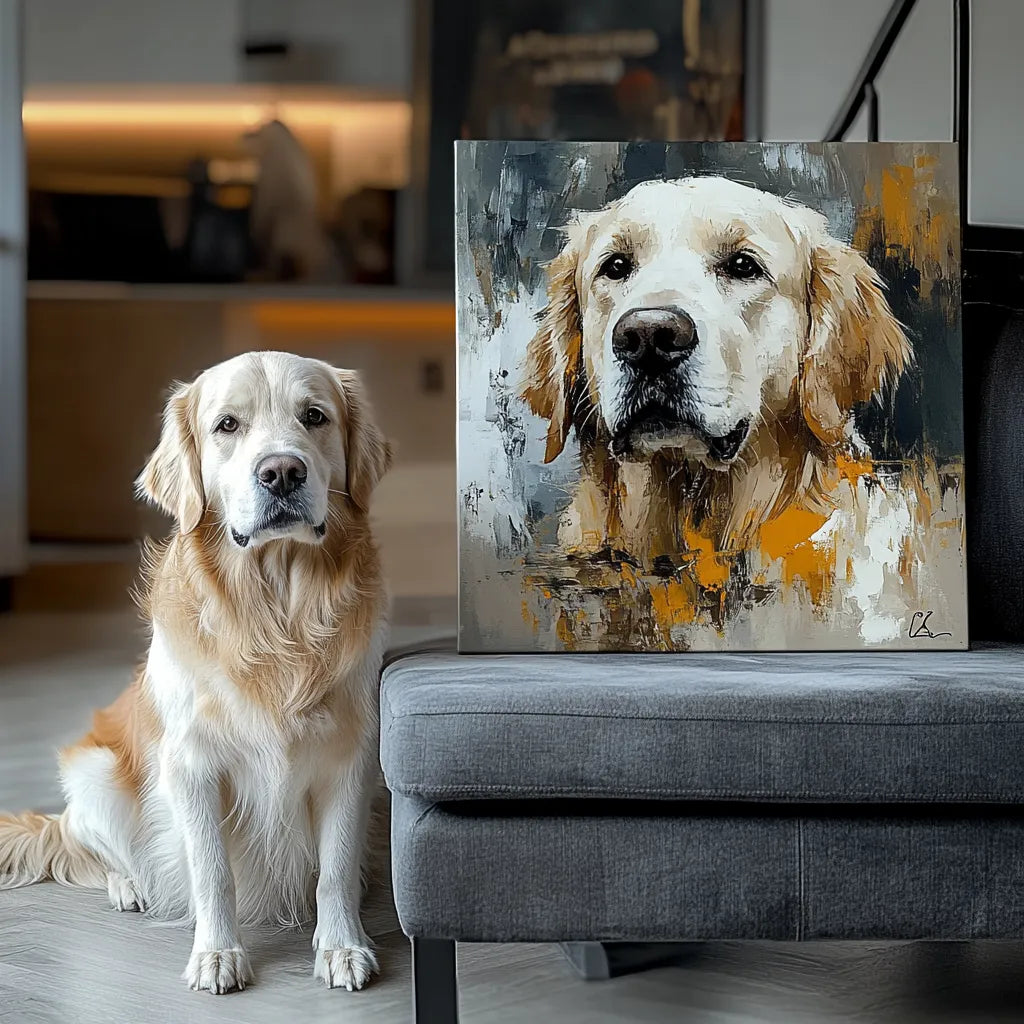
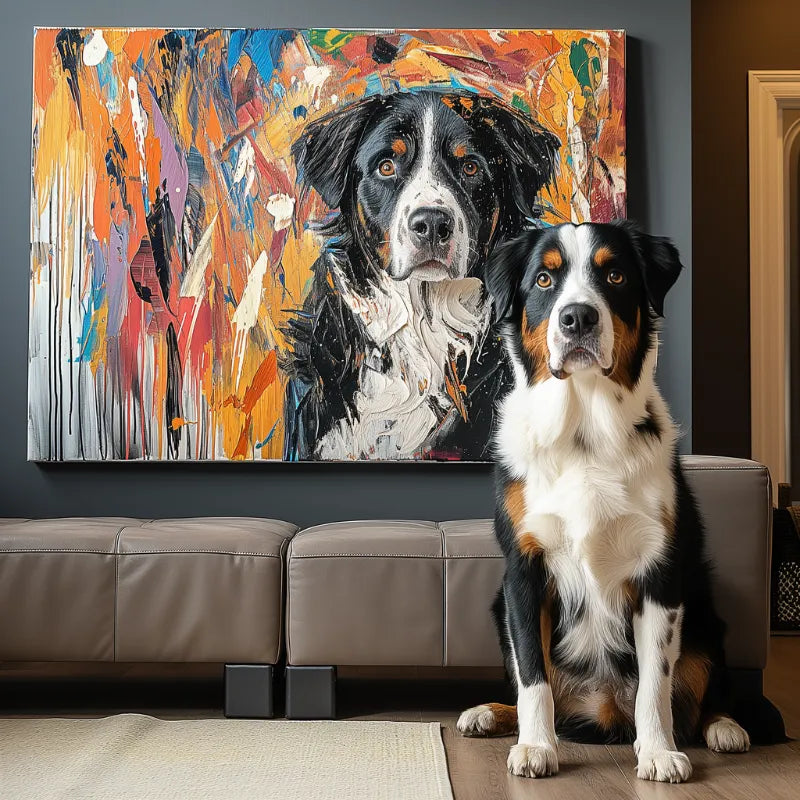
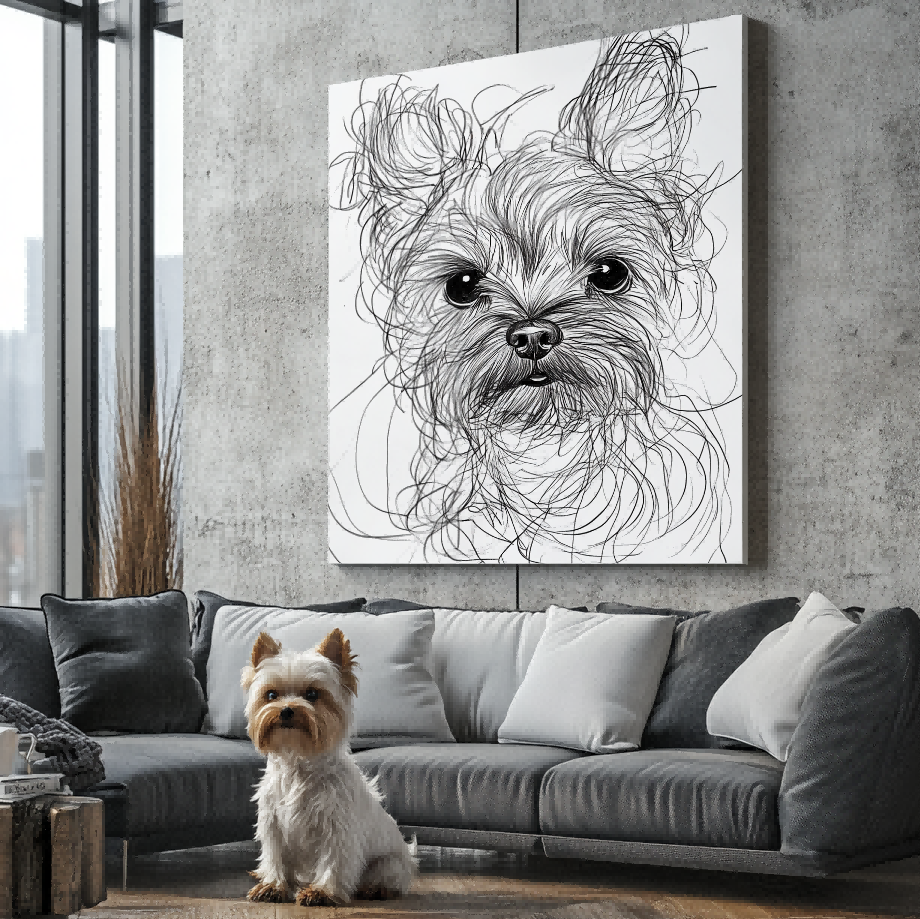
A shelf, console, bookcase, or table can make artwork part of an everyday sightline. Before choosing one, check the available depth, how close people or pets pass, and whether the furniture is stable. A narrow ledge may look elegant in a photo but may not be a reliable place for a heavier framed piece. Avoid assuming that the visual example below supplies a safe mounting specification; it simply shows how the artwork can read when it is not fixed to a wall.
Try a temporary paper outline at the proposed position. Stand where you normally enter or sit and check whether the pet’s face is visible without being hidden behind a lamp, plant, or computer monitor. The point of a tabletop display is not to fill every empty surface. It is to give the piece enough breathing room to be understood.
Leaning a framed portrait can keep the arrangement flexible
A framed piece resting against a secure backdrop can be easy to reposition when furniture changes. That flexibility is valuable in a rented home or a room where the display may evolve. It also allows two smaller artworks to form a pair without demanding a permanent gallery-wall layout. Test the visual balance first: do the artworks look like a considered set, or is one hidden behind the other?
Do not infer from an image that a particular frame, glass, weight, or anti-tip method is included in a current purchase. Furniture, pets, children, and the surface itself affect safe placement. Check the product’s actual dimensions and the room’s conditions, and use an appropriate secure display method for the specific item. The broader gallery-wall guide is more useful once you want several pieces to form one planned arrangement.

Consider a stand only when the artwork suits it
A stand can create a freestanding focal point on a sufficiently deep, stable surface. It may work for a compact piece in a home office or a shelf display. But a photograph of a stand does not establish that any stand is included, compatible, or strong enough for a particular size. Check the current product’s format and dimensions, then select display equipment rated for that exact item.
The advantage is visual separation: a stand can lift the artwork above objects around it and make the pet easier to see. The tradeoff is that it uses surface depth and can be vulnerable in a busy household. Think about the pet’s normal routes through the room. A low table beside a jumping cat may not be a good place for a freestanding frame, even if the composition looks right in a product photograph.

What about removable strips or adhesive hooks?
They are often described as no-drill solutions, but suitability depends on the wall surface, product weight, adhesive instructions, humidity, and the rules of the property. A general pet-art article cannot verify those conditions or promise damage-free removal. If you rent, check the lease and the product manufacturer’s directions before placing anything on the wall. If the conditions are uncertain, a stable furniture-based display may be easier to test and change.
Regardless of method, avoid placing an artwork where it can be knocked over, reached easily by a pet, or exposed to conditions the product guidance discourages. A safe display decision is specific to your home, not to an attractive example on a screen.
Choose the artwork after choosing the display method
Once you know whether a table, shelf, or stand is realistic, compare the current portrait formats rather than assuming that every canvas or framed option works the same way. Size, depth, weight, frame construction, and included accessories may differ. The portrait size guide can help you think about visible scale, while the live product page remains the source for exact dimensions and what is included.
A no-drill display can be a thoughtful first home for a portrait, not a compromise. Choose the sightline, confirm the actual physical item, and test the arrangement before treating it as permanent. When you are ready to compare available artwork, explore current custom pet portraits and verify the live format and product facts before ordering.


