

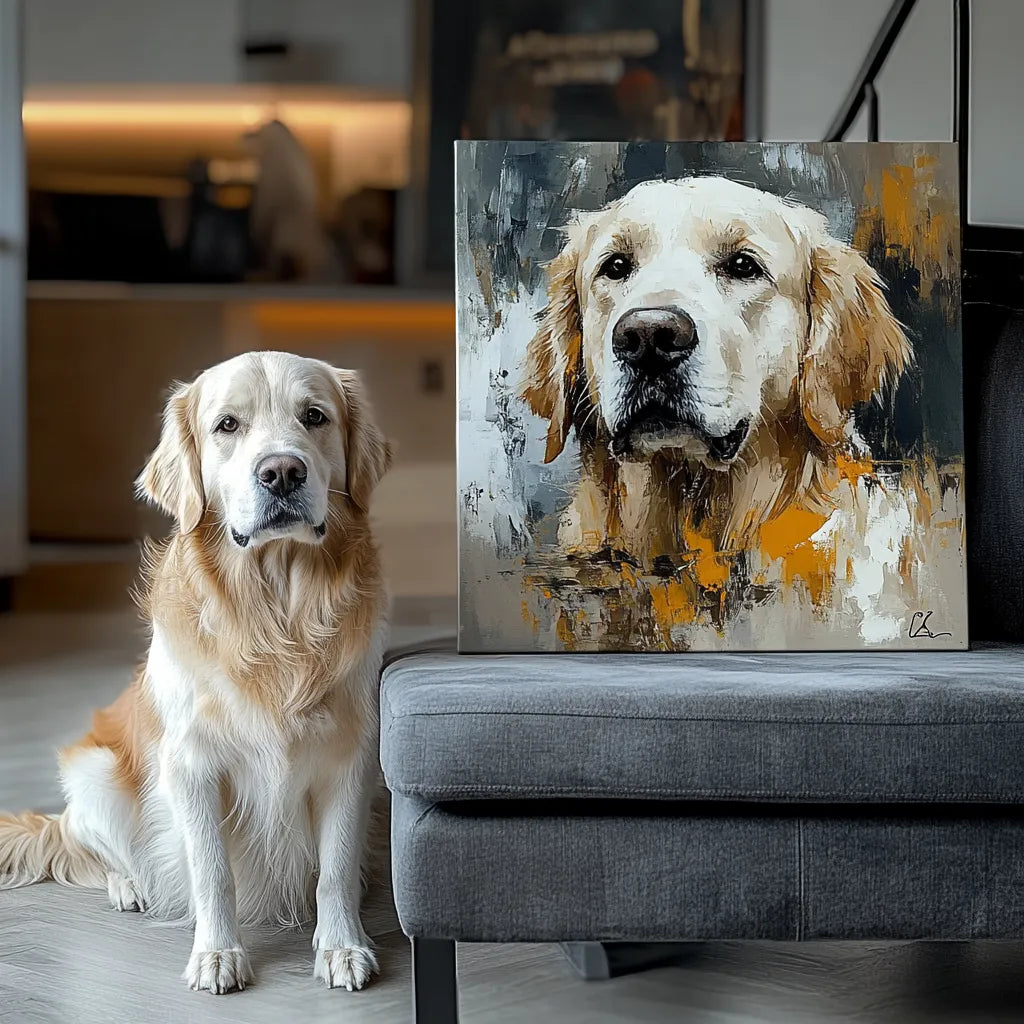
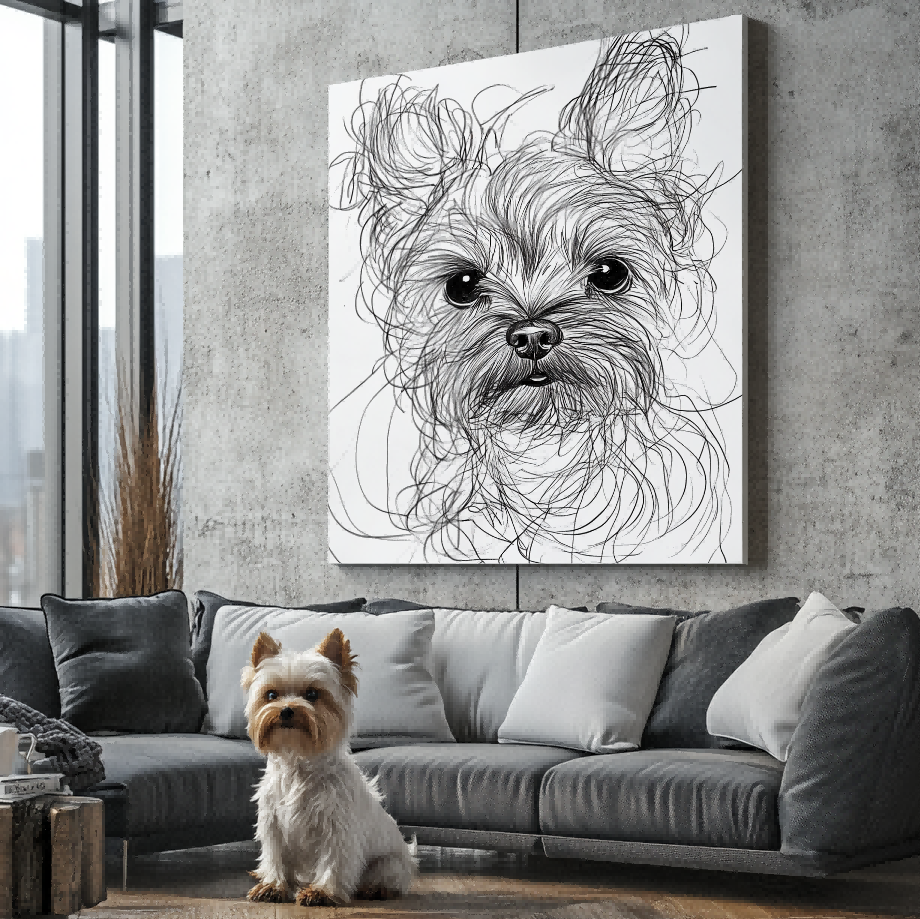
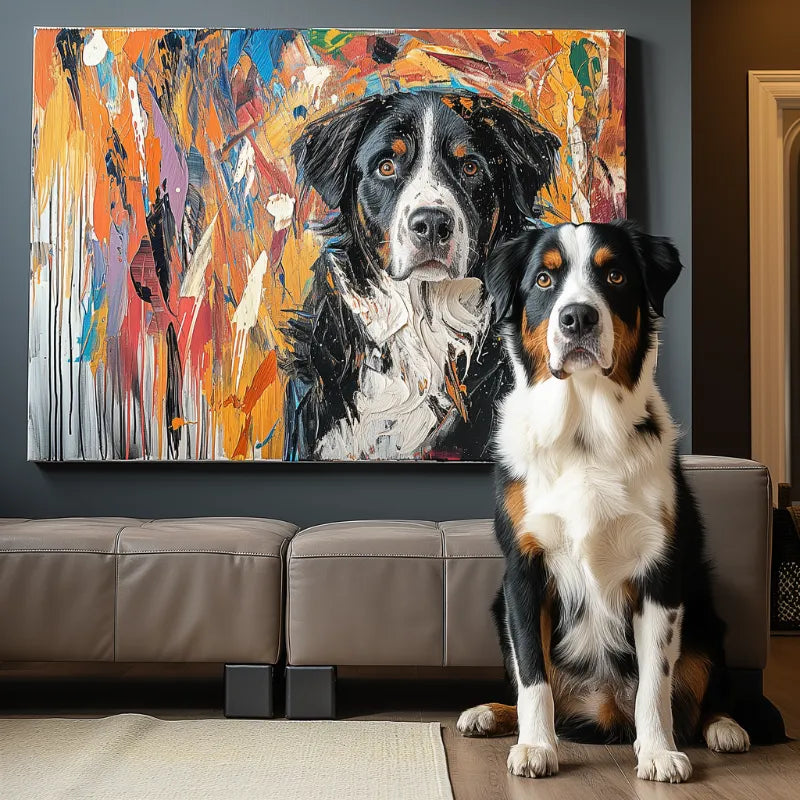


A pet portrait can look beautifully detailed in the afternoon and difficult to see from the sofa at night. Often the artwork has not changed: the light, viewing angle, and nearby reflections have. Before buying a special picture light or moving the piece to another room, test the portrait from the places where people actually look at it. The goal is to see the eyes and expression comfortably without a bright patch across the face.
This guide is about displaying existing artwork. It does not imply a particular Palette Tales canvas has glass, a protective coating, or special light resistance. Check the material and frame of your own piece before choosing any fixture or cleaning method.
Start with the usual viewing position
Stand at the doorway, sit in the chair, and step back to the distance from which the portrait is normally viewed. If the pet's eyes disappear in a reflection from one spot but look clear from another, the problem may be the angle rather than insufficient light. A small change in where the frame rests or hangs can help more than a brighter bulb. Do not judge only while standing directly in front of the artwork; most people rarely view it that way at home.
Ask a second person to look from their normal height. A picture above a console can read differently for a seated adult, a child, or someone entering the room. If the art is not yet on the wall, place a same-size paper outline where you plan to hang it and check the sightline before making holes. The room-by-room placement guide covers the earlier decision of which location suits the portrait; here the decision is whether the light at that location lets you enjoy it.
Use daylight without putting the image in a hard beam
Soft room light can reveal the pet's face without creating a single bright stripe. Watch the wall at morning, midday, and late afternoon. A spot that looks evenly lit at noon may receive a direct beam later as the sun moves. If the chosen wall does receive a hard beam for part of the day, consider a different position or adjust window coverings. Conservators generally advise limiting direct sunlight on displayed art; the exact care requirements depend on the piece rather than a universal promise about a product.

The physical canvas shown here has enough clear wall around it to make the surrounding light part of the display decision. It does not prove that all homes have this lighting, nor that the print will look identical under every bulb. When testing your own space, use the actual time of day when you are most likely to enjoy the portrait.
Check reflections before adding a lamp
A framed piece behind glazing can reflect windows, ceiling fixtures, or the person looking at it. An unglazed surface may not reflect in the same way, but a harsh spotlight can still make one area noticeably brighter than another. Turn off one lamp at a time and look again. If the face becomes easier to read after a lamp is switched off, more light was not the answer.
For an evening display, try a nearby room lamp that lights the wall gently rather than aiming a bare bulb straight at the image. Move the light source or viewing position in small steps. Avoid placing a hot fixture immediately against artwork, and follow the fixture and artwork maker's safety instructions. A picture light can be an option, not a required purchase; it should be judged on the actual frame, mounting arrangement, and wall.
Table and shelf displays need a different angle check
A framed portrait on a table or shelf is closer to the viewer and may lean back slightly. That tilt can reflect a window or overhead light at eye level. Before committing to a shelf, place the piece where it will live, then look from both standing and seated positions. If a bright reflection lands on the pet's face, adjust the angle or shift the piece to a nearby surface. Make sure it rests securely and is not where a passing bag, door, or curious pet can knock it over.

This approved display photograph includes both a person and a dog in the artwork. It serves only as evidence of a framed tabletop presentation, not as proof that every Palette Tales portrait includes people or uses that framing. The lighting lesson is the frame's position on the surface.
A five-minute viewing test
- Look at the pet's eyes and markings from the main seat or entry point.
- Check whether a window, lamp, or ceiling fixture produces a bright reflection.
- Compare the same spot at the times of day you use the room.
- Move the artwork or light source a little before buying more equipment.
- Confirm the frame or canvas is secure and away from direct heat.
If the pet remains readable in the lighting you really have, the display is doing its job. If not, revisit placement before blaming the art style or ordering a larger size. The canvas art care guide handles cleaning and preservation questions separately. To compare current physical portrait formats before ordering, explore the Custom Pet Portrait Collection and verify each listing's actual options. Light is a viewing choice, not a substitute for checking those product facts.


