

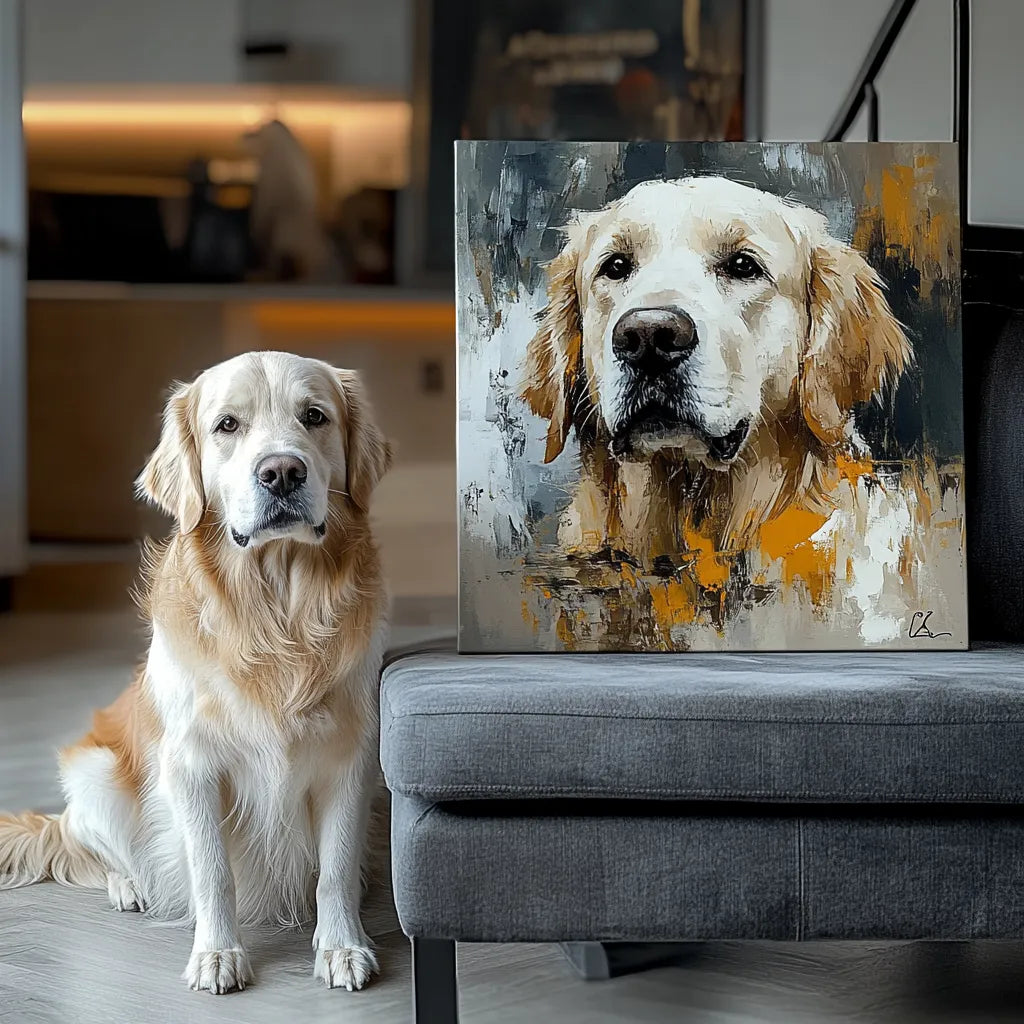
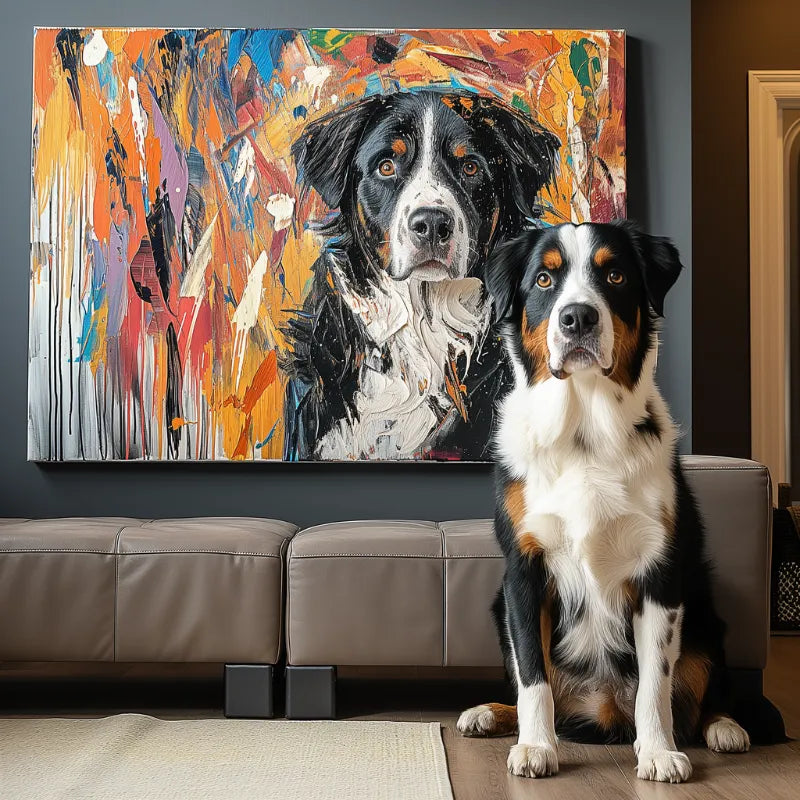

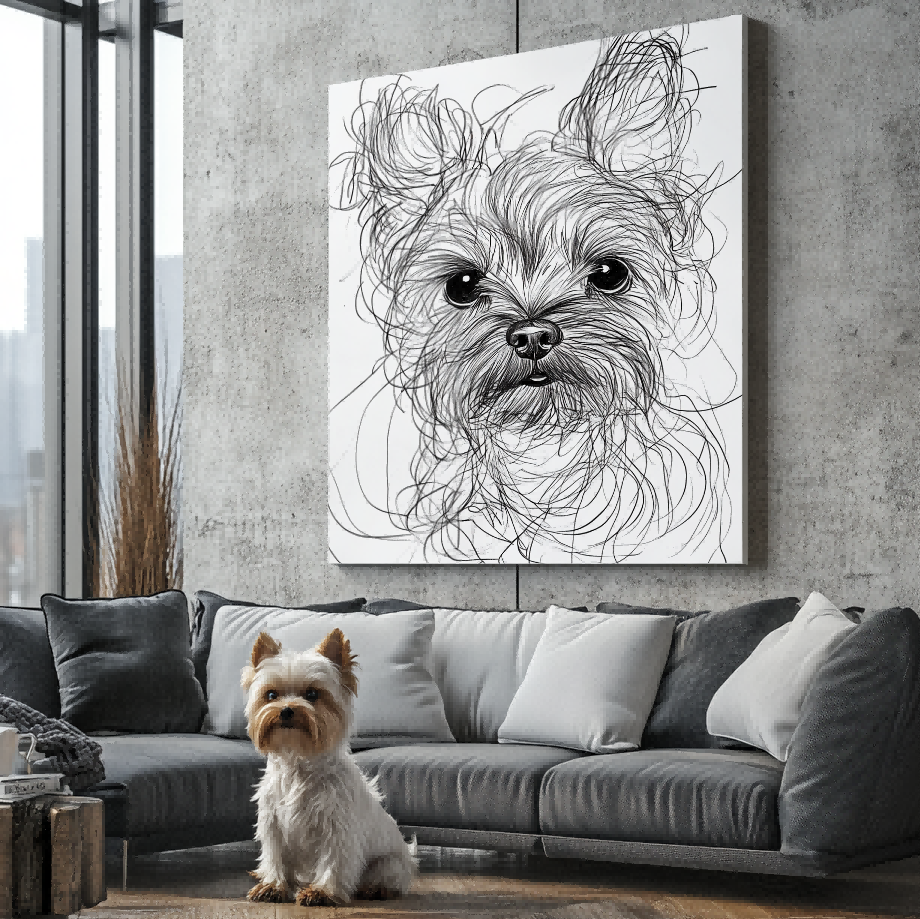

I'll be honest—I never thought much about paint canvas until I ordered my first custom pet portrait. I just picked whatever seemed cheap and easy, uploaded a photo of my dog, and waited for the mail.
When it showed up, the colors looked dull. The edges were already starting to curl. And my dog's face? It looked kind of… flat. Not exactly the masterpiece I was hoping for. If you're thinking about getting one done, check out all the portrait styles Palette Tales offers—it'll give you a sense of what's possible.
So I started paying attention. Talked to some artist friends. Read way too many guides. Ordered a bunch of different canvases just to see what worked. And after all that trial and error, I finally figured out what actually makes a paint canvas worth buying—especially if you're doing a custom pet portrait.
If you're in the same boat I was in, here's what I wish someone had told me from the start. And honestly, browsing their portrait collection is a good place to start if you want to see real examples before you decide.

Paint Canvas 101: What You're Actually Paying For
Most people don't realize there's a real difference between canvases. It's not just about size. The material, the weight, the way it's stretched—all of it affects how your portrait looks and how long it lasts.
The two big ones are cotton and linen.
Cotton is the workhorse. It's affordable, versatile, and works great with acrylics—which is what most custom pet portraits use these days. The absorbent surface grabs the paint nicely, and it's forgiving if you're not a pro. For most pet owners, cotton is the sweet spot between quality and cost. It's what Palette Tales uses for their 13-oz canvases—heavy enough that it doesn't warp or sag over time.
Linen is the premium option. Stronger, finer weave, more durable. Professionals love it for detailed work because the texture adds character. But it costs significantly more, and honestly? For a pet portrait that's going to hang in your living room, you probably don't need linen unless you're planning to pass it down for generations or sell it.
Then there's the stretcher frame—the wooden structure inside the canvas that keeps everything tight. Cheap ones warp. Good ones—like the wooden frame Palette Tales uses—stay straight. That matters more than you'd think. I learned that the hard way when one of my early portraits started looking wavy after a few months.

What's Actually Happening in 2026
I keep an eye on this stuff because, honestly, I don't want my walls to look dated. Here's what's going on right now:
Personalized pet portraits are everywhere. The custom pet portraits market is estimated at $1.2 billion in 2026** and expected to hit **$2.5 billion by 2033. That's not a niche anymore—it's a whole category. People are treating their pets like family (66% of U.S. households own a pet), and they want that love reflected on their walls.
Canvas is the dominant medium. It holds a significant share of the wall art market, prized for its classic texture and visual depth. People prefer canvas over paper prints because it feels more like art—less like a poster.
Texture is in. Flat, glossy prints are out. People want canvases that look like they have depth—almost like you can feel the brushstrokes. Wabi-sabi, tactile surfaces, organic textures. It's about making the artwork feel real and intentional.
Unframed art is having a moment too. Designer Steven Graffam said unframed pieces feel "fresh because it's more immediate and less formal". So if you want that modern, effortless look, a gallery-wrapped canvas without a frame is totally on-trend.

How to Pick the Right Paint Canvas for Your Pet Portrait
After all my mistakes, here's the checklist I use now:
1. Start with cotton. Unless you've got a specific reason to go linen, cotton gives you the best balance of quality and price. Look for something around 13 oz—heavy enough to hold detail without being stiff.
2. Check the stretcher frame. This is the part nobody talks about. If the wooden frame inside is cheap pine or poorly constructed, your canvas will warp. Look for a well-constructed wooden frame that keeps the canvas properly tensioned.
3. Think about texture. Too rough and you lose fine details (like whiskers or fur texture). Too smooth and it looks like a photo on fabric. Medium tooth is the sweet spot—enough grip for the paint, smooth enough for detail.
4. Pick the right size. Standard sizes like 8×10, 11×14, and 16×20 are common. For a single pet headshot, 8×10 works great for a gallery wall. For a full-body or couple portrait, go bigger. I've got a 16×20 of my dog and it's the focal point of my entire living room.
5. Don't skip the finish. Archival inks and a protective coating matter. Without them, your portrait fades. Quality canvas and fade-resistant materials are the standard to look for.

Why Custom Pet Portraits on Canvas Are Actually Worth It
Look, I get it. You could just print a photo and put it in a frame. But a custom paint canvas portrait is different.
First, it captures personality, not just a snapshot. My dog has this sideways look he does when he's confused—and the artist actually nailed that in the canvas. You can't get that from a mass-produced print.
Second, it lasts. Unlike paper that yellows or wrinkles, a good canvas print stays vibrant for decades. Proper materials and care can keep it looking fresh for 20+ years.
Third, it's a conversation starter. Every guest who comes over asks about the portrait. It's way more interesting than a generic landscape or abstract swirl.
And if you've recently lost a pet, a canvas memorial can be a comforting way to keep their memory alive. I've seen people tear up when they unbox theirs—and I get it.
The global wall art market is growing fast, and a big part of that growth is people moving away from generic decor toward pieces that actually mean something. A paint canvas of your pet isn't just decoration—it's a statement.

Why I Keep Ordering from Palette Tales
I've tried a few different custom pet portrait services. Palette Tales is the one I've gone back to three times now.
Here's why:
-
The canvas quality is solid. 13-oz cotton, hand-stretched over wooden frames. No warping, no sagging.
-
The print quality holds up. The printed result has held up well in my experience. My oldest portrait from them still looks as good as the day it arrived.
-
They retouch your photo for free. That saved me when I only had a grainy photo of my cat from five years ago. They cleaned it up without charging extra.
-
They offer frame options starting at $29. No separate trip to the framer. Just pick the frame that matches your vibe and it shows up ready to hang.
-
They do more than just canvases. Phone cases, tote bags, doormats, caps—same pet portrait, different products. So if you want your dog's face on everything, it's all in one place.
Is it the cheapest option out there? No. But for the quality and the convenience, I think it's fair. Digital pet portraits typically run $40–$150, while canvas prints are $75–$250 depending on size and style. That's less than what you'd pay for a custom oil painting—and honestly, the digital-to-canvas process gives you more control over the final look.
A Few Quick Things Before You Order
-
Use a high-resolution photo. The better the original, the sharper the print. Natural lighting and a clear shot from the front or side work best.
-
Measure your wall. I bought a canvas that was too big for my hallway once. Looked ridiculous. Measure before you order.
-
Match the canvas to your room. If your space has warm tones, a cool-toned portrait might clash. Neutrals—black, white, earthy tones—tend to settle in naturally.
-
Consider going frameless. Gallery-wrapped canvases look great on their own, especially in modern or minimalist spaces.
FAQ – Paint Canvas and Custom Pet Portraits
1. What's the best paint canvas for a pet portrait?
Cotton canvas around 13 oz with a medium texture. It holds detail well, doesn't warp, and gives you the best balance of quality and cost.
2. What's the difference between cotton and linen canvas?
Cotton is more affordable and versatile—great for most pet portraits. Linen is stronger and has a finer weave, but it costs more. For most home decor purposes, cotton is perfectly fine.
3. Can I use a regular photo for a canvas print?
Yes, as long as it's decent resolution. Most shops, including Palette Tales, accept standard JPEGs and offer free retouching if the photo needs improvement.
4. How much does a custom pet canvas cost?
Digital portraits run $40–$150. Canvas prints are typically $75–$250. Hand-painted options can go higher—$150–$500 or more.
5. What sizes are available for canvas prints?
Common sizes include 8×10, 11×14, 16×20, 18×24, and 24×30. Smaller sizes work for gallery walls; bigger ones make a statement.
6. How long will a canvas print last?
With proper care (out of direct sunlight, away from moisture), a good-quality canvas can last 20+ years without noticeable fading.
7. Is a gallery-wrapped canvas better than a framed one?
Depends on your style. Gallery wraps are modern and frameless—ready to hang. Framed canvases give a more traditional, polished look. Both work; it's personal preference.
8. Where can I buy a custom pet canvas online?
You've got options—Etsy, Amazon, and specialty sites. Personally, I've had the best experience with Palette Tales because of their material quality, free retouching, and framing options. You can check out their full portrait collection to see what fits your style.
I've got three custom pet canvases on my walls now. Each one looks different, but they all make me smile when I walk past. If you've got a favorite photo of your furry friend sitting in your camera roll, honestly? Just go for it. Pick a good paint canvas, upload the photo, and hang it up. Future you will be glad you did.
Visit www.palettetales.com to see their custom pet canvas options. Code WELCOME gets you 10% off your first order.


