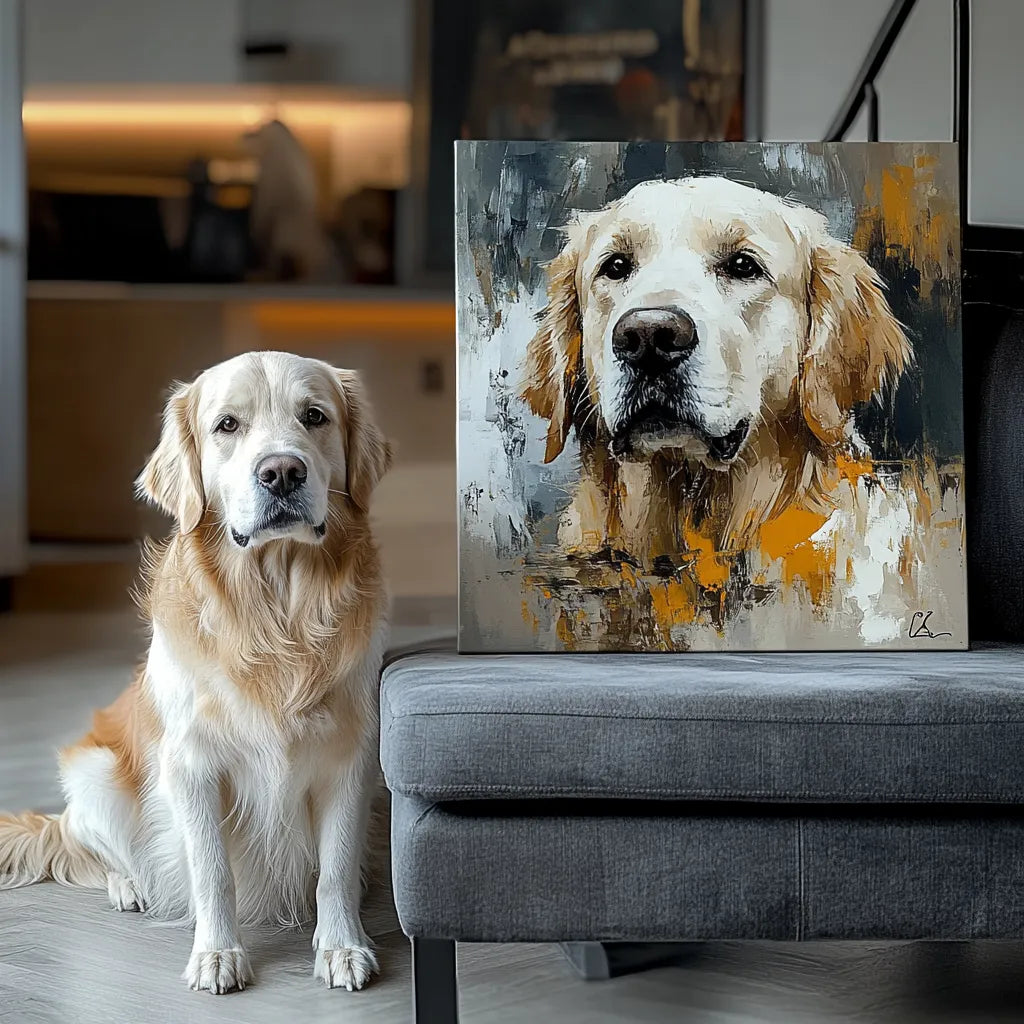
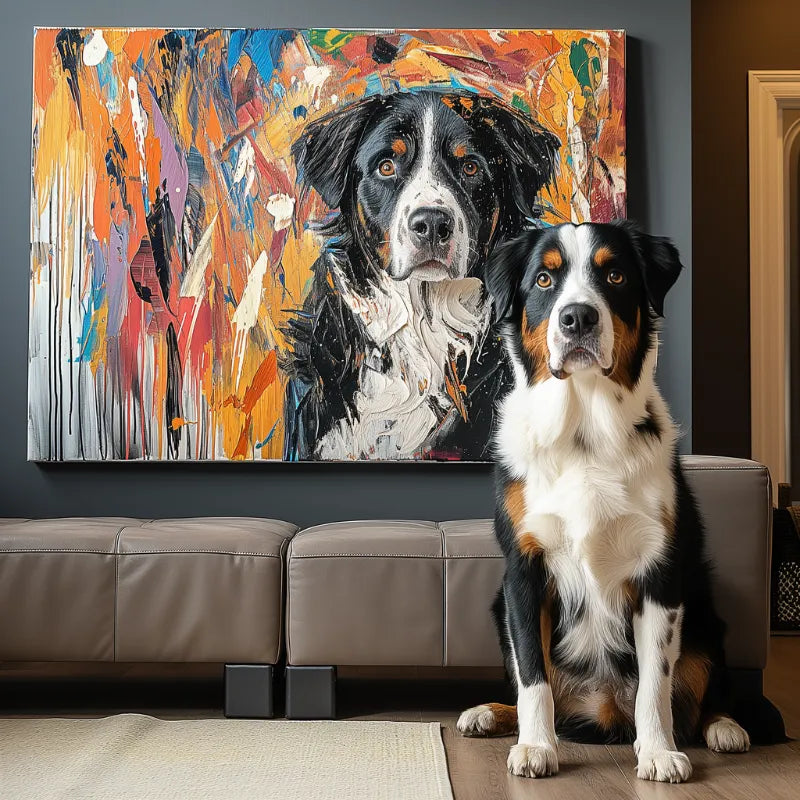
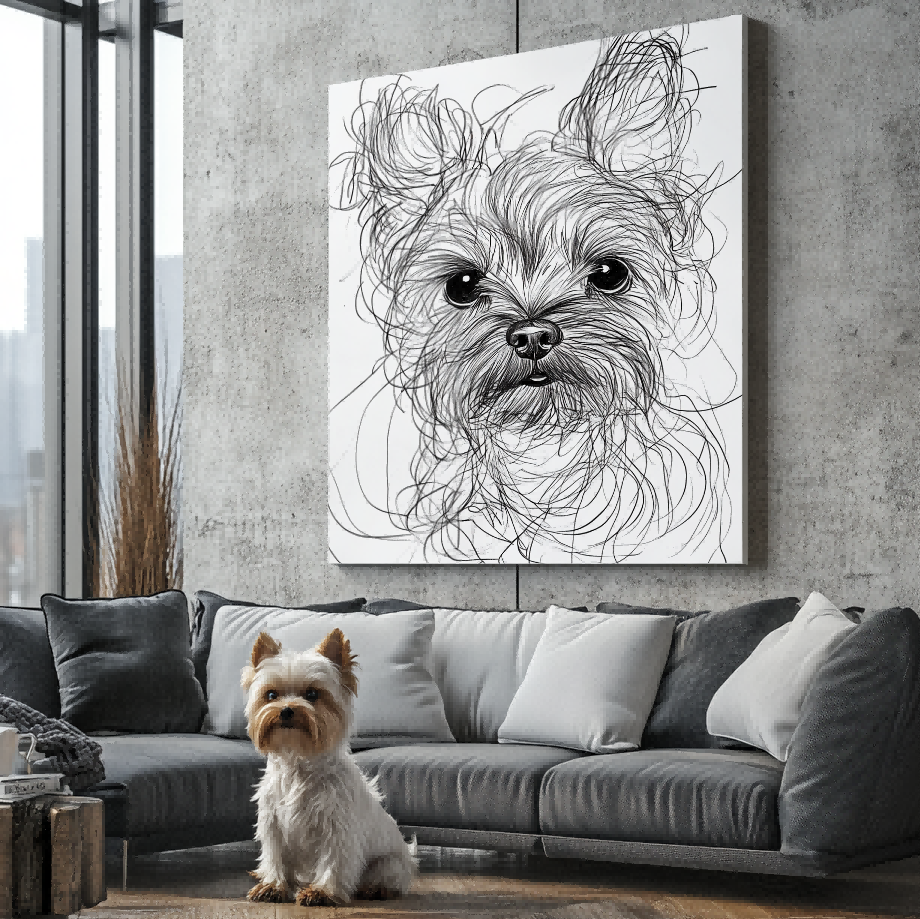
A pet portrait is artwork centered on a particular animal’s recognizable character. It may begin with a photograph, but it is not simply the same image printed again. The purpose is to decide what should remain visually important—an expression, a familiar marking, an ear shape, a pose, or a feeling associated with the pet—and present those choices as artwork. A regular pet photo can be complete and meaningful on its own. A portrait is a different medium for looking at the same subject.
This distinction matters before a person starts comparing styles, formats, or reference images. It keeps the question practical: are you trying to preserve a specific photograph exactly, or are you looking for an artistic interpretation that still feels recognizably like the pet? The answer helps determine what information a useful reference image needs to show and which decisions should stay with the live product page.
A portrait starts with recognition, not perfection
The best reference is not always the most polished photo. It is usually the one that makes the pet easy to recognize: the eyes are visible, the face is not hidden in deep shadow, and distinctive details are clear enough to discuss. The best-photo checklist explains that broader choice in more detail. A portrait does not need a studio image, but it benefits from visible information rather than guesses.
Recognition is also why a second photo can be useful. One image may have the best expression while another confirms an ear shape, coat pattern, or body marking. Those supporting images are reference material, not an instruction to combine unrelated poses or invent details. When several pets are involved, the separate composition question belongs with the multi-photo guidance rather than this definition page.
How a pet portrait differs from a regular pet photo
A photo records a particular moment. A portrait is built around a visual decision: which features should carry the identity of the pet, how much surrounding information belongs in the artwork, and what style or display context best supports that choice. Neither option is automatically better. A candid photo can preserve a memory of a day; a portrait can provide an intentional visual interpretation of the animal at the center of that memory.
That is why style should come after the subject is understood. The pet portrait style guide is useful once the reference and the desired mood are clear. Style is not a substitute for an identifiable subject, and a style name alone cannot decide whether a particular photo gives enough useful visual information.
What choices belong to the artwork decision
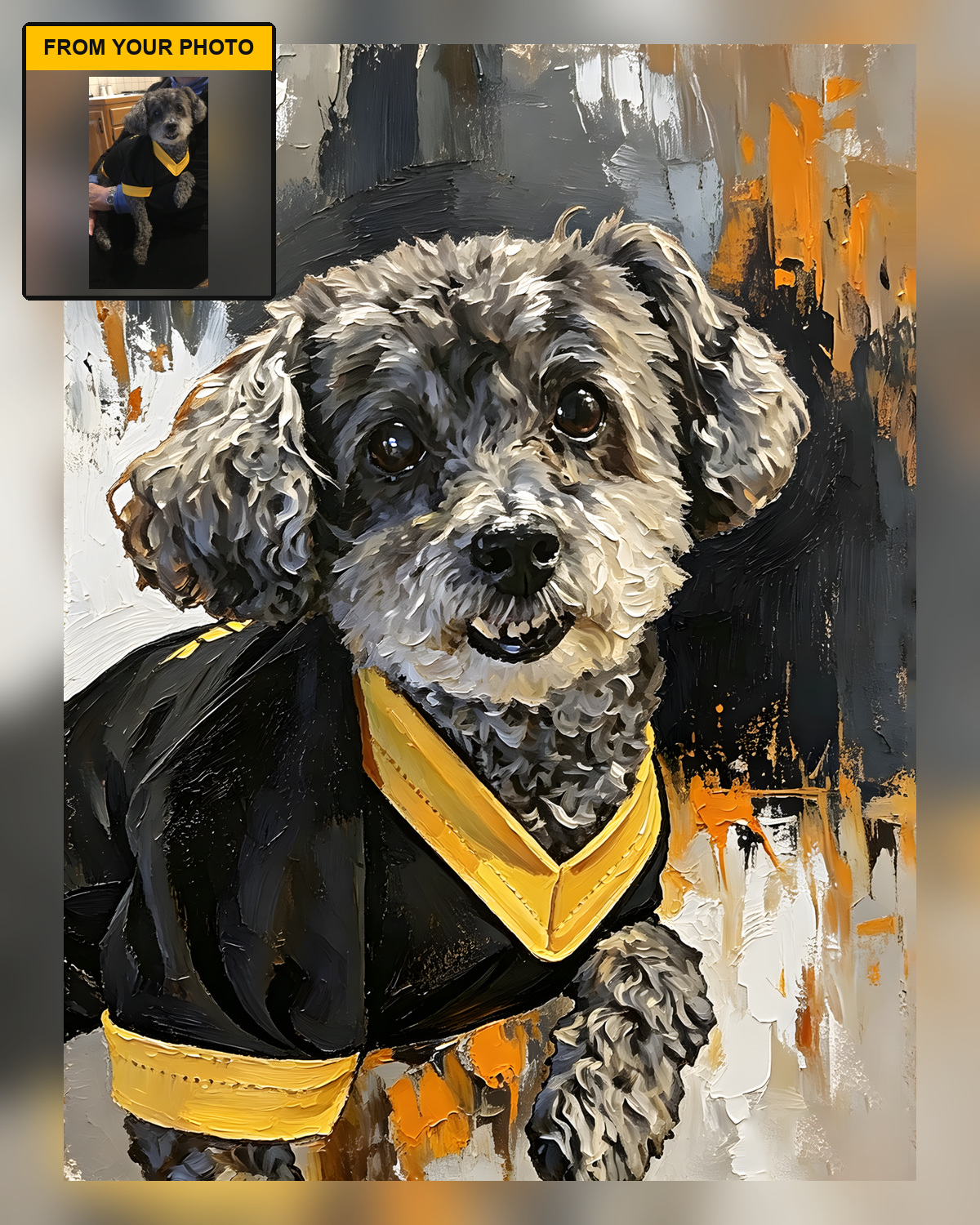
Before ordering, separate the decisions that describe the pet from the decisions that describe the finished piece. Subject choices include the reference photo, visible features, and the intended expression. Artwork choices include the level of detail, composition, and visual mood. Live commercial choices—such as currently available formats, size selections, or any order-specific options—should be confirmed on the current collection or product page rather than assumed from an educational article.
Real examples can make this separation easier to see. The Customer Preview Gallery is a visual-evidence resource for understanding how reference information and artwork-stage review can relate. It should be read alongside the current product information, not used as a substitute for it.
When a photo may be the better choice
A photo is often the better choice when the exact setting, people in the scene, or a fleeting event matter more than an artwork interpretation. It may also be the right answer when a person wants no changes to the original moment. A portrait can be more useful when the goal is to focus attention on the pet itself, make a deliberate display decision, or explore an art direction that supports the pet’s visible character.
There is no need to turn every favorite image into a portrait. Choosing between the two is a matter of intent. If the main goal is to retain the original event, keep the photograph. If the goal is to make the pet’s character the central visual subject, a portrait may be the more relevant format to explore.
Frequently asked questions
Does a pet portrait have to look like a painting?
No. “Portrait” describes the focus on the individual pet rather than one mandatory visual style. The current collection is the place to confirm which live options are actually available.
Can an older photo still be useful?
Sometimes. What matters is whether recognizable features remain visible. For the narrower question of older reference images, use the existing older-photo guide rather than treating this definition as a technical photo test.
Is a pet portrait the same as a generic pet illustration?
Not necessarily. A portrait is oriented around a particular animal’s recognizable features and character. A generic illustration may depict an animal type without being tied to one individual pet.
Final takeaway
A pet portrait is an artwork decision built around a real animal’s visible identity. It starts with a reference, but it is not identical to the reference photo. Once you know whether you want to preserve a moment or create an intentional visual interpretation, you can explore the current custom pet portrait collection for live choices while keeping this page focused on the definition and decision itself.