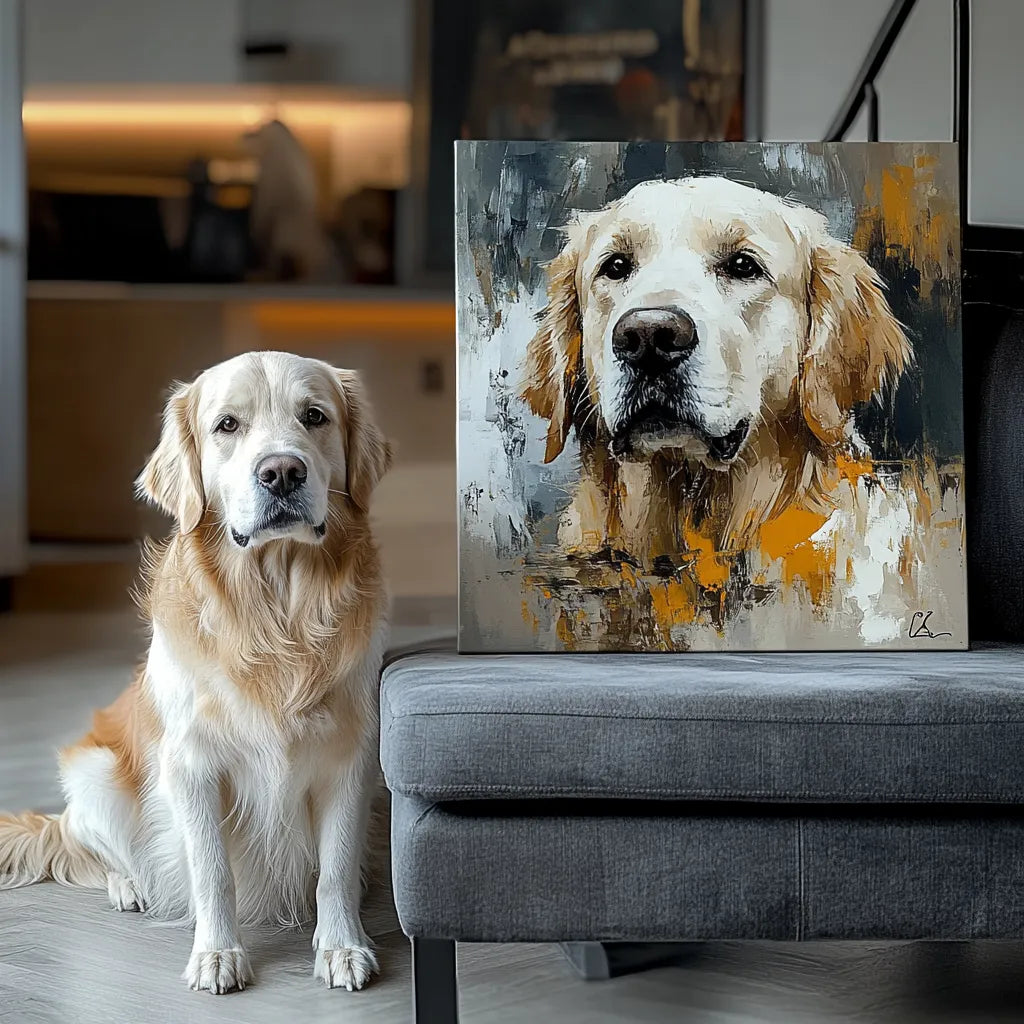
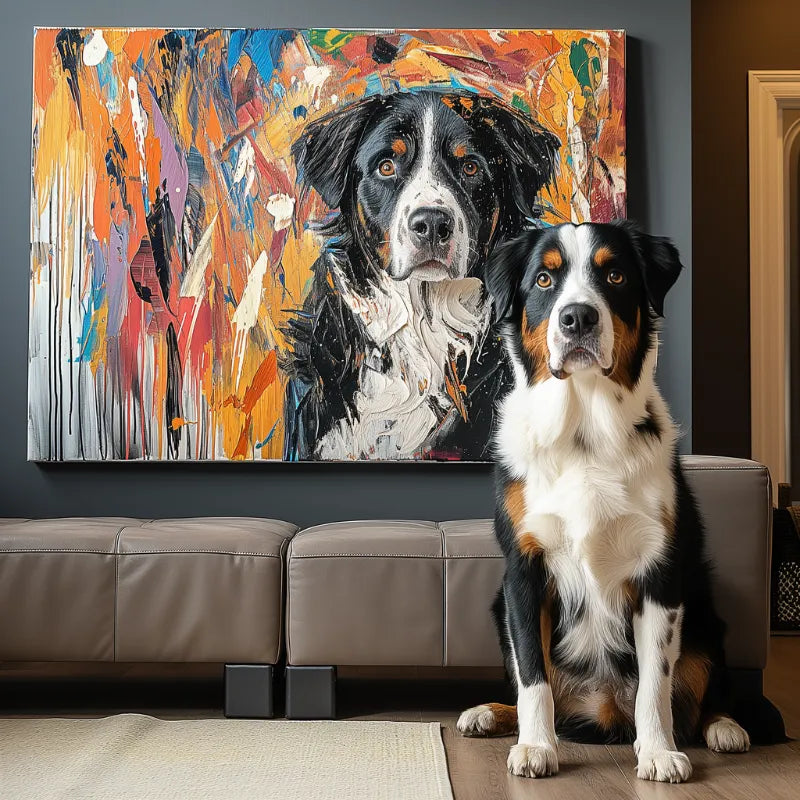
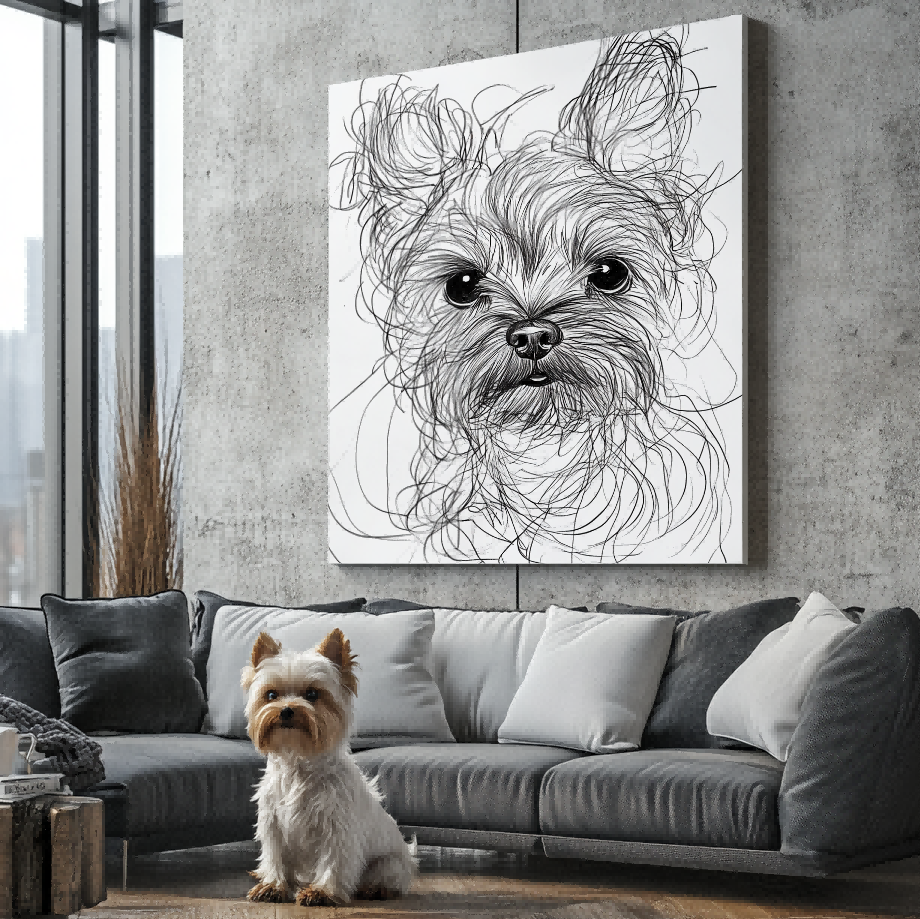
Pet portrait ideas are easiest to choose when you start with the role the artwork should play, rather than with a long list of styles. A meaningful direction can come from the pet’s expression, the room where the piece may live, the person receiving it, or a memory that deserves more attention than a phone album usually gives it. The goal is not to find a universally “best” idea. It is to identify the one decision that makes the next choices clearer.
That distinction matters because a portrait can be personal without needing a dramatic concept. Sometimes the strongest direction is simply a familiar expression. Other times, a gift, a display plan, or a preference for a quieter look provides the useful starting point. This page is a first-step map; the linked guides below handle the narrower decisions in depth.
Start with the purpose of the portrait
Ask what you want the finished artwork to help you remember or communicate. A portrait for your own home can begin with a room, a wall, or a visual mood. A portrait intended as a gift can begin with the recipient’s relationship to the pet. A memorial decision may call for a different kind of care than a lighthearted everyday keepsake. These are not rules about what a portrait must be. They are ways to avoid choosing a style name before you know why the piece matters.
If the main question is what a pet portrait means as a format, read what a pet portrait is. If the direction is a present, the pet portrait gift guide keeps that separate from a home-display choice.
Choose one decision at a time
It is tempting to solve reference photo, style, size, framing, and placement all at once. That usually creates noise. A better sequence is to decide the role first, then the reference, then the visual direction, and finally the live product options. This preserves room for a pet’s actual features instead of forcing every choice to match a template.
For visual direction, use the pet portrait style guide. For an individual display plan, use the small-wall size guide. These pages answer different questions, so neither needs to carry every idea-related decision.
Use real evidence, not a generic mood board
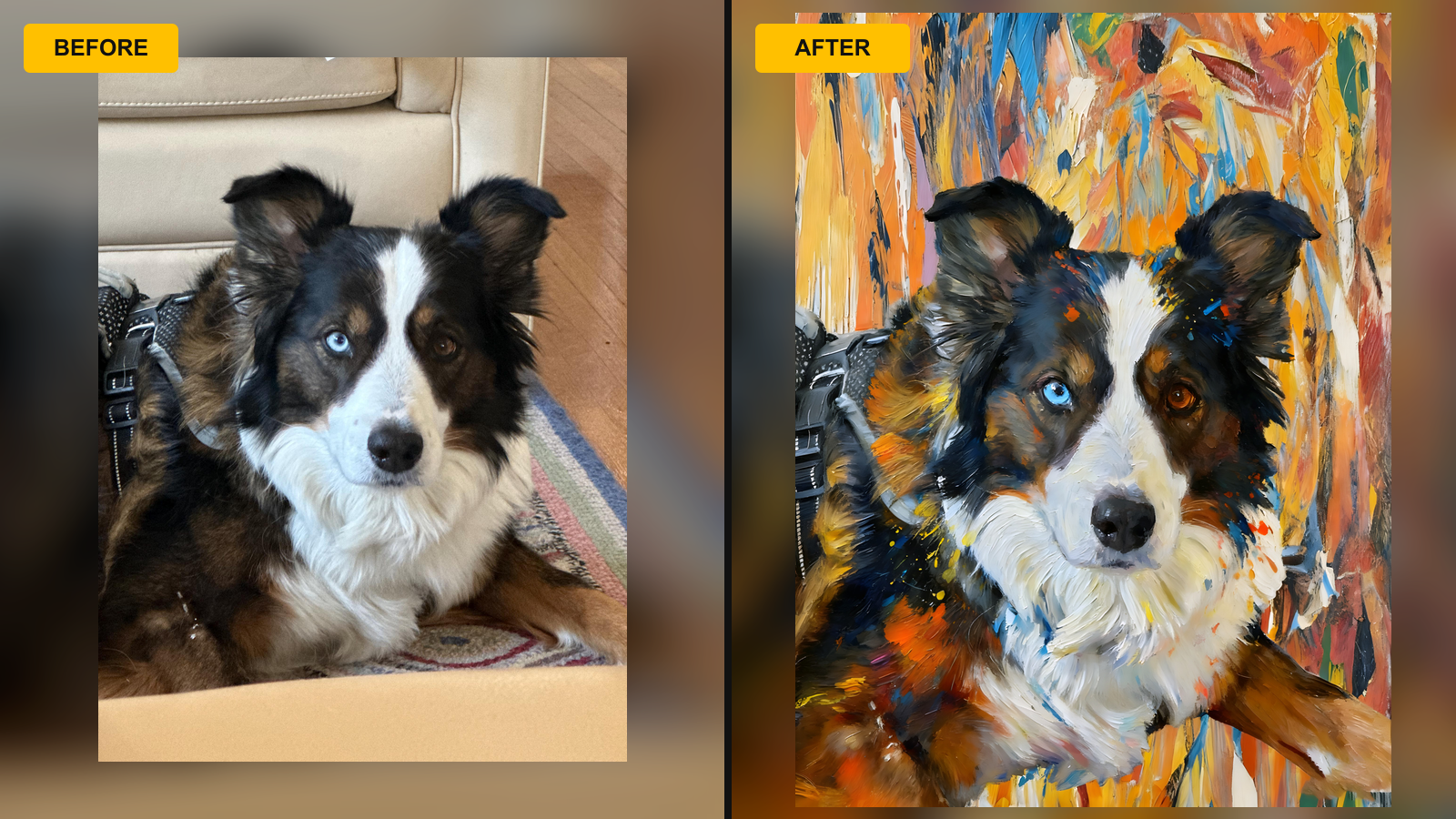
An idea becomes more useful when it connects to a real decision. Look for the expression or marking that makes the pet recognizable, the place where the piece might be seen, or the memory that should remain central. A reference image with clear information can support any of those choices. A vague inspiration image cannot replace facts about the particular pet.
When you want to see how a reference and artwork-stage example can relate, the Customer Preview Gallery provides supporting visual evidence. It is not a catalog of guaranteed results, and current choices should always be checked on the live collection.
Keep the commercial step separate from the idea
An educational idea page should not invent available formats, sizes, or turnaround details. Once you know the direction you want to investigate, visit the current portrait collection for live information. That is the right place to confirm what can actually be selected at the time you are considering an order.
Frequently asked questions
Do pet portrait ideas have to be humorous or elaborate?
No. A simple, recognizable portrait can be just as meaningful as a more expressive concept. The useful idea is the one that serves the person, pet, and intended setting.
Should I choose a style before choosing a photo?
Usually, start by checking whether the pet is visible and recognizable. A style decision is easier after the reference has given you something specific to preserve.
Can one portrait idea work for every room?
Not necessarily. A display setting can influence how much visual energy, scale, or framing feels appropriate. Treat placement as its own decision rather than assuming one direction fits everywhere.
Final takeaway
Good pet portrait ideas begin with a clear purpose, not with pressure to copy a trend. Choose the memory, relationship, or setting that matters most; let that guide the next decision; and use the live portrait collection only after the educational question has been answered.
Use the first idea to choose one focused next step
An inspiration decision is useful when it makes the next question smaller. A reader who begins with a favorite expression may next assess the reference. Someone who begins with a room may next consider placement. Someone choosing a gift may next consider what the recipient recognizes most about the pet. This page should point readers to those narrower answers rather than repeat them.
It is also fine to decide that a favorite photograph is already the right keepsake. A good idea guide leaves room for that answer; it does not imply that every pet image needs to become a new display piece.