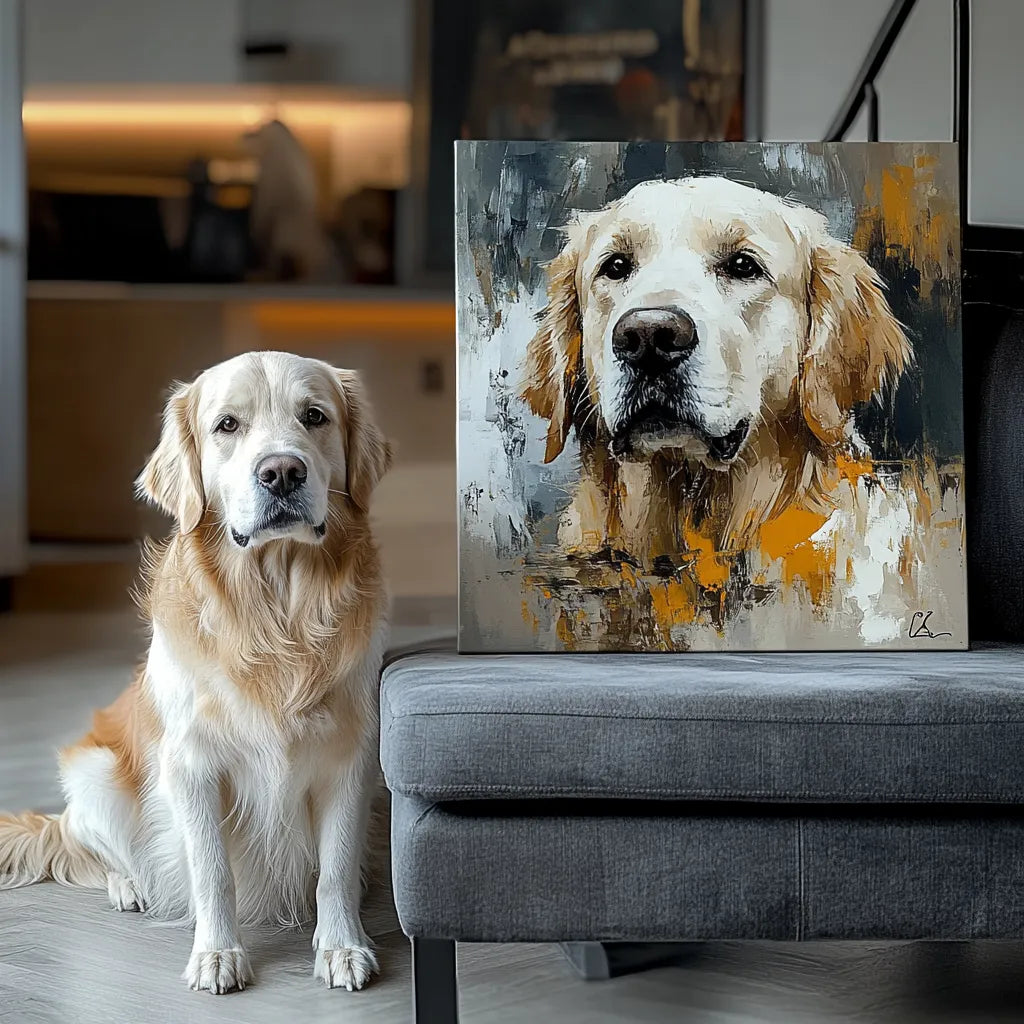
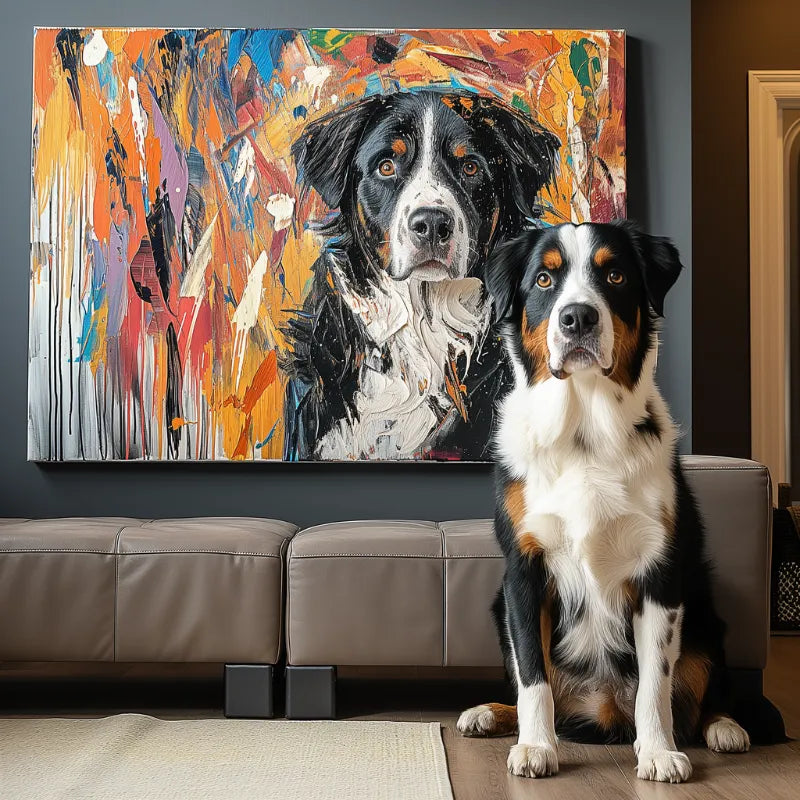
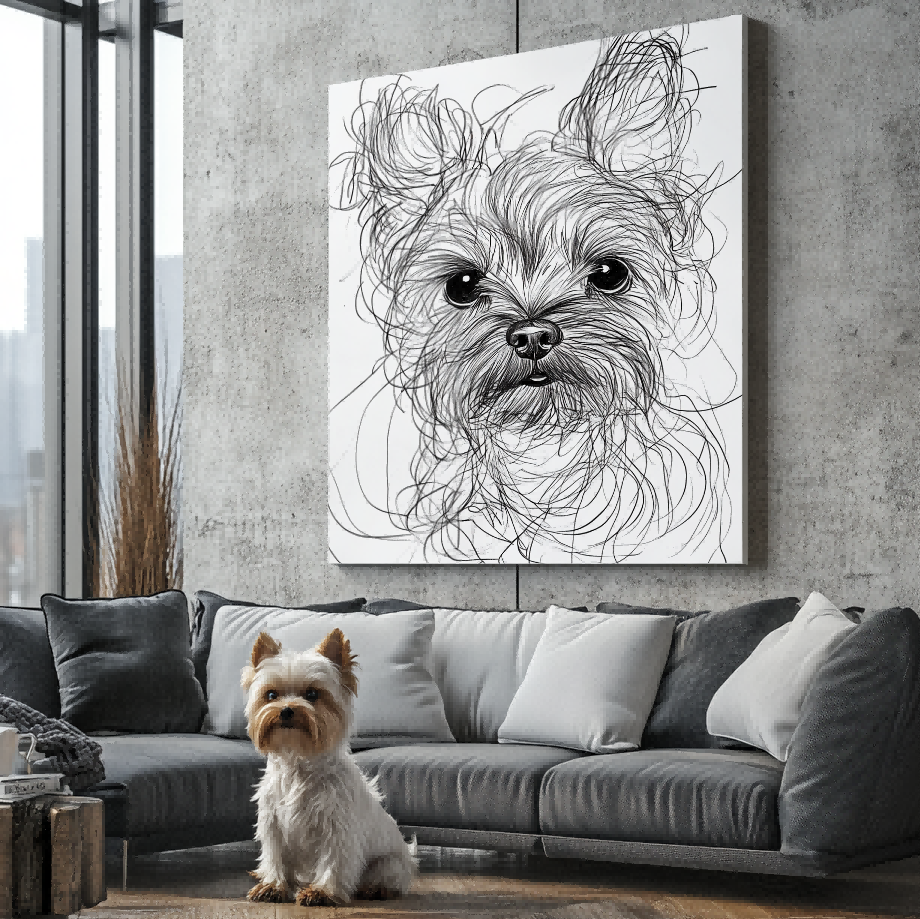
Where you hang a pet portrait changes the role it plays. A portrait near an everyday sightline can feel like a small part of daily life; a portrait in an entryway may become a welcoming detail; a quieter room may suit a more reflective memory. The right place is not a fixed list of “best rooms.” It is the place where the pet, the artwork, and the way you use the room make sense together.
This guide is about placement for one piece. It does not replace a size guide, a framing guide, or a gallery-wall plan. Keeping those questions separate prevents a single display article from becoming a catch-all and makes each next step easier to choose.
Begin with the room’s real use
Think about where people pause rather than where there happens to be empty wall space. A living room can make an artwork part of a shared setting. An entryway can create an immediate personal note. A desk area may make more sense when the portrait is meant to be seen during a workday. The most suitable placement is usually connected to a habit or a memory, not merely a decorating rule.
Consider whether the room already has a strong visual center. If it does, a pet portrait may work best as a supporting point of interest rather than competing with every other object. If the room is quiet, the artwork may have more space to carry the story of the pet.
Separate placement from size
Placement answers “where should this live?” Size answers “what scale can this wall support?” They influence each other but should not be collapsed into one decision. Measure the visible wall area, account for furniture below it, and leave room for the piece to breathe. For the narrower question of small walls or narrow entries, use the small-wall size guide.
For a broader home-style question, the home style guide helps you decide how the artwork should feel in the room. Neither guide can confirm live options, so those details should remain on the current collection page.
Choose the sightline before the hardware
Before deciding how to mount or frame anything, stand where you normally enter, sit, or work in the room. A useful sightline is one that lets the piece feel intentional without forcing it into a crowded zone. Natural light, reflections, traffic flow, and furniture height can all affect whether a place feels calm or distracting. These are practical observations, not specifications for every home.
If you are planning more than one piece together, the gallery-wall planning guide is the relevant owner. A gallery layout has a different search intent from choosing a home for one portrait, so it should remain its own decision.
Let the pet’s story guide the room
A portrait of a pet associated with family gatherings may feel natural near a shared living space. A tribute you want to see quietly may belong in a private room. A playful expression can work where it adds warmth to a routine rather than where it must carry an entire design scheme. There is no universal hierarchy among these choices. The purpose of the piece should be visible in the place you choose for it.
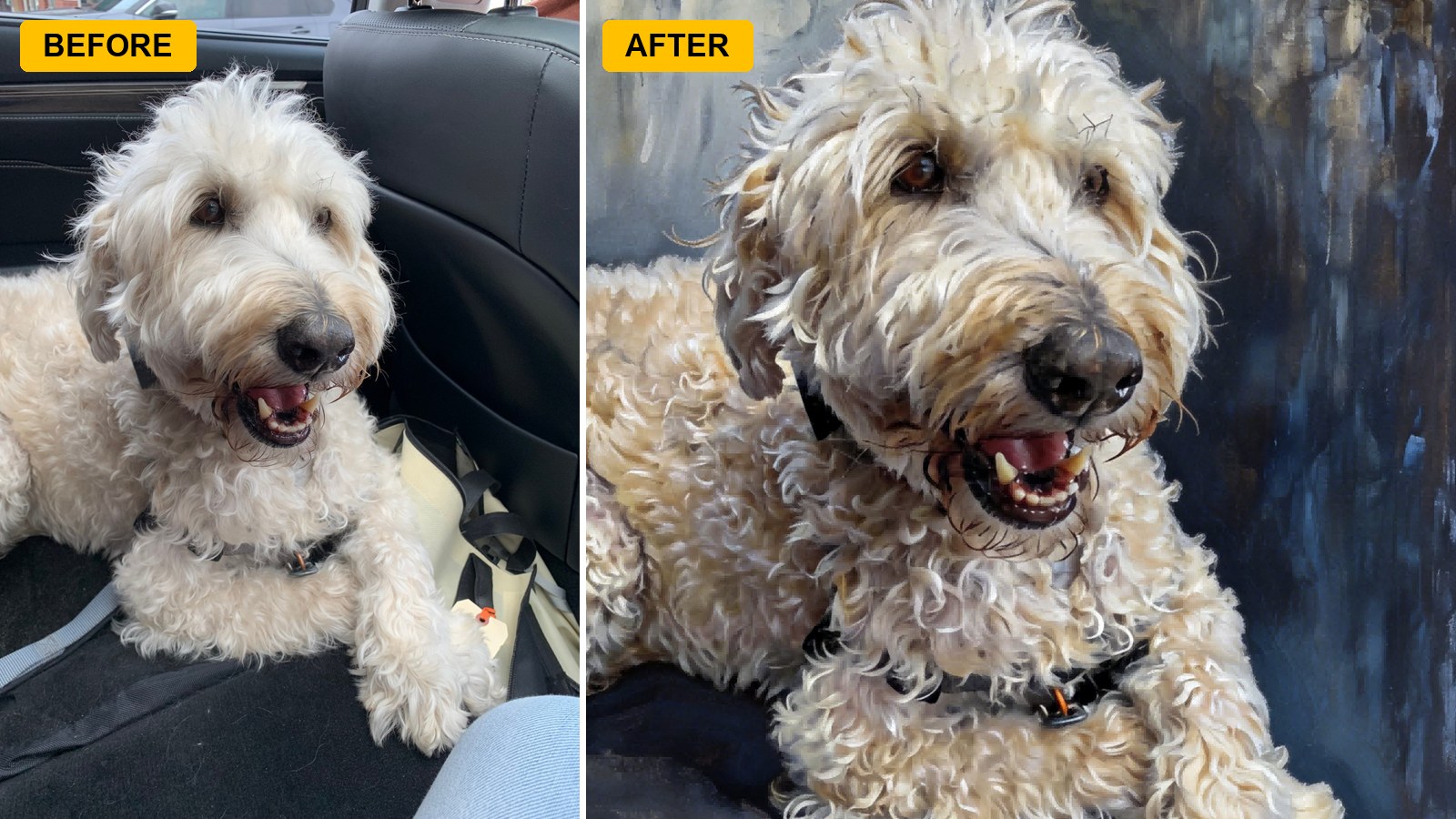
For visual evidence about how a reference can become artwork-stage context, see the Customer Preview Gallery. It is a learning resource, not a substitute for a home mockup or an order-specific guarantee.
Frequently asked questions
Should a pet portrait always go in the living room?
No. The best room depends on who should see it, how the room is used, and whether the piece is meant to feel social, quiet, or welcoming.
Does this guide decide the right size?
No. It helps identify a likely room and sightline. Use a size-focused guide and the live collection for current choices.
Can a single portrait later become part of a gallery wall?
Yes, but treat that as a new layout decision. The gallery-wall guide is the better resource once more than one piece is involved.
Final takeaway
Choose a place for a pet portrait by thinking about how the room is lived in, not by following a generic room list. Once you know the intended setting, explore the current portrait collection for live information while keeping placement, size, and gallery planning as separate decisions.
Make the placement decision reversible
It is reasonable to test a location before treating it as final. Lean a paper outline against the wall, stand in the usual doorway, and notice whether the piece would be visible without becoming busy. This is not a substitute for checking live formats, but it helps turn a room-by-room idea into a decision grounded in your own sightlines.
A change of furniture or routine does not erase the meaning of the artwork. The aim is to choose a thoughtful first location, not to claim that one room is permanently correct.