

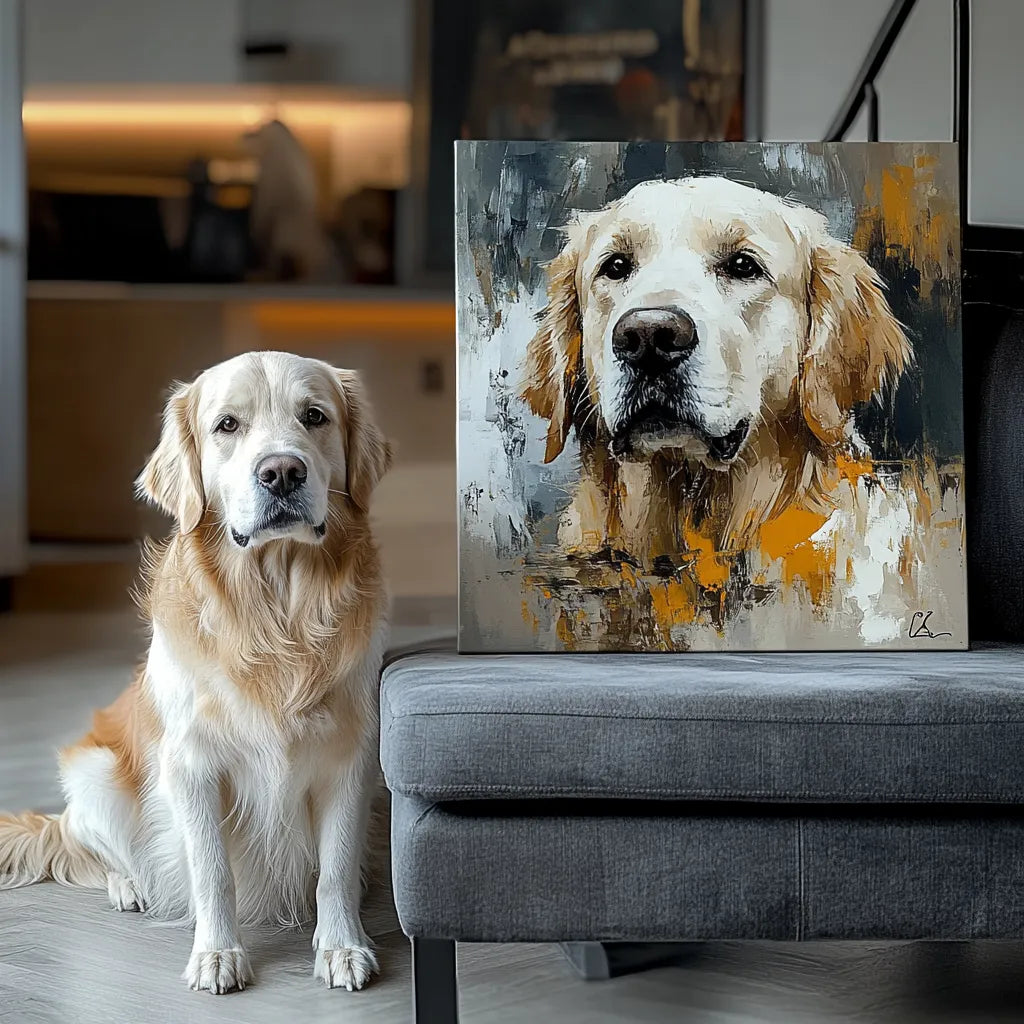
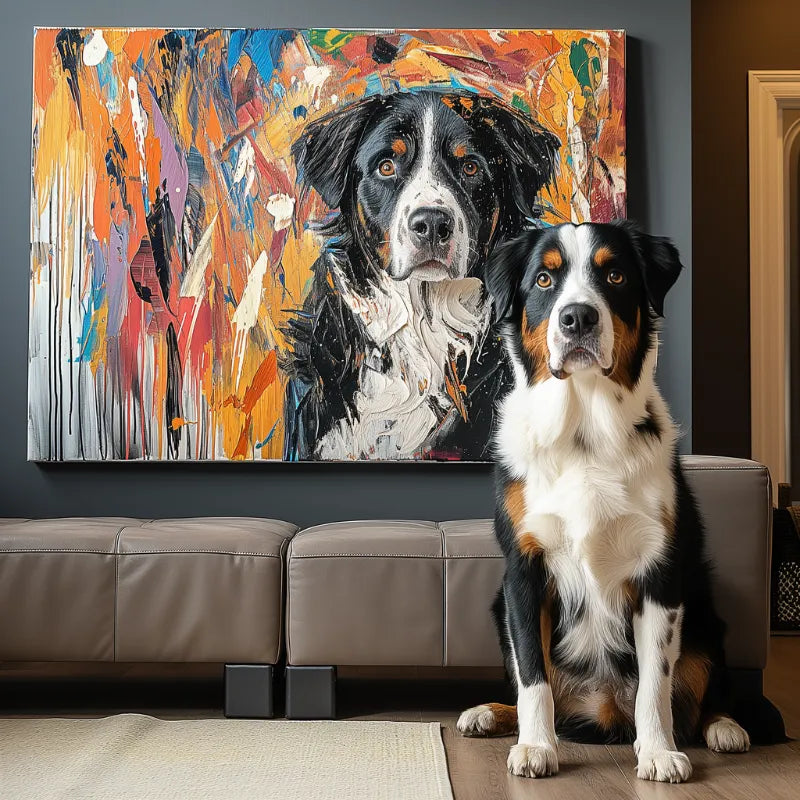

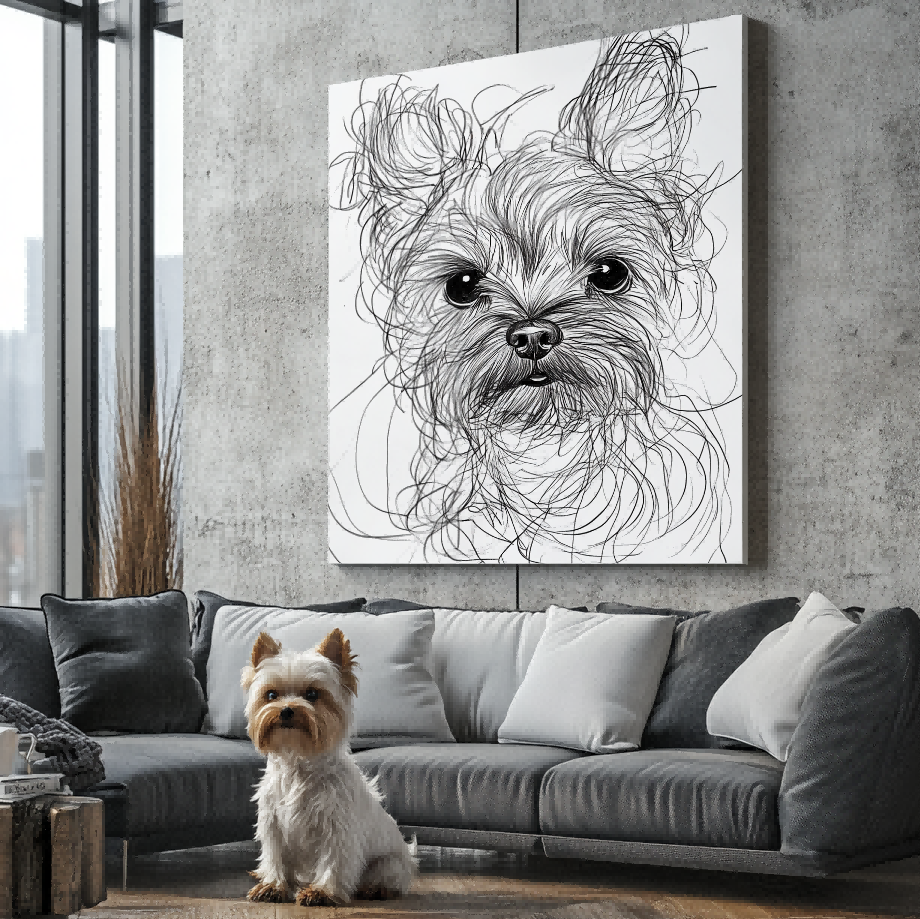

Breed art represents a type of animal: a golden retriever, tabby cat, dachshund, or another recognizable category. A custom pet portrait is intended to represent one individual pet from a reference such as the owner’s photo. Both can be appealing, but they answer different questions. Breed art says, “I love this kind of pet.” A custom portrait says, “This is my pet.”
The difference is not simply price, medium, or style. A watercolor-looking image can be generic or personalized. A line drawing can be based on one pet or a stock silhouette. Look for evidence that connects the artwork to the animal.
Breed resemblance is not individual likeness
Animals of the same breed can share coat structure, body proportions, and common coloring, yet still differ in the details owners recognize immediately. One ear may fold differently. A blaze may be off-center. The muzzle may gray with age. A rescue dog may combine traits that do not fit a single breed label at all.
Breed art can celebrate those shared characteristics without claiming to reproduce a specific animal. That makes it useful when the buyer wants decorative dog or cat art and does not need exact markings. Custom work should be judged by whether the individual survives the chosen style.

Ask what the seller means by custom
Some products let you choose a breed, color, and name from a fixed template. Others build the image from an uploaded photograph. Both involve choices, but the depth of personalization differs. Read the current listing for the required input, the preview process, and the parts of the artwork that may change.
A name under a stock breed illustration does not necessarily make the animal’s face custom. Conversely, a portrait can be deeply personalized without text if it preserves the pet’s expression and markings. The pet name guide helps separate identity in the artwork from optional written personalization.
Words such as bespoke, personalized, made to order, and custom are not always used consistently across stores. Rather than ranking the words, inspect the input and output. Does the buyer submit a pet-specific reference? Does the seller show how the individual features are reviewed? Is the displayed image a fixed design with selectable text, or a new likeness built from the customer’s animal?
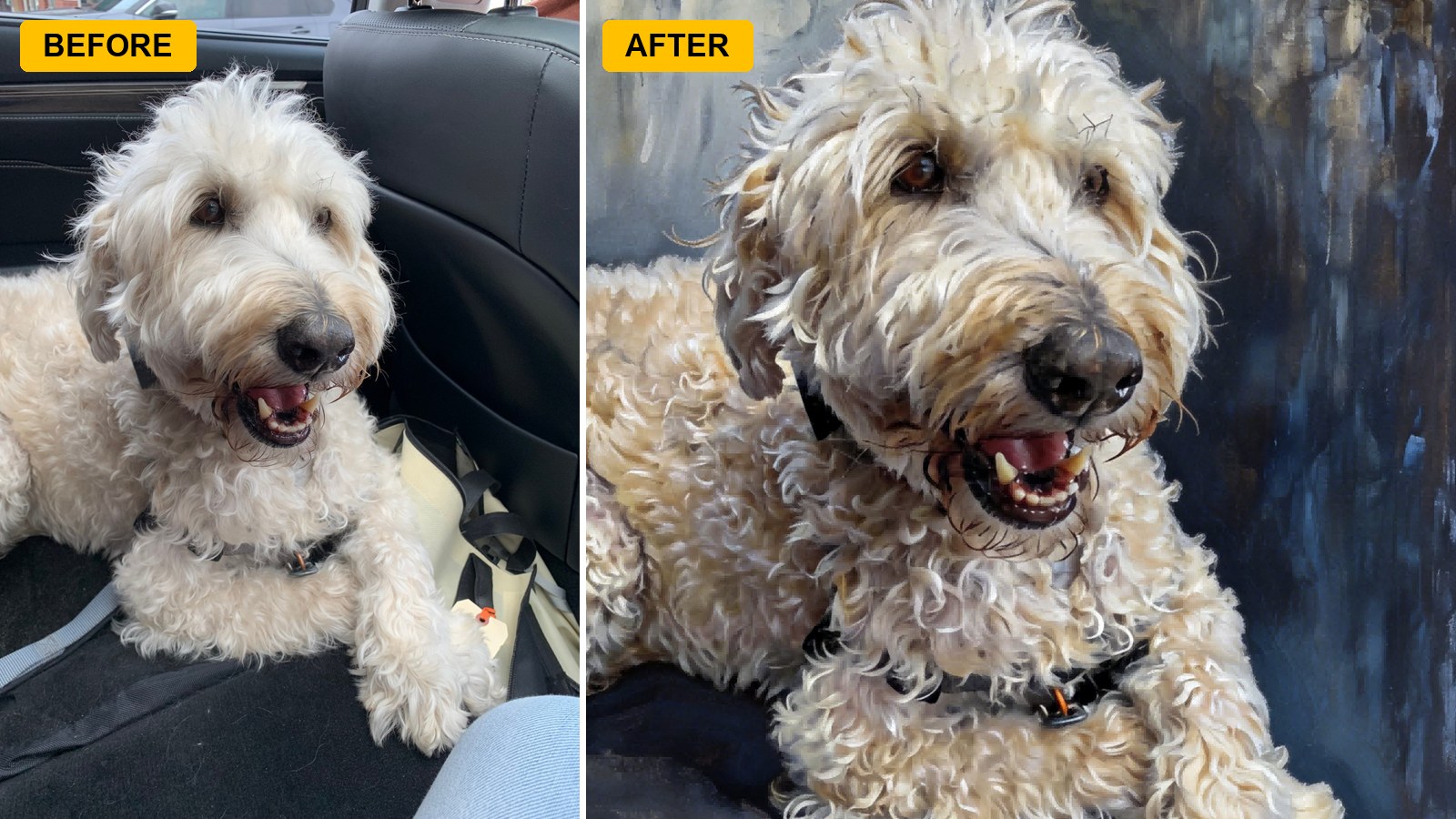
Use a photo-to-result example as evidence
When exact likeness matters, look for examples that show the customer image beside the proposed or finished artwork. Check the eye area, ear position, face shape, coat pattern, and any distinctive mark. Do not expect a stylized portrait to copy every pixel; expect the seller to explain which features remain recognizable inside that style.
One example cannot prove consistent quality. Look across different coat colors, poses, and pets. Also distinguish a digital preview from a photograph of a physical product. Each answers a different part of the buying decision.
Choose breed art when exact identity is not the goal
Generic breed imagery may be the better fit for a themed room, club, breed enthusiast, or casual gift where the recipient’s exact animal is not the subject. It does not require a private photo, and the buyer can usually see the finished design before purchase. The tradeoff is that it may not capture a mixed breed, unusual markings, or a familiar expression.
Be cautious when a listing moves between “breed art,” “personalized,” and “custom portrait” without explaining what changes. Verify whether the shown dog is an example, a template, or artwork produced from the buyer’s own photo.
Choose a custom portrait when recognition matters
Custom work is more appropriate when the purpose is to remember one pet, mark a life stage, create a memorial, or give an owner a likeness they can recognize. The quality of the reference and the clarity of the seller’s review process become part of the decision.
Use the pet likeness checklist to identify the features that must remain. Then compare the current service’s supported styles and product facts instead of assuming every custom seller offers the same changes.
If you are still unsure what makes an artwork a portrait rather than a regular pet image, the pet portrait definition guide explains how subject, interpretation, and intended display work together.
What about mixed-breed and rescue pets?
Generic breed art may be difficult to match when an animal combines several breeds or has an unknown background. A photo-led custom portrait does not need a perfect breed label; it can begin with the visible pet. That makes individual evidence especially useful for uneven ears, unusual coats, scars, or markings that a stock illustration is unlikely to contain.
Do not treat those features as defects to be corrected automatically. Decide which details are part of the pet’s identity and tell the seller before approval.
A simple test before ordering
Hide the product title and ask: could this artwork belong to any similar dog or cat, or does the evidence connect it to one animal? If the goal is breed appreciation, the first answer can be perfectly suitable. If the goal is personal recognition, insist on the second.
When individual likeness is the priority, explore current custom pet portraits and confirm how the live listing uses your photo. If a general pet-art theme is enough, choose breed art honestly and enjoy it for what it represents.


