



A diptych is a two-part artwork; a triptych is a three-part artwork. In wall-print listings, the parts may form one image across separate panels or present related images as a coordinated work. The terms count parts—not pets. A portrait of three cats on one canvas is not automatically a triptych.
For pet artwork, the important question is what happens where the panels separate. A dramatic split can suit a composition with room to breathe, but a gap through a familiar face may interrupt the very detail you wanted to preserve. Understand the arrangement before choosing it for a portrait.
One image split apart, or several complete images?
Ask which meaning the listing uses. A split-image set divides one composition across supports. A coordinated set can keep each image complete. Both may be described using panel terminology, yet they ask different things of the source artwork.
If you are deciding whether several pets should share one scene, use one multi-pet portrait versus separate portraits. That is a subject-grouping decision. This guide concerns the physical divisions within a proposed multi-part display.
Draw the divisions before committing to a face crop

On a copy of the proposed layout, mark every panel boundary and the intended spaces between panels. Check the eyes, nose, ears, and important coat markings. Then look from normal viewing distance. Does the pet remain immediately recognizable, or does your attention go first to the break?
Ask the supplier how the image is prepared for the gaps. Is any image area omitted, or are adjacent sections separated without compensation? Are additional parts wrapped around edges? Those details can change alignment. Do not assume a single uninterrupted preview is sufficient approval evidence for a split product.
Three pets do not require three panels
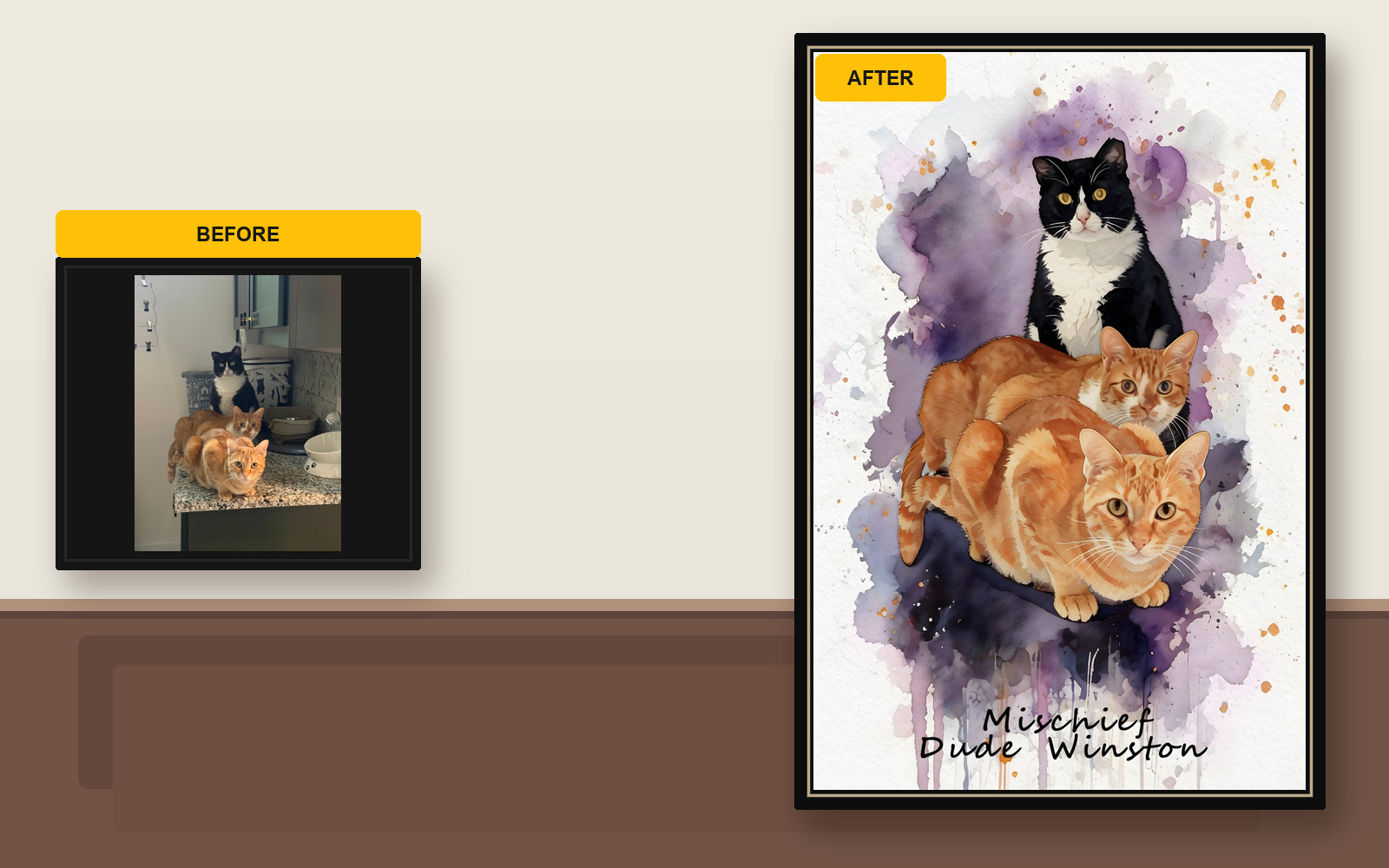
A group may work best as one uninterrupted composition. Conversely, one pet could appear in a multi-part work. Panel count should follow the artwork and the intended display—not a rule that assigns one animal to each rectangle.
If every part is a complete independent portrait, the gallery-wall planning guide is the more useful next step. It covers grouping and spacing without requiring one image to be cut into sections.
Measure the whole footprint
Add the panel widths and the spaces between them. Three panels that are each 12 inches wide occupy 36 inches before any gaps are added. The full display is wider than the sum printed in a single-panel size label, and frames may add more.
Use paper templates based on the actual outer dimensions. Test the intended arrangement against furniture, trim, and the view from the doorway. There is no universal gap measurement that works for every portrait; use the supplier's layout requirements and your room together.
When one canvas is the clearer choice
Keep the image whole if the divisions undermine recognition, the available wall is narrow, or the proposed layout has not been demonstrated clearly. More panels do not automatically make a portrait more artistic or more suitable for a large wall.
Explore current Custom Pet Portraits after deciding what the composition needs. This terminology guide does not establish a Palette Tales split-canvas option. Verify the selected product's available format rather than assuming a gallery-wall idea or a triptych term is an orderable configuration.


