



Giclée and canvas are not opposite choices. Giclée is a term used for fine-art inkjet printing. Canvas is a surface an image can be printed on. A canvas print can therefore be described as a giclée print, while a giclée print can also be made on paper. To compare two pet portrait listings, ask what is being printed, what it is printed on, and what specifications the seller actually provides.
This matters because a sophisticated print label does not tell you whether the portrait captures your pet, arrives stretched, includes a frame, or suits your room. Those are separate decisions. Start with the image and the finished format, then use the printing information to compare like with like.
Separate the process, the surface, and the finished piece
Process: how an image is transferred to a surface. Giclée generally refers to fine-art inkjet output. A seller may give more specific information about inks, printers, and production standards. The broad term alone is not a complete specification.
Surface: the material receiving the image. Canvas has a fabric structure; paper is a different support with its own surface choices. Neither word tells you how the underlying pet artwork was created.
Finished format: what arrives. A canvas might be stretched over supports or supplied unstretched. Paper might be framed or unframed. “Giclée” does not answer those practical questions. If you are unfamiliar with the material itself, the art canvas definition guide covers that foundation.
What a product photograph can actually show

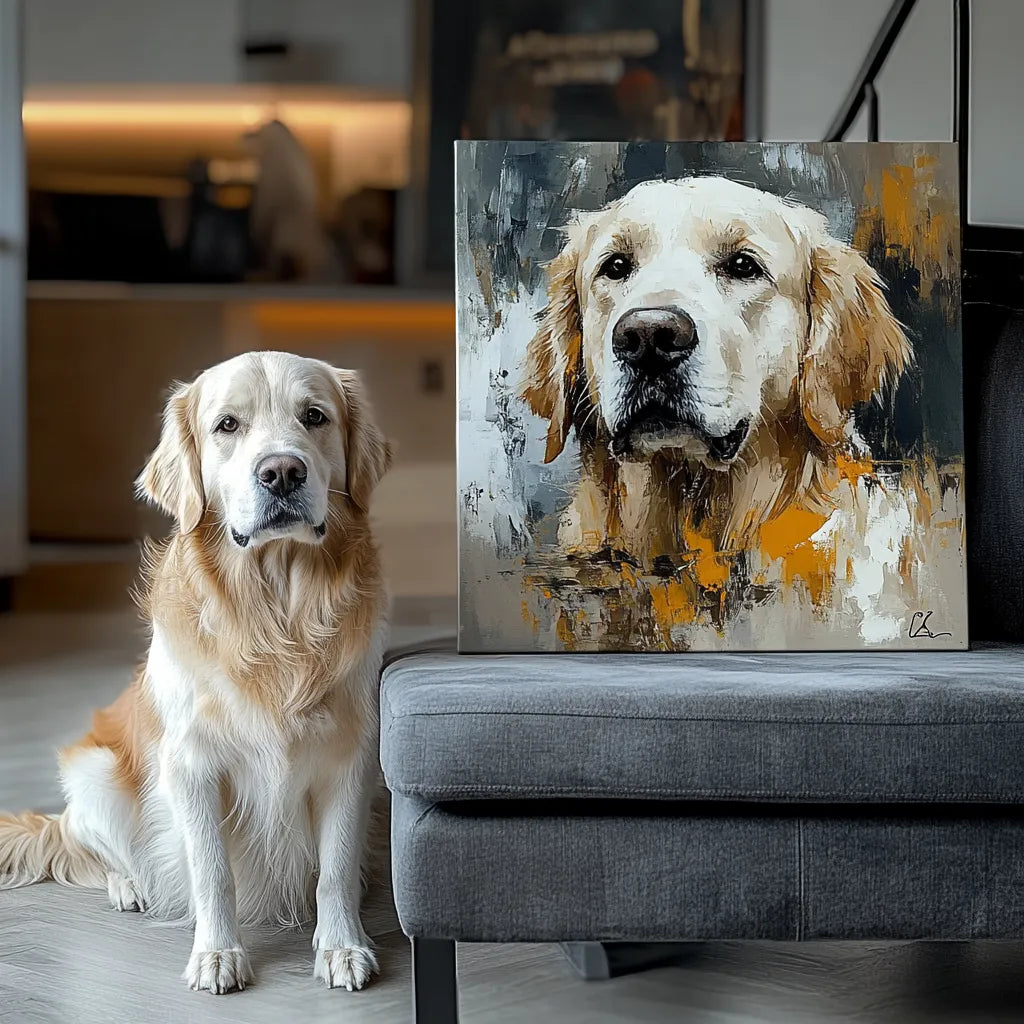
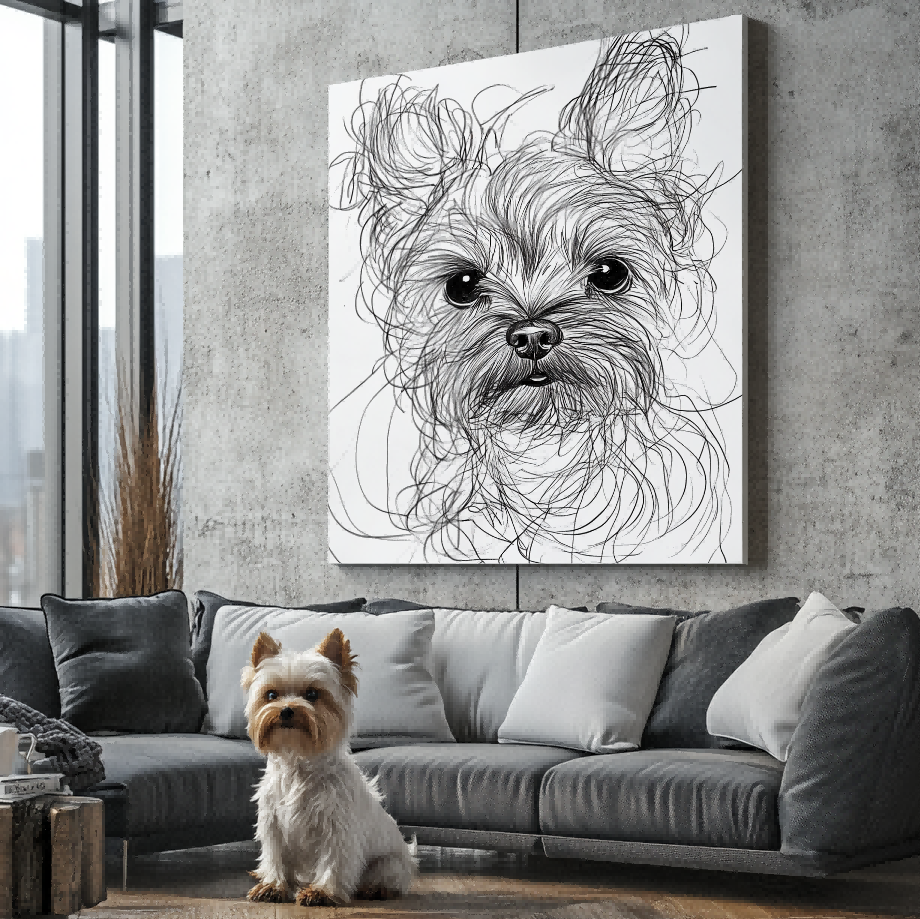
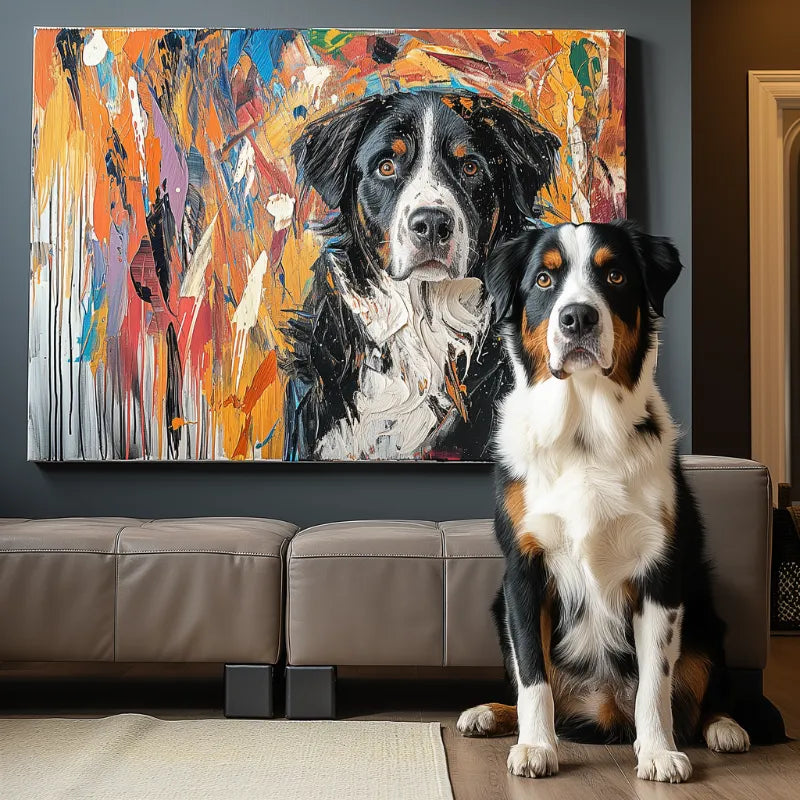
Look at a real product image for the visible surface, edges, frame, and presentation. Look at written specifications for claims about the printing process. A photograph can help you understand an object, but it cannot verify ink chemistry or prove a permanence claim. A digitally styled room image cannot do that either.
The same distinction applies to a Customer Preview. It helps you assess the artwork before the physical piece exists. It is useful for likeness and composition, not proof of how a printer or material performs.
Compare the pet artwork before comparing technical labels
Two technically similar prints can deliver very different portraits. Check the shape of the ears, placement of markings, familiar expression, and the balance between the pet and the background. Decide whether you want an expressive interpretation or a closer rendering of the reference photo.
Then inspect the same kind of detail in the seller’s examples. Does the style simplify coat markings? Does it use bold outlines or softer transitions? That visual language may affect your satisfaction more immediately than an unfamiliar process term. The Customer Preview checklist offers a way to review those decisions without confusing artwork approval with material verification.
Five useful questions for a listing
- What is the support? Confirm canvas or paper rather than inferring it from “fine art.”
- What arrives? Check whether stretching, framing, or mounting is included for the selected option.
- Which process details are documented? Ask for the actual specification if it affects your purchase.
- What does a quality claim refer to? Separate the image, ink, support, frame, and care conditions.
- Can you assess the portrait itself? Use relevant examples and the seller’s stated preview process.
You do not need to become a print technician. You do need enough information to avoid comparing a framed canvas with an unframed paper print as though only the printing label differs. Include any later framing or mounting work in your decision without assuming a particular price.
Does “giclée” mean hand-painted or guaranteed to last?
No. A printing term does not establish that the finished object was painted by hand. Nor should it be treated as a universal lifespan guarantee. A useful durability statement needs support for the particular materials and conditions; a single label cannot replace that evidence.
For Palette Tales, use the current product description for the selected format. This terminology guide does not claim that every Palette Tales item uses a specified giclée process, ink system, or archival standard. Do not transfer another printer’s specifications to a different product.
Choose the portrait, then confirm its specifications
When you explore Custom Pet Portraits, first find an artistic direction that feels like your pet. Confirm the available size and physical format, then resolve any material or process questions before ordering. The best comparison is not “giclée or canvas?” It is “which artwork, printed how, on what surface, and delivered in which form?”


