

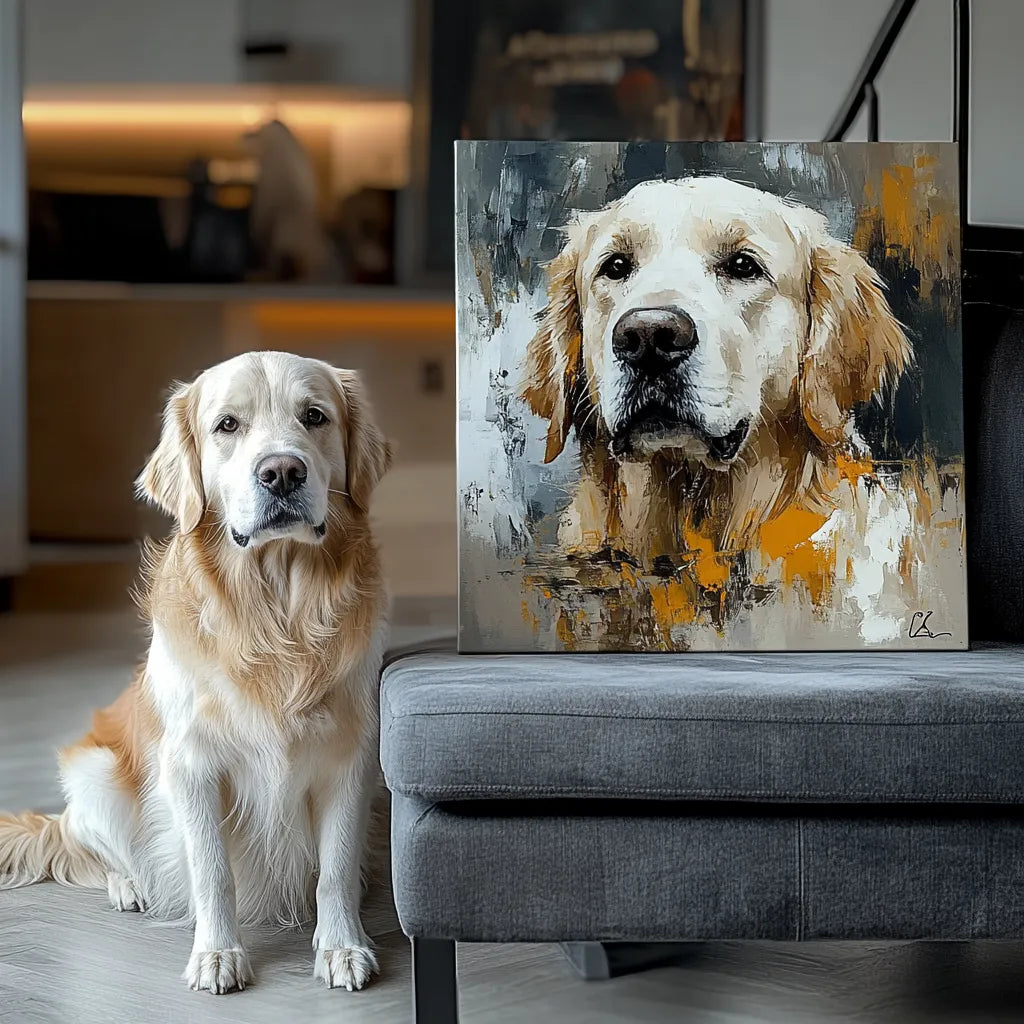
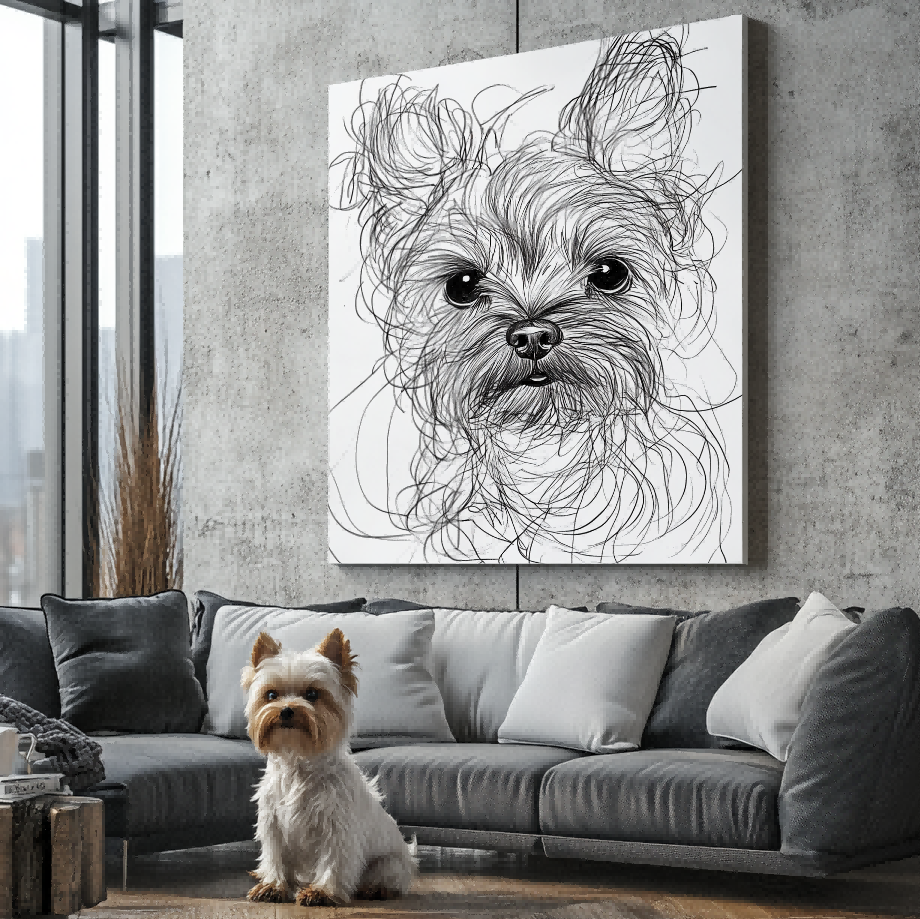
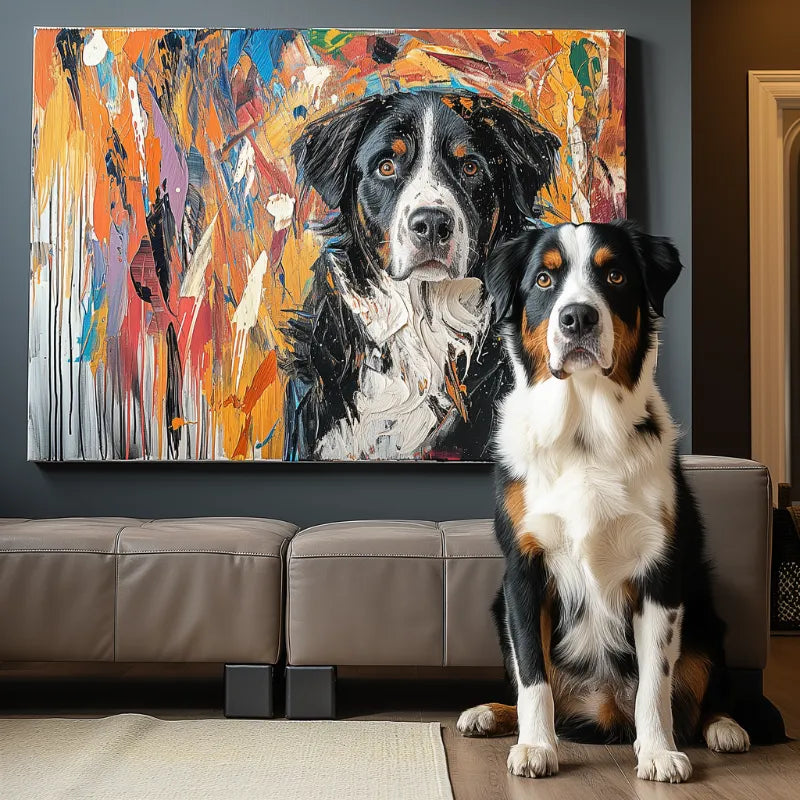


Can one favorite pet photo become a wall portrait, a phone case, and a tote? It can be a useful starting reference for each, but “the same photo” does not mean “the same crop.” A wide wall piece, a narrow case, and a bag seen while moving give the pet very different amounts of visual space. Before ordering, judge the readability of the face and markings in each format rather than assuming an image that works once will work everywhere.
This is a photo-selection guide across three existing Palette Tales formats. It is not a promise that one file will be accepted unchanged for every product or that the three examples below depict one customer order.
Start with the original photo, not a saved screenshot
Find the clearest original file you have. Look for visible eyes, a recognizable muzzle and ears, and enough space around the pet to change the crop. A screenshot, social-media download, or heavy filter may hide detail that looked fine on a small phone screen. If the favorite shot has an important feature near the edge, keep a second reference that shows it clearly. The pet portrait photo checklist is the broader Owner for sharpness and source-image quality; this article focuses on how the same source needs different treatment across formats.
For a wall portrait, consider viewing distance and composition
A wall portrait gives the artwork more room. That can preserve a pose, meaningful background, or the relationship between two pets, provided the source has enough usable detail. Step back and ask which features would still feel like your pet from the usual viewing distance. A close face crop can feel intimate; a full-body image may tell a different story but makes the face smaller. Neither is universally better. Compare the intended crop with the size guide and review the current portrait options before choosing.

For a phone case, protect the features that identify the pet
A phone case is narrow, and the visible area depends on the selected device model. A photo with a clear head and room around the ears can be easier to adapt than a frame that already cuts the pet tightly at the edge. Watch for eyes, markings, and the camera area rather than only asking whether the file looks sharp. The actual case preview or product listing for the chosen model is where to verify placement; do not infer identical cutouts across models. For device fit, use the phone case compatibility guide.

For a tote, test recognition at a glance
A tote is carried, folded, and viewed at changing distances. Compare the pet’s silhouette and facial expression against the overall bag color and surrounding design. A pose with many tiny details may be meaningful in a framed portrait but less immediate on a moving bag. This is a visual judgment, not a claim about print durability or the ability to edit an unsuitable source. Check the current tote listing for its actual format and personalization choices. The pet tote photo guide owns the single-product photo decision.

A quick comparison before you choose
- Portrait: Does the chosen crop support the pose, pet count, and intended viewing distance?
- Phone case: Are the most recognizable details clear within a narrow, model-dependent shape?
- Tote: Does the pet remain identifiable quickly against the bag and artwork background?
If the answer changes by format, use a different crop—or a different source photo—for that product. There is no requirement to force one image into every layout. Save the original files and note which features must remain visible before reviewing a proof or placing an order.
What the examples can and cannot prove
The three images above are genuine, approved Palette Tales format examples. They show what a physical portrait, a phone case, and a tote can look like as separate products; they do not establish that a single photograph was used to create all three. A Customer Preview is artwork-stage evidence, not a substitute for a physical product photograph. If you need to assess the portrait artwork itself, the Customer Preview checklist explains what to examine before approval.
Which format should get the best photo?
Give the most detailed, expressive image to the format where those details will matter most to you. If the goal is a lasting wall focal point, start with the portrait. If the goal is everyday carry, choose a crop that reads cleanly on the phone case or tote and check that product’s current requirements. You can explore Custom Pet Portraits, then compare the phone case and tote formats as separate decisions. Keep the pet’s real features—not a generic template—at the center of each choice.


