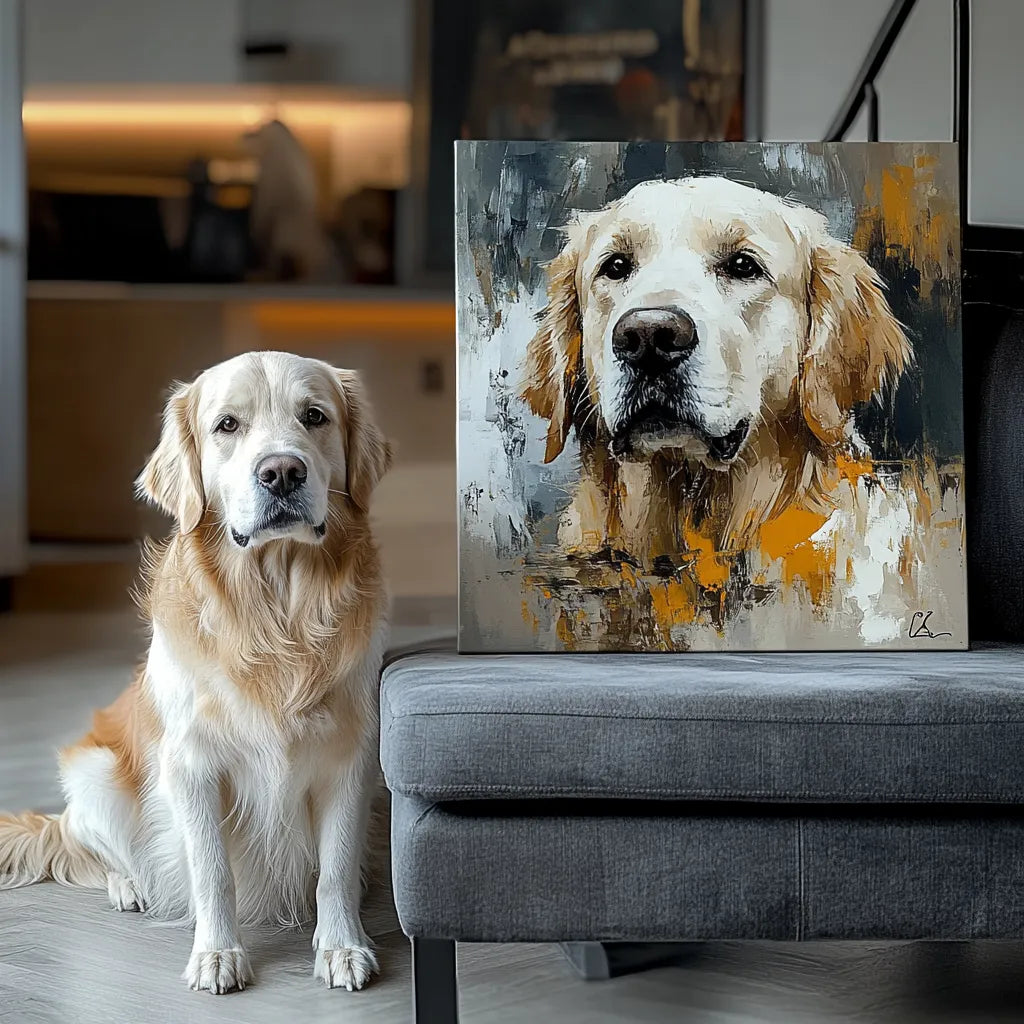
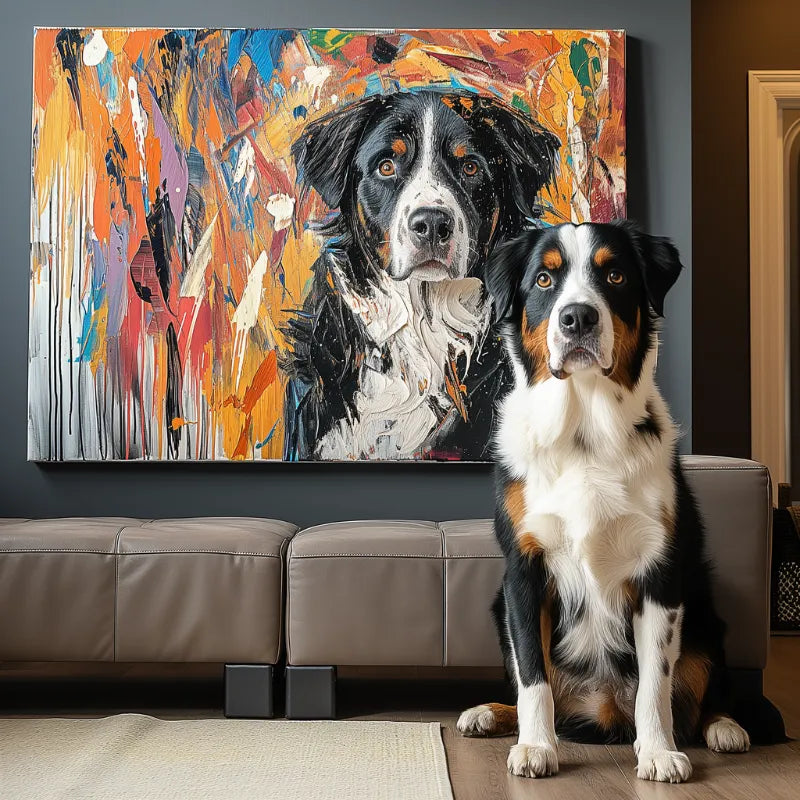
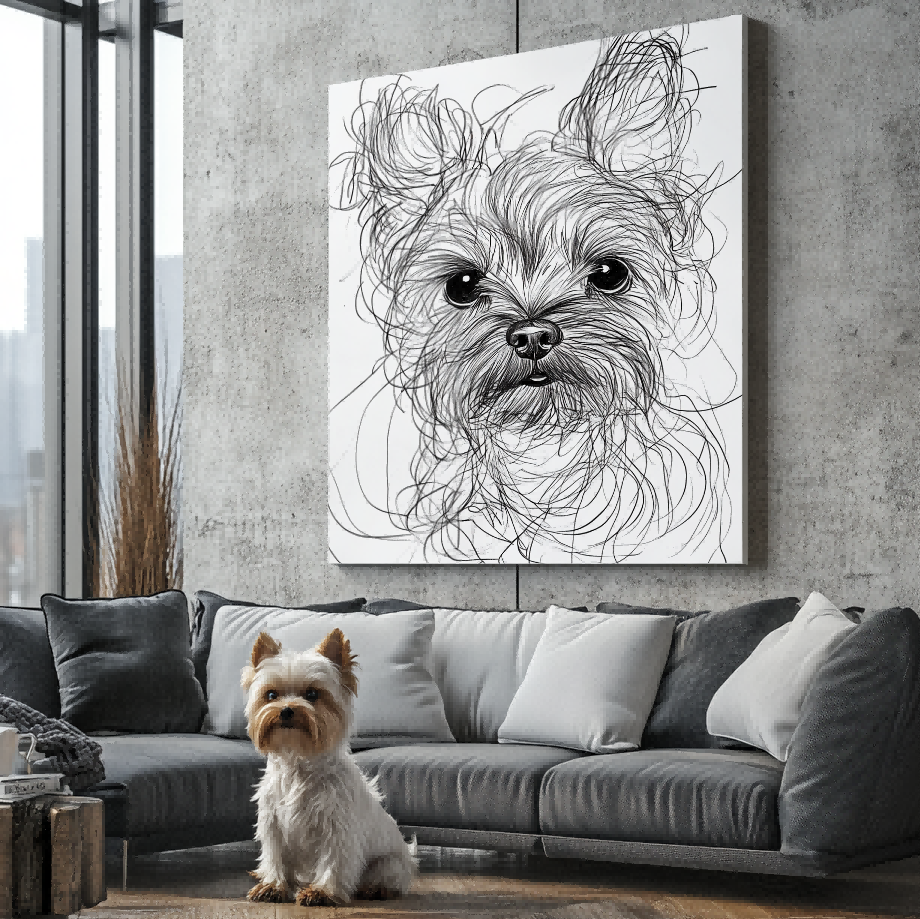
The best photo for a custom pet portrait is clear, well lit, and taken near your pet’s eye level. More importantly, it should show the expression you recognize—not simply be the image with the highest resolution.
A good reference does not need to look like a studio photograph. It needs to give the artist enough honest information to understand the eyes, markings, face shape, and personality that make your pet unmistakably yours.
Five checks before you upload a pet photo
Open the image at full size and look at it the way someone unfamiliar with your pet would. Can you still read the eyes? Are the ears, muzzle, and coat markings visible? Does the pose feel natural?
- Light: soft daylight usually preserves coat color and facial detail better than a dark room or a harsh flash.
- Focus: the face—especially the eyes—should be sharper than the background.
- Angle: a camera position close to eye level avoids an exaggerated forehead or shortened muzzle.
- Crop: leave a little space around the head, ears, or body so the composition has room to develop.
- Character: choose the expression that feels true to your pet, even if another image is technically cleaner.
For a quick comparison of headshots and full-body references, keep the pet portrait photo guidelines open while reviewing your camera roll.

Headshot or full body: decide what the portrait should remember
A headshot puts attention on the eyes, expression, and small facial markings. It is often the stronger choice when a pet’s personality lives in a tilted ear, a serious stare, or a familiar smile.
A full-body image can preserve posture and body language—a curled tail, a favorite seated pose, or the relaxed way your pet rests. The better option is the one that supports the memory you want the artwork to hold.
A strong reference also helps the artwork carry clearly into its final format. The Canvas example below shows how a personalized portrait can appear as a physical wall-art piece.

Backgrounds matter less than separation
A busy room is not automatically a problem. What matters is whether your pet can be visually separated from it. A dark pet against a dark sofa may hide the outline; bright backlighting may erase the face. If you have two similar photos, choose the one with clearer contrast around the head and ears.

If the meaningful photo is imperfect, send the useful context
Sometimes the photograph that matters most is the only one you have. In that case, do not hide the limitation. A second reference can help clarify eye color, coat pattern, or ear shape even when the main pose comes from another image.
You can also explain details you do not want carried into the artwork. Palette Tales supports requests to remove unwanted elements such as collars during the artwork review process.
Use the preview as the final visual check
Palette Tales creates a custom pet portrait from the photo you provide and sends an artwork preview in 1–2 business days. The Free Preview Before Printing is where you check expression, markings, crop, and the overall feeling of the piece. Edits can be requested during that review process.
If you want to understand the range of compositions before ordering, see customer pet portrait previews. When your reference photo is ready, you can explore custom pet portraits and choose the format that fits your idea.
Frequently asked questions
Can a collar be removed from the portrait?
Yes. Customers may request removal of unwanted elements such as collars during the artwork review process.
When will I see my artwork preview?
Palette Tales provides the artwork preview in 1–2 business days, followed by the opportunity to request edits before printing.
Should I send a headshot or a full-body photo?
Choose the image that supports what you want the portrait to emphasize. A headshot prioritizes expression and facial detail; a full-body photo preserves pose and body language.