



A pet portrait can be on the right wall and still feel strangely disconnected if it hangs too high or too low. The useful starting point is not a universal number; it is the place from which people will actually see the pet's face. A picture viewed while standing in an entryway and one viewed while sitting on a sofa invite different tests. Decide the viewing position, then use a temporary paper outline before making a hole.
This is display guidance, not an installation specification for a particular Palette Tales product. Wall material, frame weight, hanging hardware, furniture height, and accessibility all matter. Check the real item's construction and follow suitable hardware and safety advice before mounting anything.
Start with the viewing position
Stand or sit where you normally will look at the artwork. Imagine a line to the pet's eyes, not merely to the top of the frame. In a small portrait, the face may sit above or below the geometric center because of the composition. If you hang by frame center alone, the expression might end up farther from your natural line of sight than expected.
Many framing guides use an approximate eye-level center as a starting point. That is not a rule to impose on every household. Children, wheelchair users, seated viewers, and unusually tall or low furniture change the useful height. Hold a paper template on the wall and ask the people who live with it to view it from their normal positions. The right result should feel comfortable, not numerically “correct.”
Above furniture, judge the relationship rather than the floor
A portrait over a console or sofa should feel connected to the furniture beneath it. If the gap is so large that they read as unrelated objects, lower the paper template and look again. If it feels crowded against a high sofa back or a lamp, move it upward or choose another wall. Leave practical room for furniture use, cleaning, and safe movement. Do not copy a fixed inches-from-sofa claim without testing the actual room.

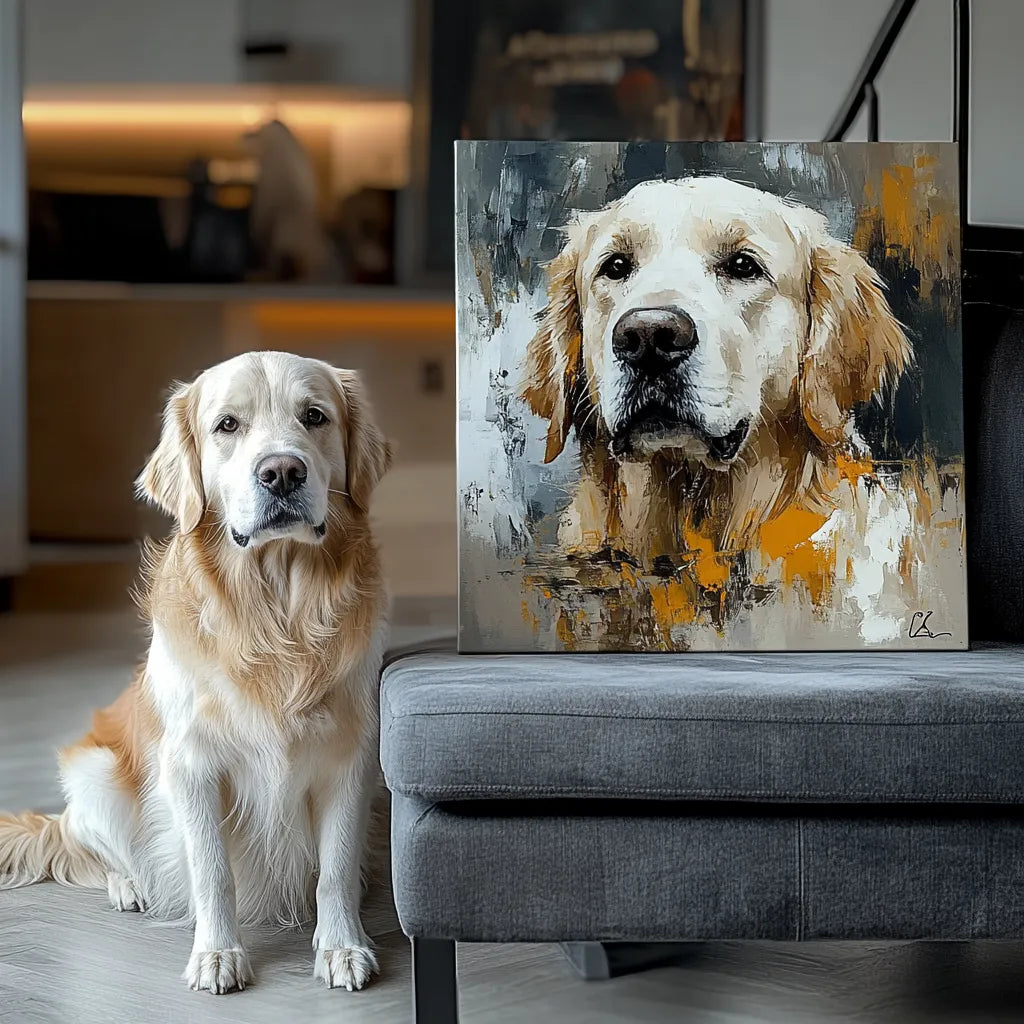
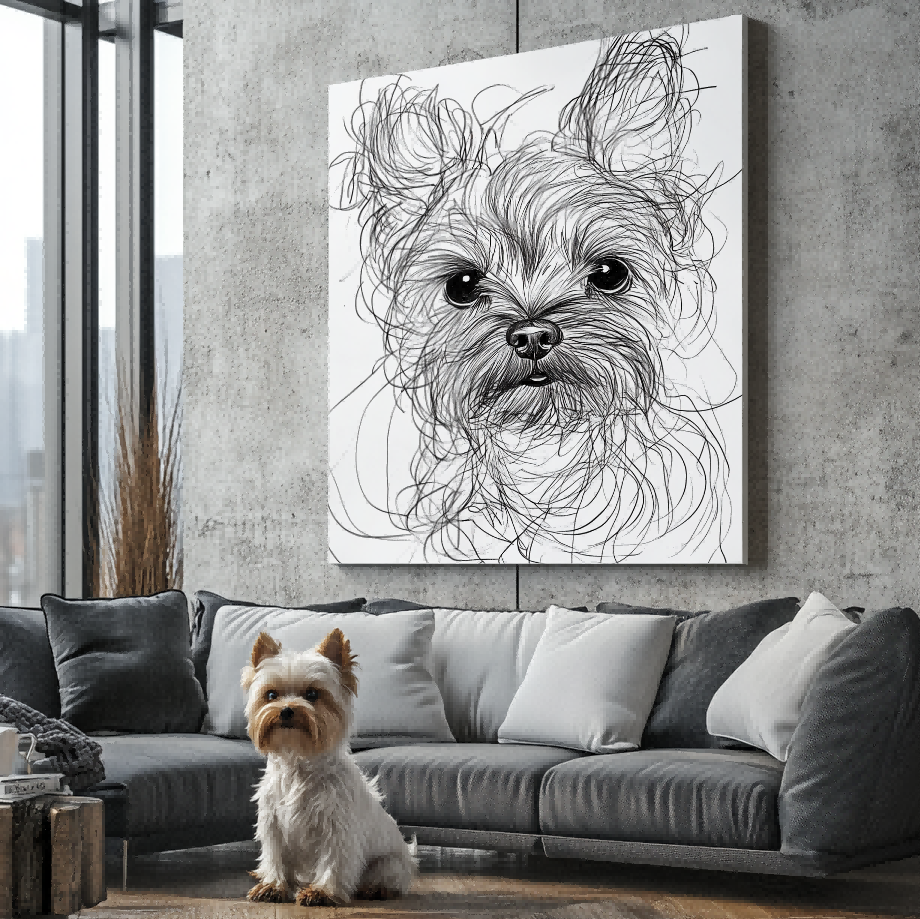
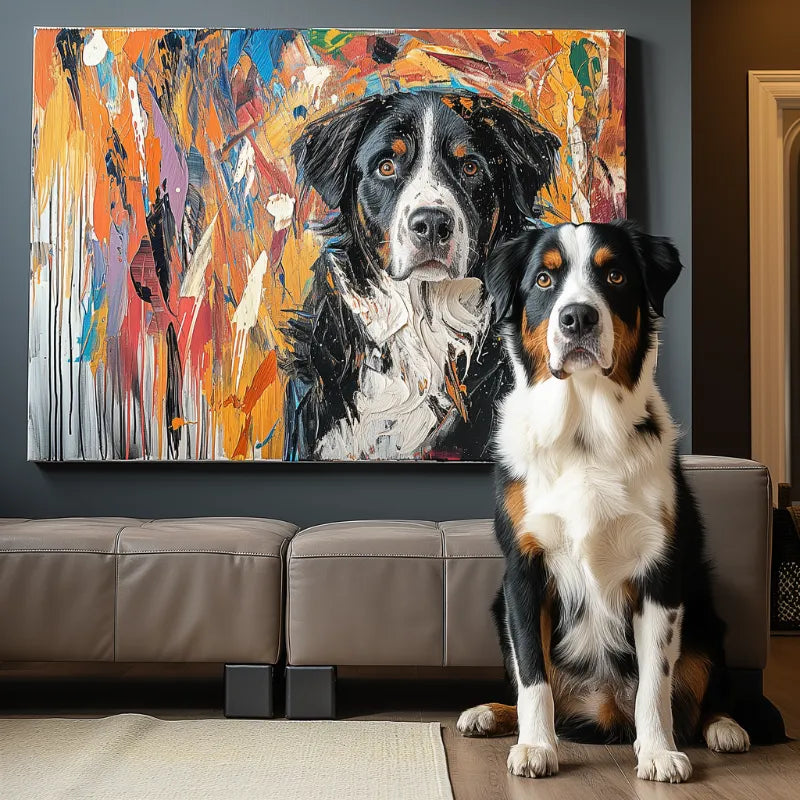
The image helps show why a visible gap and the overall furniture grouping matter. It does not reveal the actual wall height or mounting point. Also notice where the portrait's face sits within its frame. If a pet looks downward in the composition, hanging the whole frame too low can exaggerate that effect. If the artwork sits near a bright lamp, check reflections before final placement; our lighting guide handles that separate issue.
For more than one artwork, test the group as a unit
Two pet portraits do not have to share an identical top edge to look intentional. Decide whether their centers, their bottoms, or the pets' eye lines should be the common visual anchor. Different frame sizes and portrait orientations may make a strict top alignment feel uneven. Lay out paper outlines on the floor first, then tape them to the wall at the proposed height. Step back and view the pair from the place people will usually stand.

This is a grouping example, not a promise that the artworks were sold as a set. If you are still choosing how many pieces to use, the one versus separate portraits guide owns that earlier decision. The height question comes after you know the number and approximate outside sizes.
A tape-and-paper test before drilling
- Measure the real outside dimensions of the finished piece, including its frame if one is used.
- Cut paper to that outline; mark where the pet's eyes fall inside it.
- Tape the template in the likely position and view it standing and sitting.
- Check furniture clearance, nearby doors, lamps, and reflections.
- Only then choose appropriate mounting hardware for the actual wall and artwork weight.
For a gallery wall, put all outlines up at once. A lone portrait can be adjusted independently, but a group will be read as a larger shape. The gallery-wall guide covers the broader arrangement and spacing. Here the question is where that final shape sits vertically in the room.
Common errors that a mockup catches
A picture can appear too high when someone measures from the top instead of the center. It can appear too low when a shelf or sofa cuts across the bottom of the art from the usual viewing angle. A deep frame may cast a shadow under a wall light. A horizontal portrait may need a different visual center from a tall one. These are reasons to test in context, not reasons to assume one preset number will always work.
If the pet face is too small from the chosen viewing distance, moving the art lower may not solve the real issue. You may need a different size or crop; consult the Size Guide before ordering. If the face reads well but the wall still feels empty, reconsider the wall or companion decor rather than forcing an unsafe mounting height.
Choose the wall first, then test height against the people, furniture, and pet expression in that space. Explore current Custom Pet Portraits for actual formats, and measure the finished item before any permanent installation. A comfortable eye line is more valuable than following a number without context.


