



Should a framed pet portrait go behind glass? First identify the artwork itself. A flat print or drawing on paper and a stretched canvas are not interchangeable objects. The frame may look similar from the front, yet the space available for a clear protective sheet—and the reason to use one—can be different. Do not decide from a small product thumbnail or assume a picture marked “framed” includes glass.
This guide is about framing decisions, not an assertion that Palette Tales currently offers glass, acrylic, archival mounting, or a particular frame construction. Check the live product listing for what is included. If you are using a separate framer, bring the actual artwork or its specifications before making a permanent mounting choice.
What glazing actually means
Glazing is the clear sheet at the front of some frames. It may be glass or an acrylic alternative. The outer frame is a different component; an artwork can have a frame without glazing. A mat is different again: it is the visible inner border that can create space between a flat piece and the outer frame. Our mat-or-no-mat guide addresses appearance; this article addresses the clear front layer.
Glazing may help shield a flat work from direct handling and some dust, but it also introduces reflection and affects how close the image appears. No glazing does not automatically mean poor quality. The appropriate decision depends on surface, mounting method, environment, and whether the framer can keep the clear sheet from touching sensitive artwork.
Flat art on paper: ask about protection and spacing
A paper-based print or original drawing can be vulnerable to touching, moisture, and poor mounting. A framer may recommend glazing and suitable spacing so the artwork does not press against it. The exact material, UV properties, and mounting method vary; a generic “protective glass” label is not enough to establish conservation quality. If the piece is irreplaceable, ask an experienced framer about materials and reversibility rather than copying a social-media DIY tip.
For a gift, also ask whether the recipient will need to open the frame later. A removable assembly and a permanently sealed assembly are different practical choices. A ready-made frame may be convenient but still have an opening or depth that does not suit the print. Measure the artwork first and confirm the frame's visible window, not just its advertised outside size.
Stretched canvas: a different surface and frame relationship
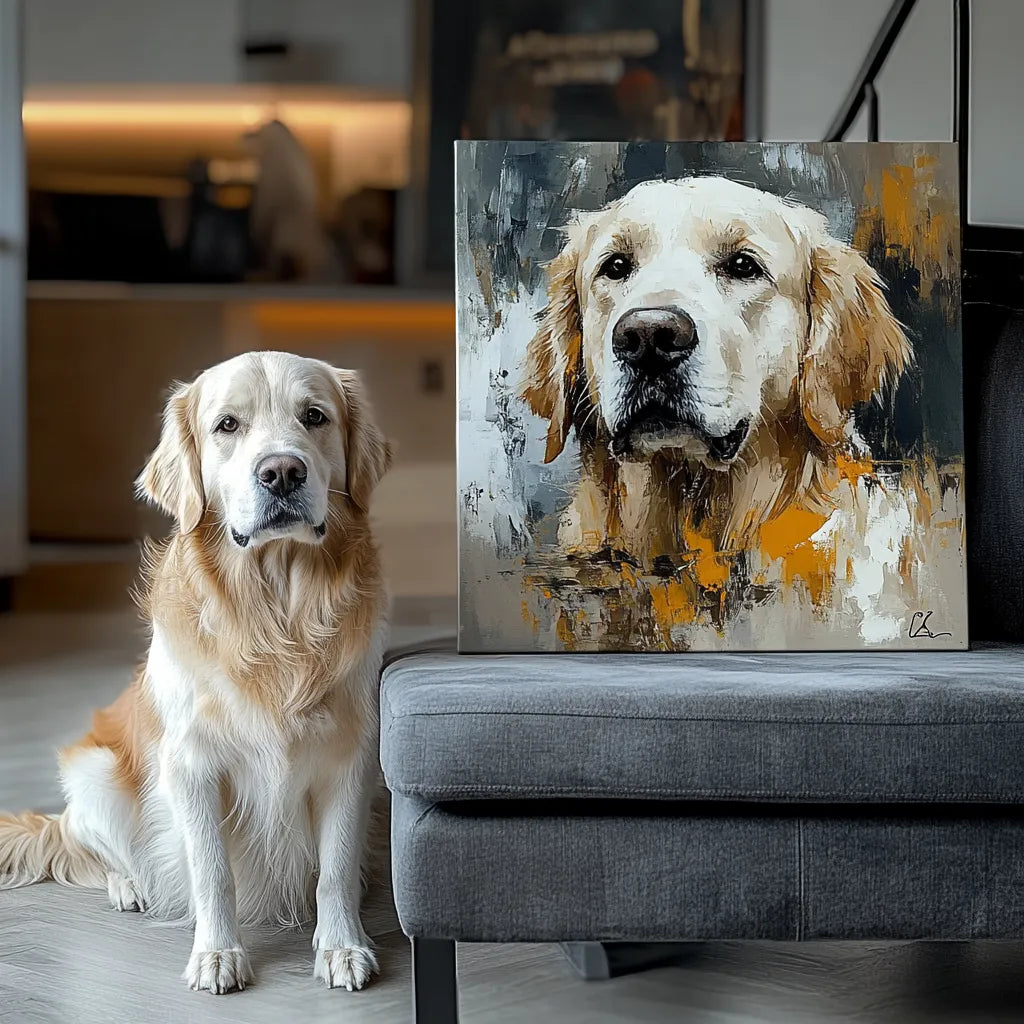
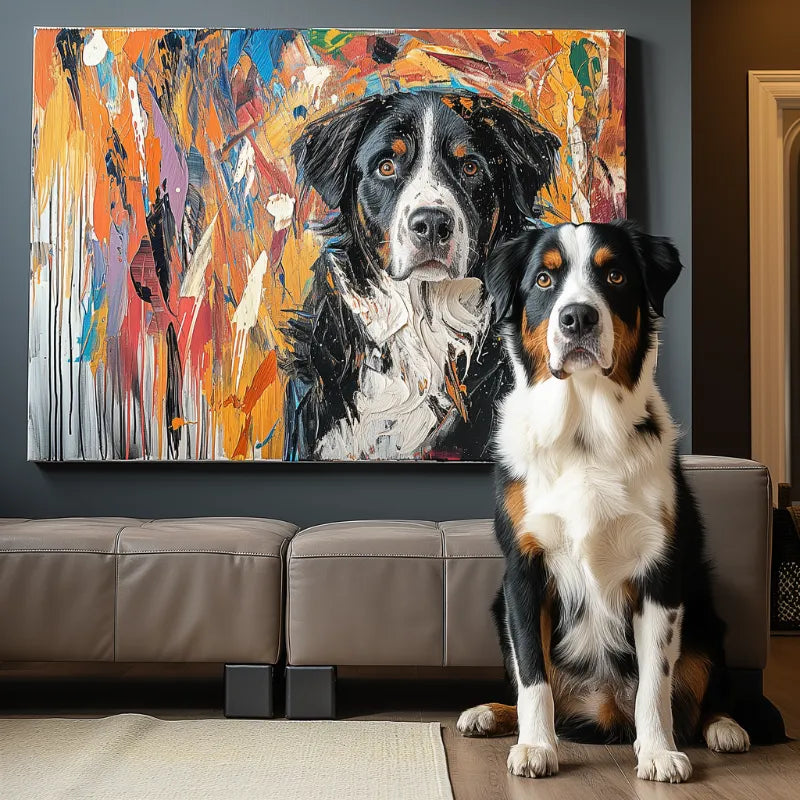
A stretched canvas normally presents a textured surface rather than a flat sheet mounted behind a window. It can be displayed with no front glazing, sometimes within a surrounding frame. But this observation is not a universal rule for every artwork or every conservation need. If you are planning to place a canvas behind glass, discuss depth, spacing, and attachment with the framer. Never assume the clear sheet can rest on the surface.

The angled view helps separate canvas surface from the idea of a flat paper picture under glass. It cannot tell you the substrate, coating, or long-term performance of every other Palette Tales item. The framed pet portrait buying guide is the place to start if you have not yet chosen a format.
See the difference between framing and glazing

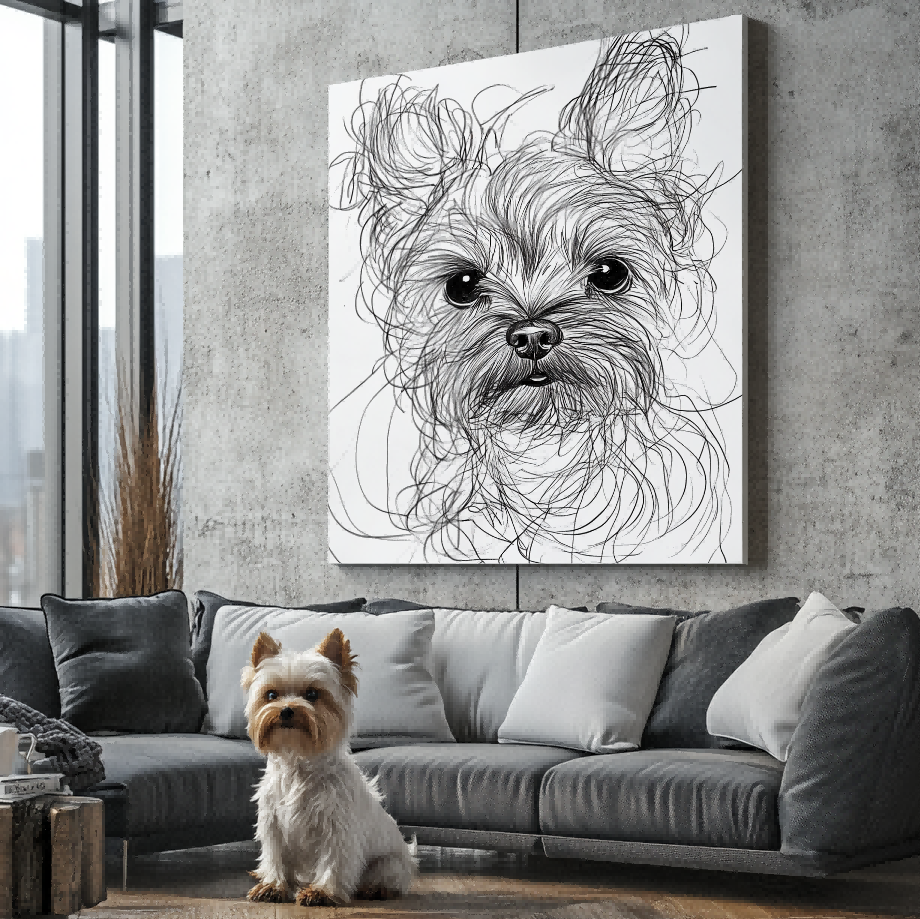
This tabletop example visibly has an outer border. It does not let us identify the presence or grade of a clear front sheet. Light reflection in a photograph can come from several sources, and a glare-free photo does not prove there is no glazing. If that detail affects your decision, request the exact specification or inspect the finished object.
Reflection, weight, and everyday use
Glass and acrylic can look different under a lamp or across a bright window. They can also differ in weight, scratch behavior, and breakage risk. Avoid blanket claims that one is always clearer, safer, or better. The selected grade and the room matter. If the artwork will hang where people pass closely, a professional framer can help weigh handling and installation considerations.
Try viewing a sample under the room's real light. Move to the side and check whether reflections hide the pet's eyes. Our home lighting guide covers where a lamp or window reflection may fall. Lighting can improve visibility, but it does not replace a mounting decision for a valuable flat original.
Five questions to ask before you order or frame
- Is the actual artwork paper, canvas, or another material?
- Does the product include glazing, and if so, what material and grade?
- Will the clear sheet touch the art, or is there appropriate spacing?
- What are the artwork, visible opening, and outside frame dimensions?
- Can the piece be opened and reframed without damaging it?
If a listing does not answer these, ask before ordering instead of filling the gap with an assumption. If you buy the artwork separately from the frame, photograph and measure it when it arrives before requesting a custom quote. A sound decision begins with the real object, not only the styling shown in a lifestyle image.
For a custom pet artwork, choose the image and format that preserve the pet's recognizable features, then decide how to present the finished piece. You can explore current Custom Pet Portraits and verify the specific listing's format. Glass, acrylic, or no glazing should remain a separate, evidence-based framing decision.


