



“Portrait” can mean the artwork of your pet, but it can also mean a vertical page shape. Those are different uses of the word. When choosing a custom pet portrait, decide whether the finished image should be taller than it is wide, wider than it is tall, or nearly square. That choice affects how much of the pet, the surroundings, and the wall can be shown. It is not answered by choosing a number such as 8 × 10 alone.
The best orientation is the one that preserves the recognizable pose without squeezing it into the available display space. A vertical source photograph does not automatically require vertical artwork, and a horizontal photo does not guarantee a usable horizontal crop. Check the actual product dimensions and any available preview rather than assuming a format can be changed after ordering.
When a vertical composition is easier to read
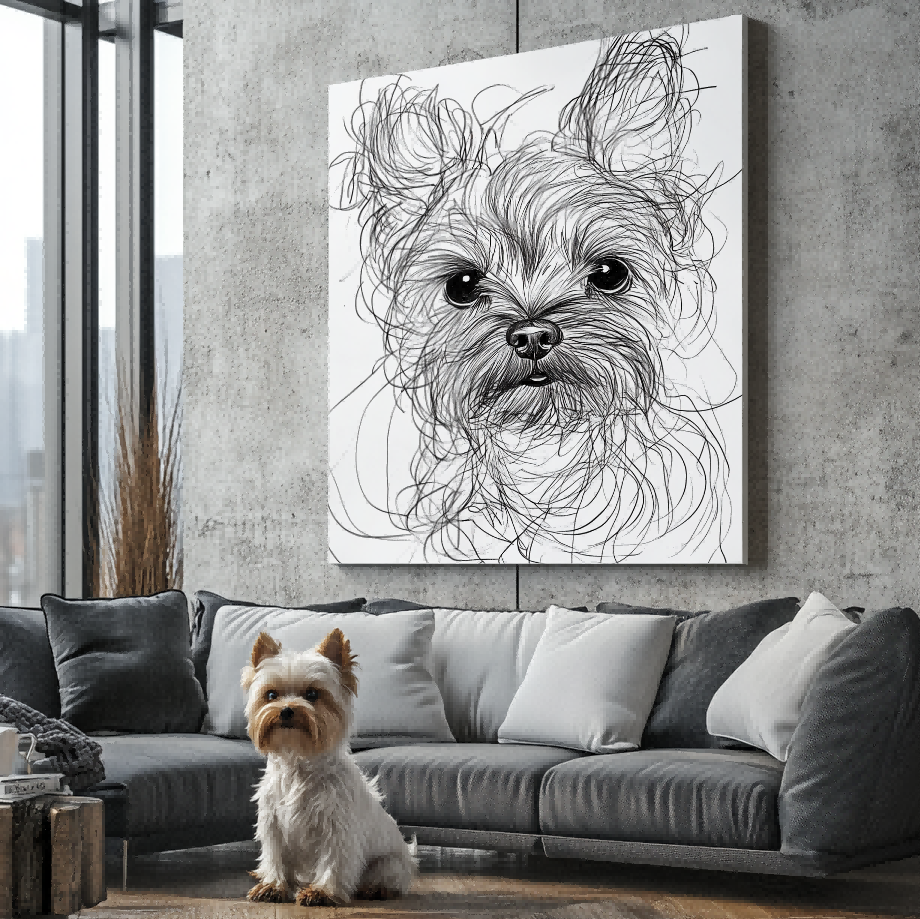
A standing dog, an upright seated cat, or a close head-and-shoulders portrait often has a natural top-to-bottom line. A taller format may leave breathing room above the ears and below the chest without adding empty space far to either side. Vertical can also suit a narrow wall between a doorway and a shelf. But if the pet is running, lying down, or surrounded by a meaningful setting, a tall crop may cut away the story.

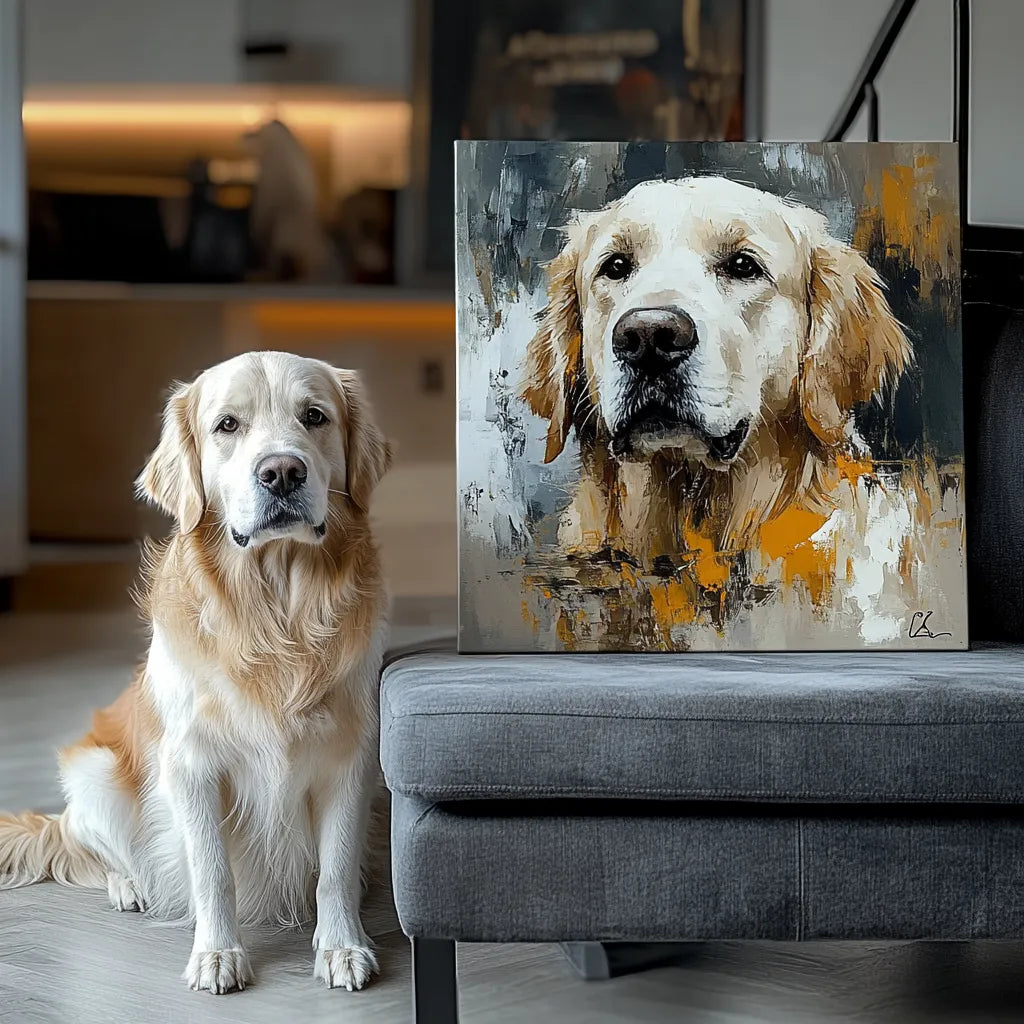
Look at the visual weight in this upright example: one subject occupies the central area, so the viewer can follow face and body without scanning a long horizontal field. If your source photograph has the pet very close to the top edge, however, a vertical layout may not provide enough safe room around the ears. Do not invent missing detail to make the chosen shape fit. The headshot versus full-body guide handles that separate crop question.
When a horizontal composition earns its space
Two pets side by side, a dog lying across a sofa, or a scene whose setting matters may need width. A landscape-format artwork can keep both subjects at a readable scale instead of stacking them awkwardly. It can also fit above a wide console or low furniture. Width is not automatically better for every multi-pet photo: if one pet is far behind the other, the reference may still need careful selection or a different arrangement.

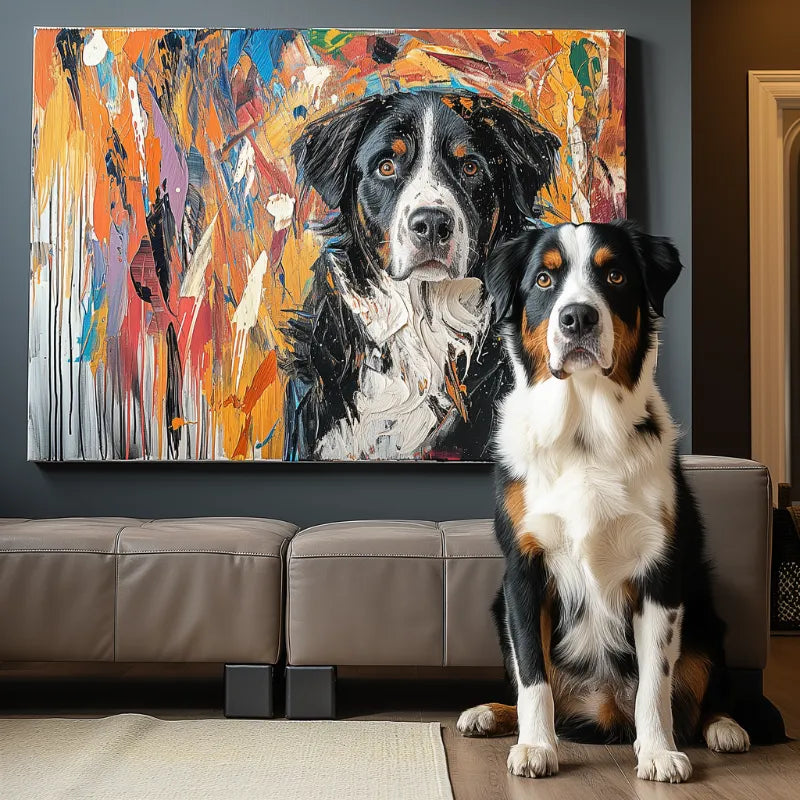
This artwork shows two dogs sharing a composition. Compare how much room each face needs. The aim is not to fill every corner with pet fur; it is to preserve enough separation to tell the subjects apart at a normal viewing distance. For the broader decision of one combined piece versus separate pieces, use the multi-pet display guide. Orientation is only one part of that choice.
Separate artwork shape from photo shape
Many phone photos use a tall screen shape, while print and canvas formats may have different proportions. Rotating a tall image sideways does not create scenery on its left and right. Cropping a wide image into a tall rectangle may remove paws, ears, toys, or a second pet. Start with the original full-resolution file, not a cropped social-media screenshot. Mark the features that must remain visible, then compare that area against the intended frame shape.
If the subject sits comfortably inside either outline, the wall may be the deciding factor. If it fits only one without losing distinctive features, let the subject lead. A preview can show an approximate composition, but a small mockup cannot prove final image sharpness or exact physical dimensions. Check the current listing for the selected format.
Try a low-risk paper test
- Draw a tall rectangle and a wide rectangle on plain paper at roughly the same outside area.
- Place the pet's face and important markings inside both outlines without covering an ear or paw.
- Hold each outline against the intended wall or shelf, then stand at normal viewing distance.
- Ask whether the pose still feels familiar and whether blank space looks intentional.
- Verify actual product dimensions and available orientation before paying.
Do not confuse the width of the wall with the size of the pet in the image. A wide artwork with a tiny face can be less satisfying than a smaller vertical piece that preserves the expression. Conversely, a too-tight vertical crop can lose the movement or relationship that made the original photo special. The Size Guide is the next step once the shape is clear.
What if the best photo and best wall disagree?
Try another source image before forcing a crop. If the photo's background is meaningful, a different display location might be easier than removing it. If the wall space is fixed, ask the seller what composition can realistically be made from the source. Do not assume background reconstruction, missing paws, or rearranging pets is included in an order. Customer examples can inspire a decision, but each is evidence for its own artwork only.
A useful sequence is subject and pose → orientation → crop → finished size → display spot. This keeps the pet recognizable while leaving room for the real product constraints. You can explore Custom Pet Portraits to see current formats, then compare the specific listing and preview with the shape that passed your paper test.


